

Units 4 & 7: Historical Significance of Game Mechanics
Planning | Research | Production | Reflection | Reference List | Blog Posts | Top of Page
Planning
Unit 4: Timeline
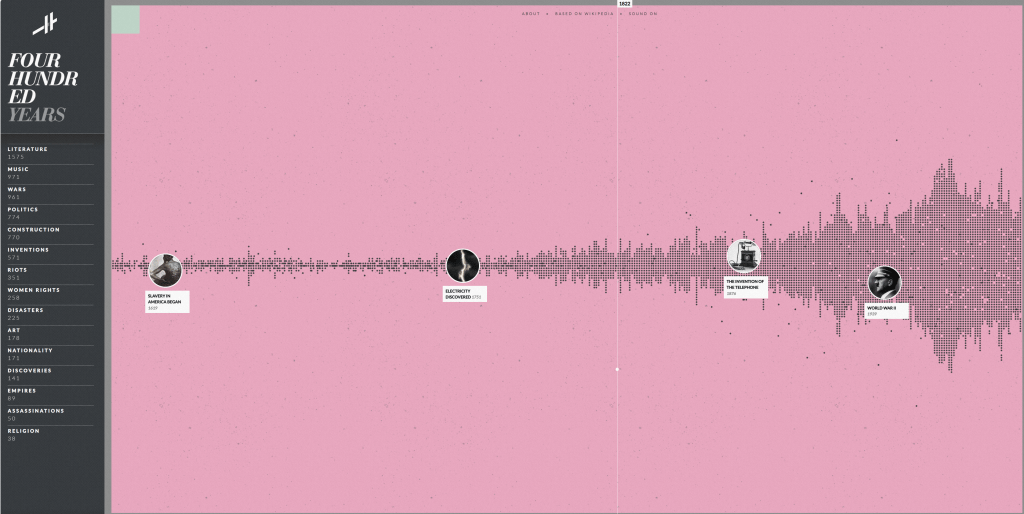
I was tasked with producing a timeline that shows the development and progression of the video game industry. To start I looked at examples of interactive timelines. Below are examples of “interactive timelines” but found my search did not yield many results. However I did find one timeline that while not relevant, being a historical timeline of events from 1600 to 2000, was aesthetically pleasing. I found a timeline on games consoles from the History Channel however despite being found on a video game interactive timeline search it was static and not interactive. The Histography Timeline was insightful though as it show expanding boxes and pop ups that appear if you hover over them. So here I present two timelines, one about the video game industry and an example of an interactive timeline.

I am going to create a timeline on Miro (a digital pin board tool). I feel I will be able to use Miro to make an engaging timeline that users can navigate through. I will aim to increase the understanding of Pokémon’s Hidden Machine (HM) system of field moves and how they were implemented, added upon, phased out and finally removed. The first game I got was Pokémon Ruby and I want show my passion for the franchise by making my timeline about it. My timeline will have information slowly fed to the reader so that they do not get overwhelmed and it will also have other little bits of interesting and relevant data. I intend to have a finished product that I can use again to help new players or to illustrate a point. My timeline will use colours to, not only draw in people but also to direct people as I intend to have a key to aid navigation and interpretation. I want my timeline to be visually exciting and built in such a way that it looks like it could be a giant wall poster on a child’s bedroom wall. I will use lots of images to achieve this. I considered adding all the side series of Pokémon but this would make the task monumental and unachievable within the timeframe and only some of the Mystery Dungeon games included HMs, the focus of my timeline. The amount of information would require careful construction for the timeline to be consumable.
Unit 7: Game Mechanic Example
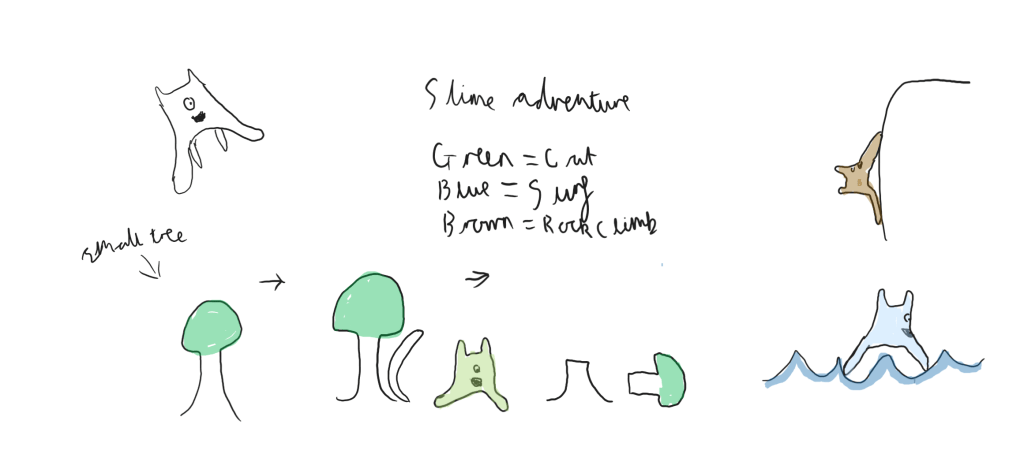
Following on from my timeline I want to capture this passion for Pokémon and it’s mechanics, to this end I want to recreate a sample of the HM system. I aim to recreate just three HMs and not all of them as I feel it would take me too long. I will aim to recreate simple HM mechanics like Cut, Surf and Rock Climb. To assist in the creation I will replay Pokémon Ruby and Pokémon Omega Ruby to get a feel for the HM system in an older game and in a modern game. This idea fits both into the adventure category of games as well as puzzle, as the player will have to find an item to unlock the relevant abilities. This example will be simple to play at first but I will aim to make the objectives to obtain abilities harder as it goes along. To do this I could make a maze or a trap system. This mechanic would fit as a simple puzzle element to an adventure game. I believe the creation of these mechanics will be achievable as HM Cut simply needs a collectable item that allows you to remove a tree in your path. HM Surf would need either something to make water traversable or simply block access to the water with a collision box that is removed when the relevant item is acquired. For HM Rock Climb, I would need to make an area where the player’s jump increases allowing them to ascend the cliff. To make the mechanic more engaging I could make a creature that will perform the action and become the collectable item. There could be multiple versions of it representing the different moves, shown by colour variants. I may also, as an extension, make these creatures roam around an area of the map. I will need to design a way for the player to locate the items, maybe the item makes a sound that will guide the player to it. I then need to think of how I reward the player at the end to show completion of the level/game. This could be as simple as a satisfying noise or a completion certificate, I could potentially add a text input to this certificate, so players can add their names to it.
Sketch of my game idea: showing how the creature might look, which HM I would recreate and a working title
Research
Unit 4: Timeline
In planning my research into Pokémon’s HM system I chose to investigate the launch game of each of Generation’s 1-9 going from 1998 to present day.
When I began my research for the timeline I started on a Bulbapedia (Pokémon Wikipedia) article on the subject of Pokémon’s HM system. I realised that it would not be a suitable source for my assignment so I had a think about how I could acquire the information from a reputable source. Then I remembered that all of the early games came with manual that also detailed some of the games’ features. I went looking for digital copies of these manuals but instead found the official guide for Pokémon Red and Blue from Nintendo Power magazine. I looked through it and found a greater wealth of information than I remember from the manuals so I decided the pursue the official guidebooks and magazines as sources.
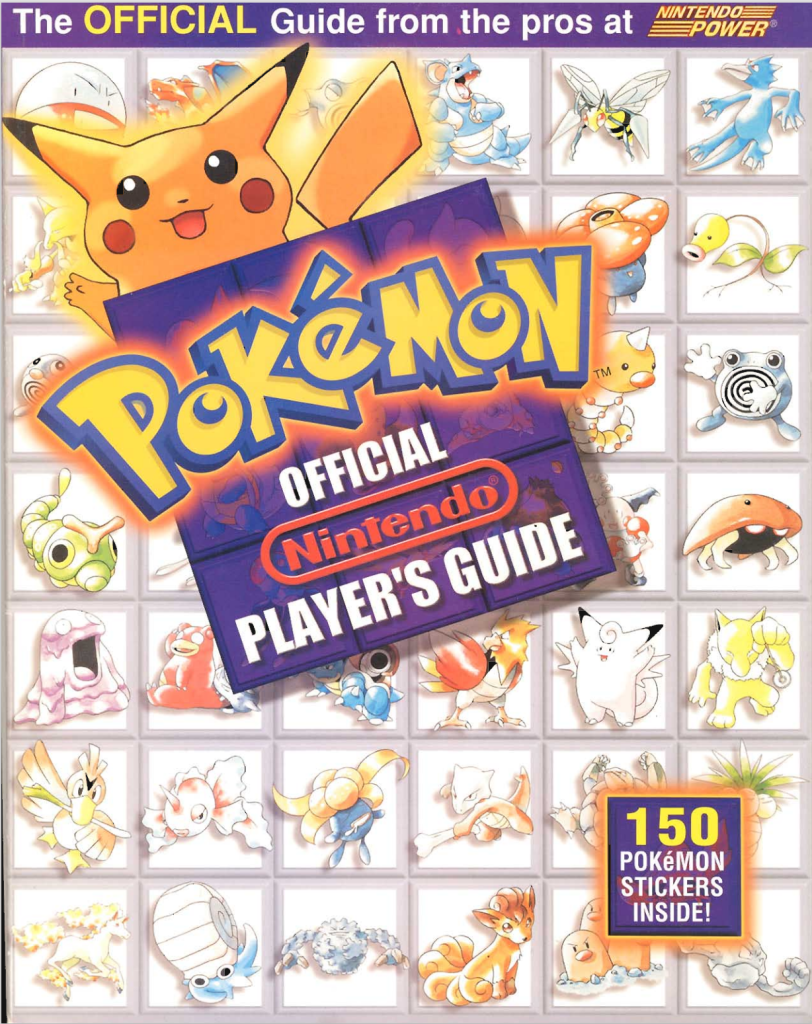
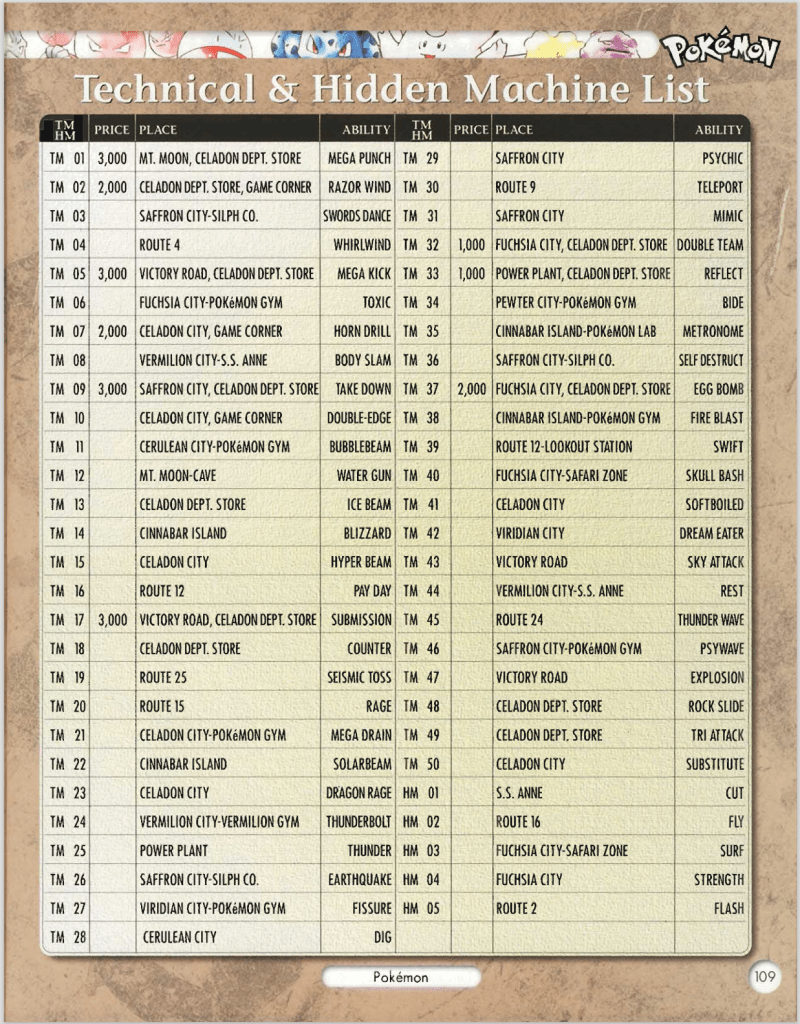
The Nintendo Power Red and Blue Guide had a complete walk-through of the games explaining every step for the target audience. This included where to get each HM, how to use them, where to use them, what abilities they gain you and which Pokémon can learn them.
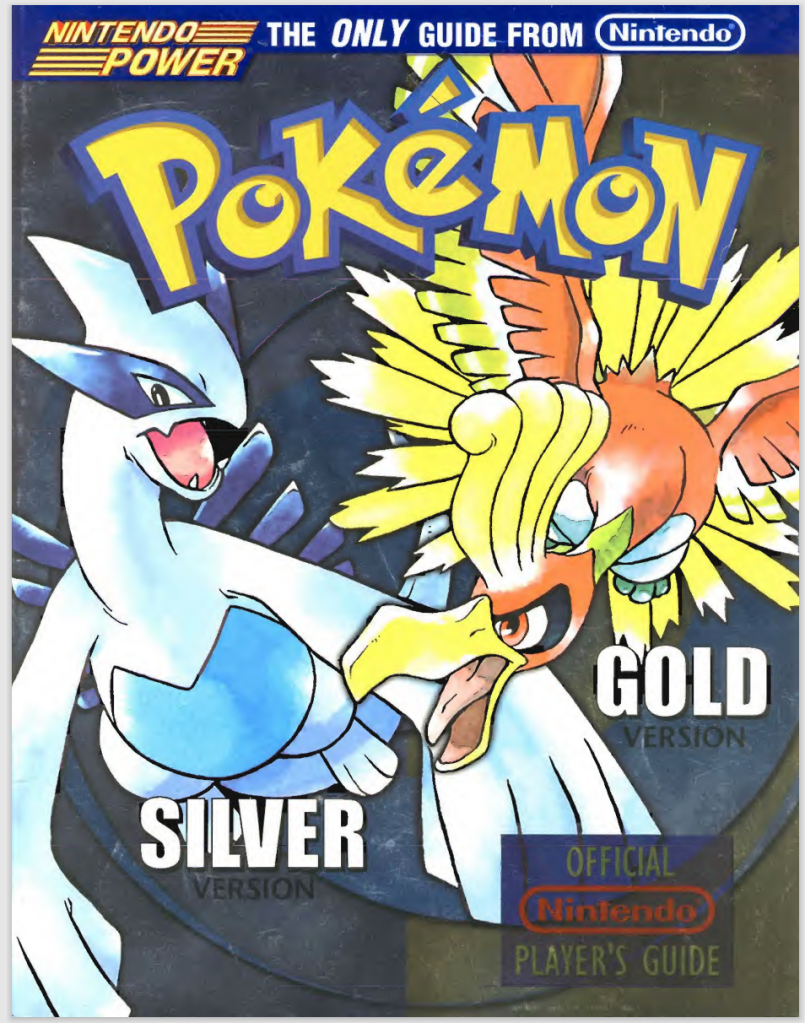

The Nintendo Power Gold and Silver Guide contains similar information to the Red and Blue guide but for the Johto Region, detailing the route through the Johto Region and later the Kanto Region for the elite four, champion and post game.
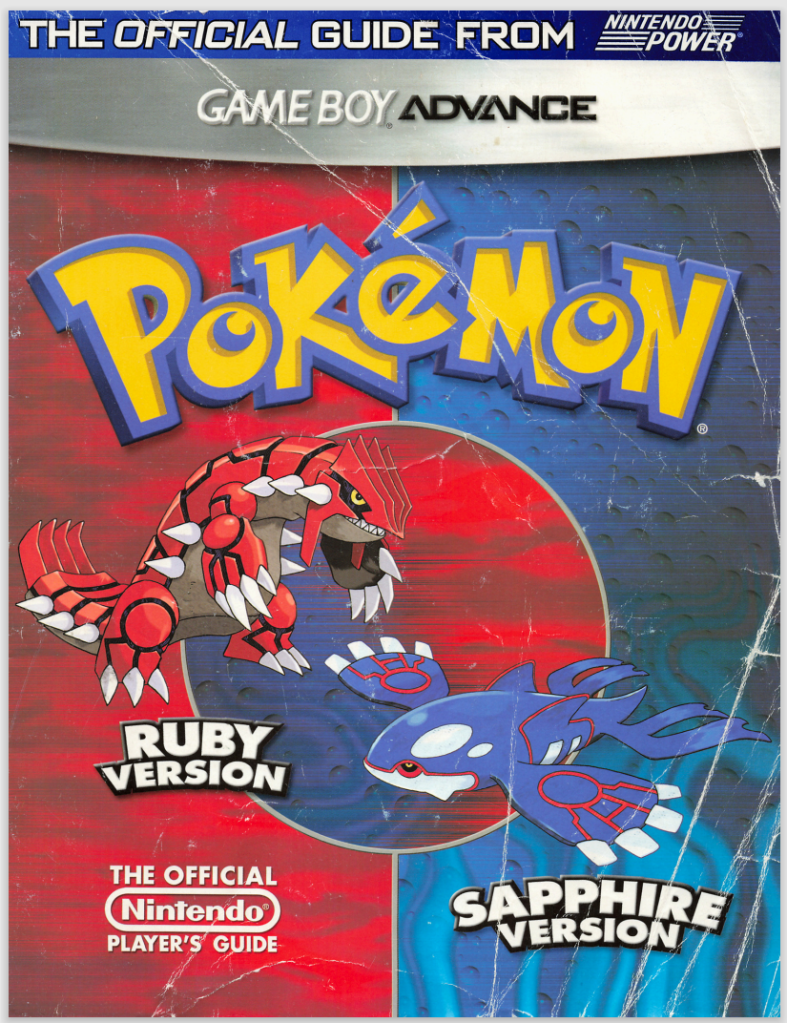
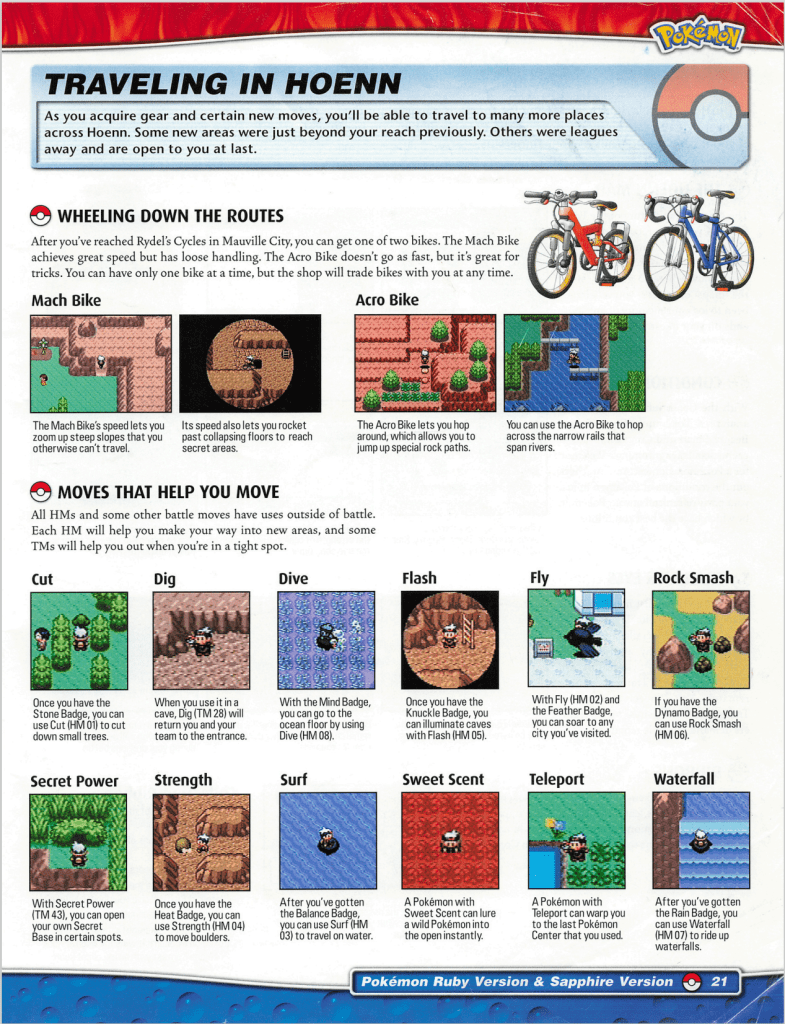
The Nintendo Power Guide for Ruby and Sapphire again had a detailed walkthrough for your journey through Hoenn Region, similar to the prior guides. However featured a new page on travelling through Hoenn Region, featuring the two different bikes and the twelve moves usable in the field.
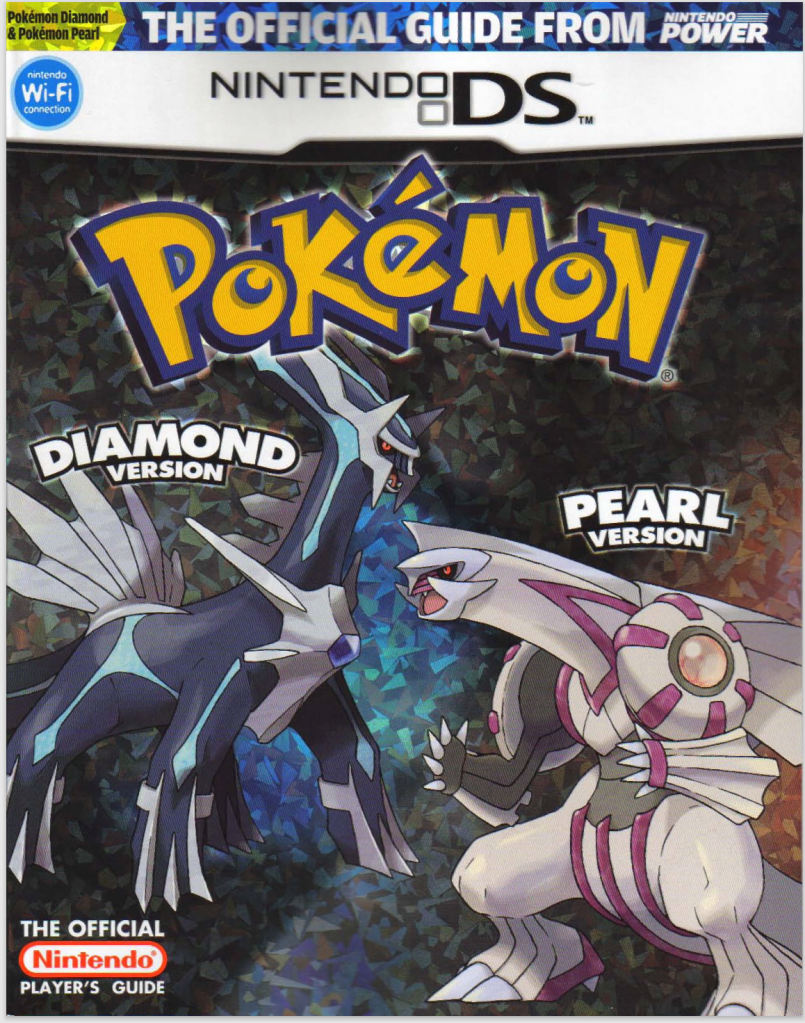
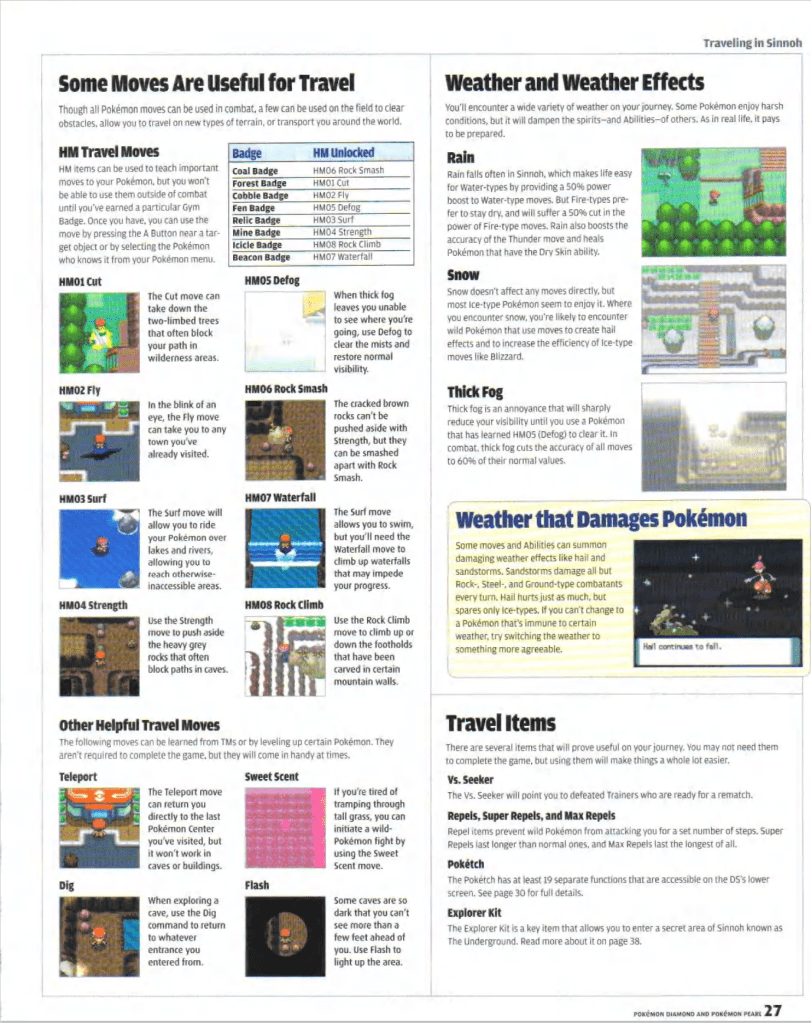
The Nintendo Power Guide for Diamond and Pearl has all the features of the Ruby and Sapphire guide including a one page guide to the twelve field moves, however this page had more information about the gym badges were required without having to look for it elsewhere in the guide. I welcomed this change as it made my research a lot easier.
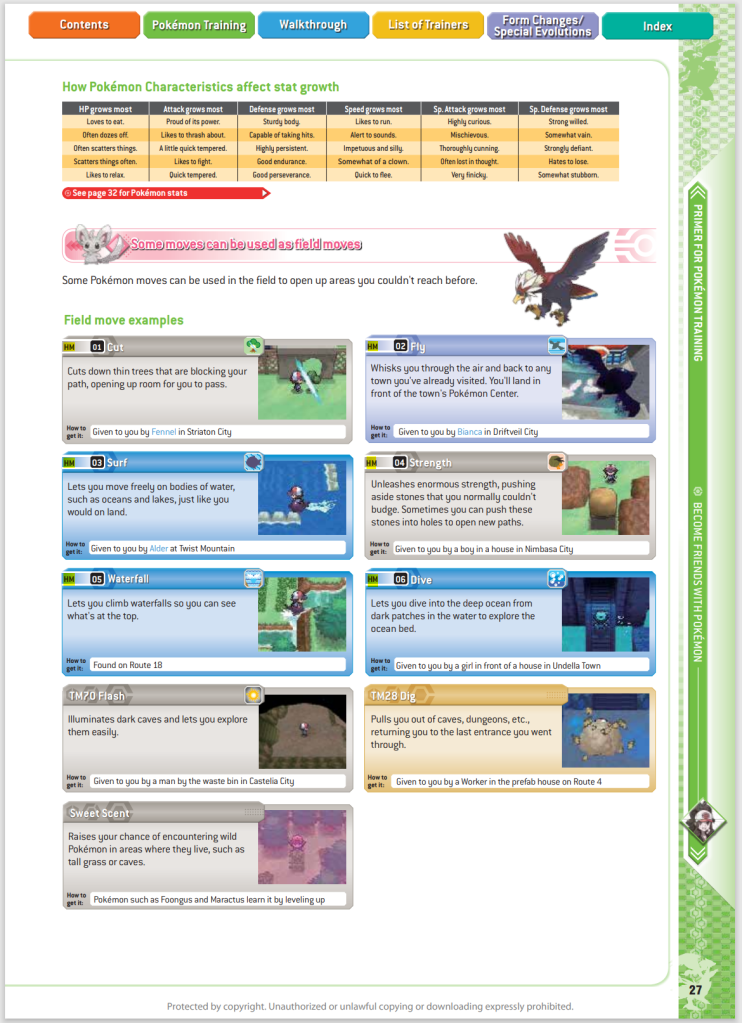
The Black and White Guide I found was published by Prima Games rather than Nintendo Power as the magazine had discontinued it Player’s Guides in 2007. This guide was better formatted as it was a PDF with extra functionality as each page had links that took you to different parts of the guide. For my research it proved useful and the version I had found was made for digital distribution so more detail was put into it and therefore I had an easier time gathering information about the HMs in the game.
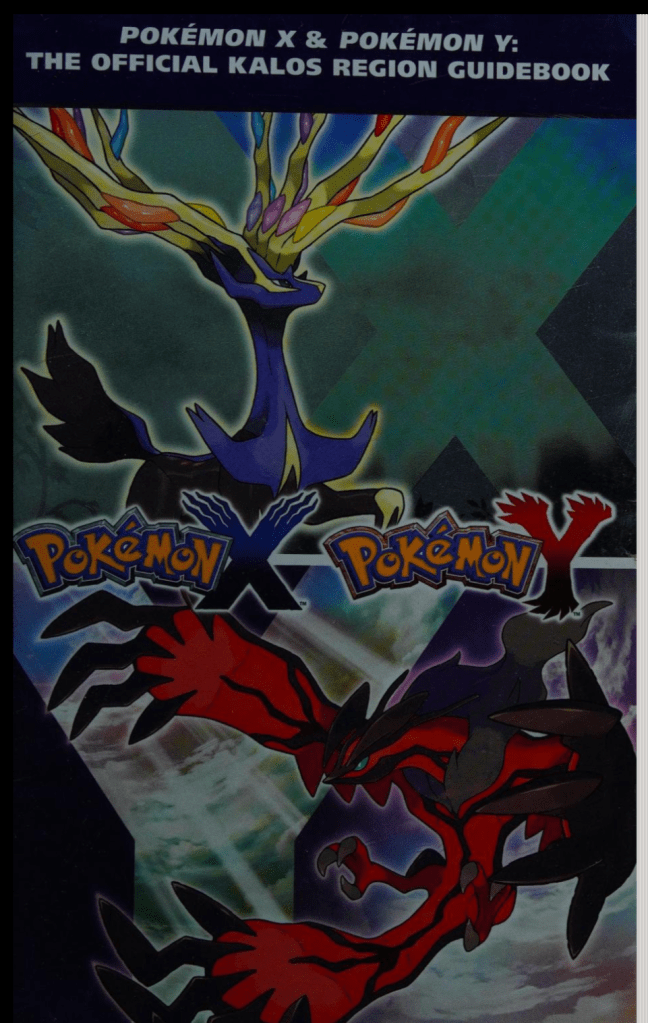
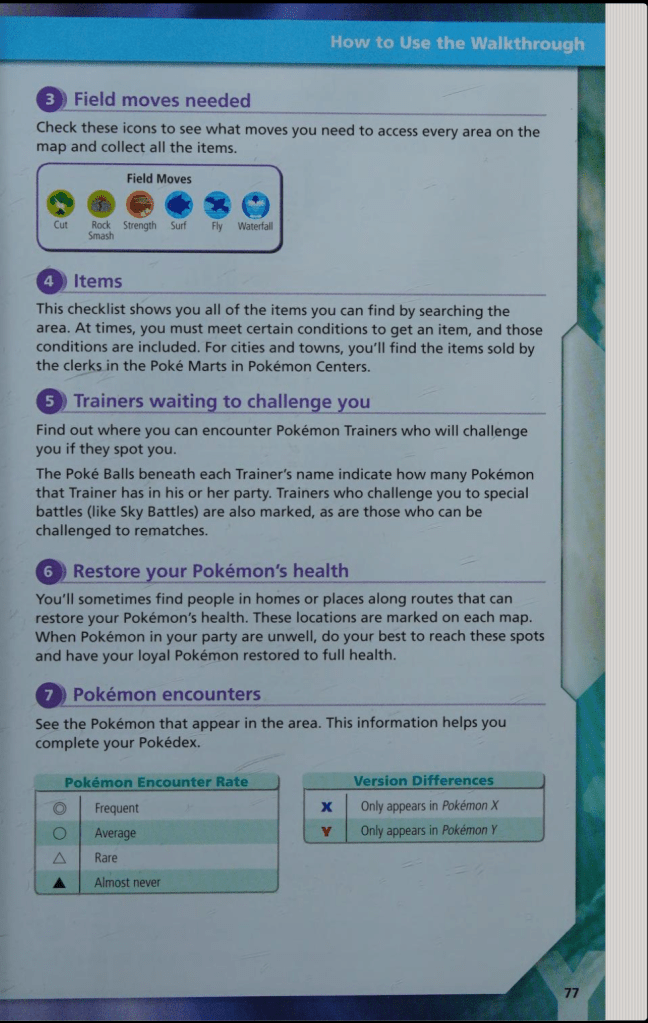
The X & Y guide was was the guide that was hardest to find and I had to make an account with a digital library and officially borrow and return it. The quality was not great but I was able to find the necessary information about HMs in the game and how Pokemon prepared to transition away from the HM system in Pokémon X & Y.
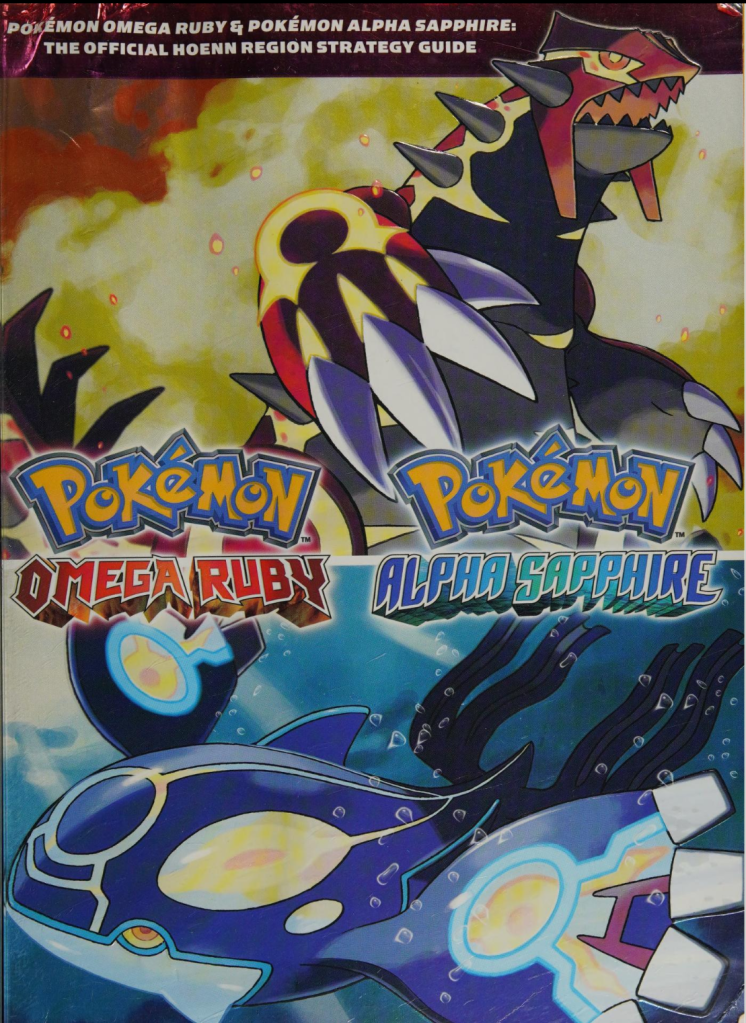
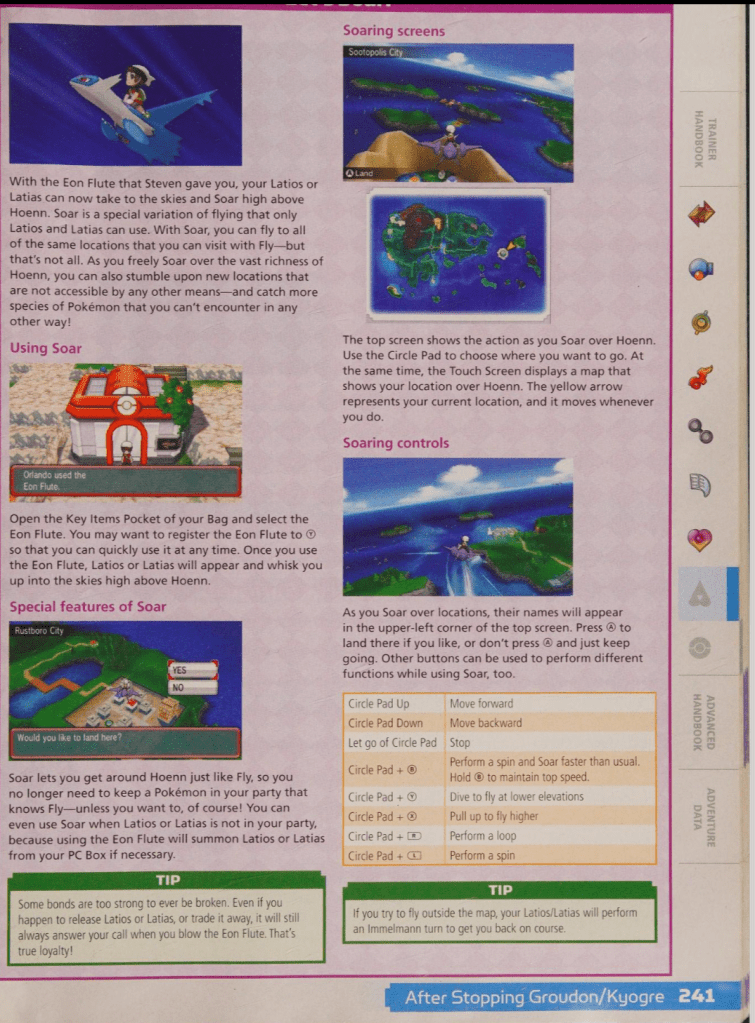
I felt it necessary to review the Pokémon Omega Ruby and Pokémon Alpha Sapphire Guidebook as it was a key game in the transition away from HMs. However, it was again difficult to acquire a PDF of the book and again had to settle for using the digital library to borrow it but again the quality was poor, missing tops and bottoms of pages as can be seen above. Despite difficulties faced I was able to find the information I needed to display in my timeline about the Soaring mechanic as right-hand image above.
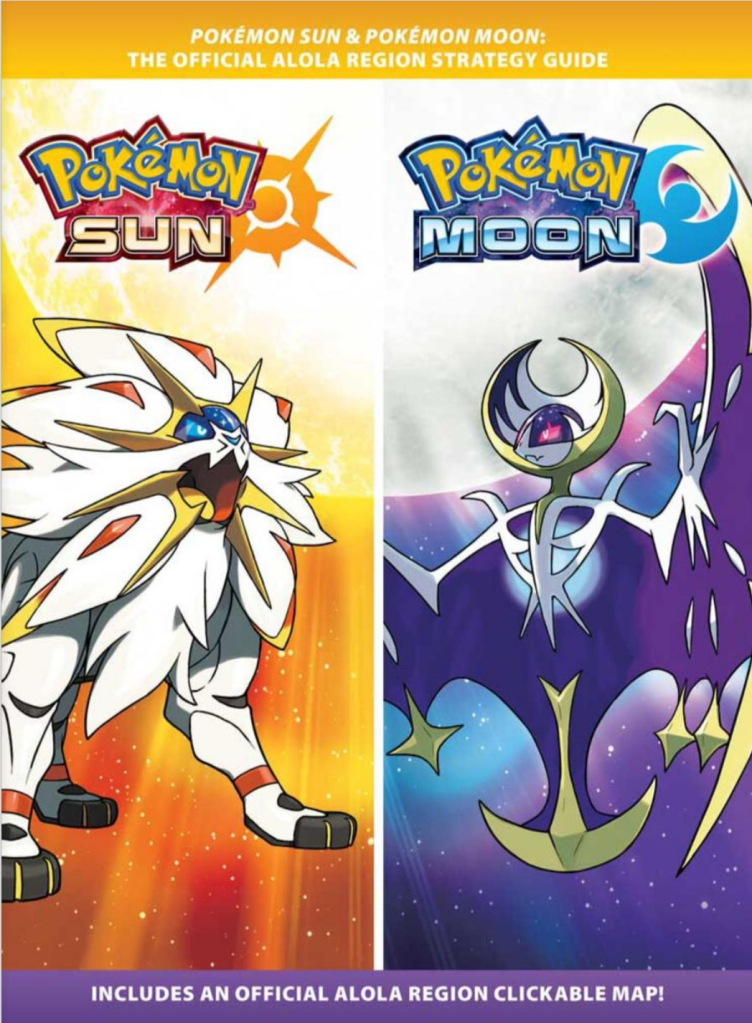
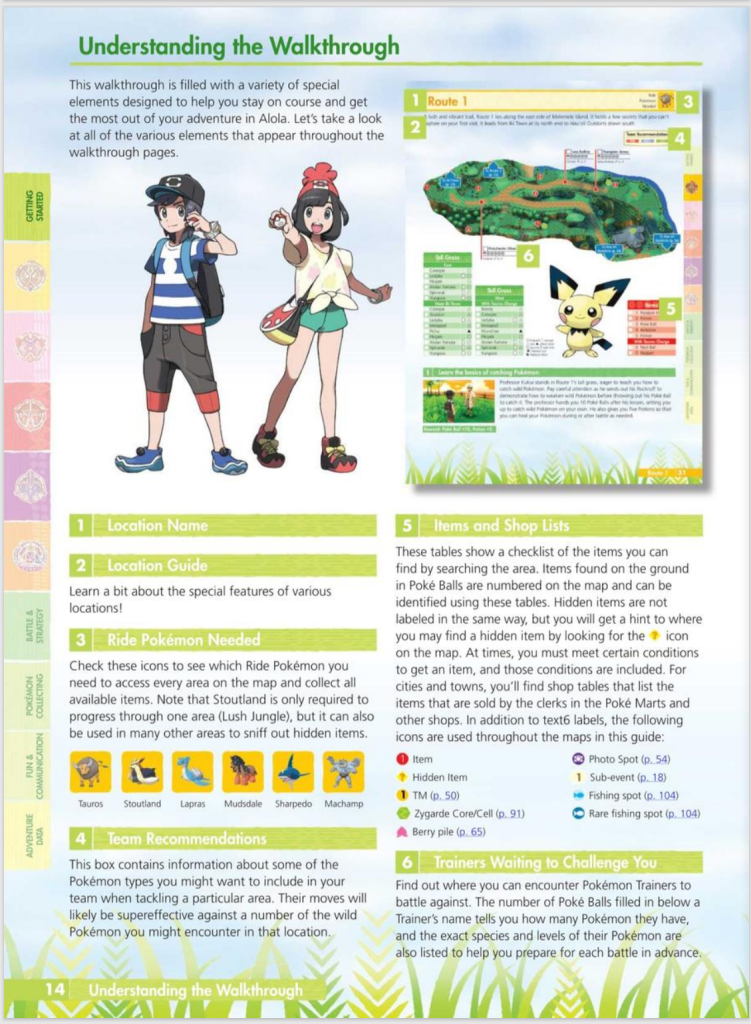
The Alola Region Guide for Sun and Moon was easier to acquire and contained a lot of useful information about the Poké Ride system which was the first system to replace HMs.
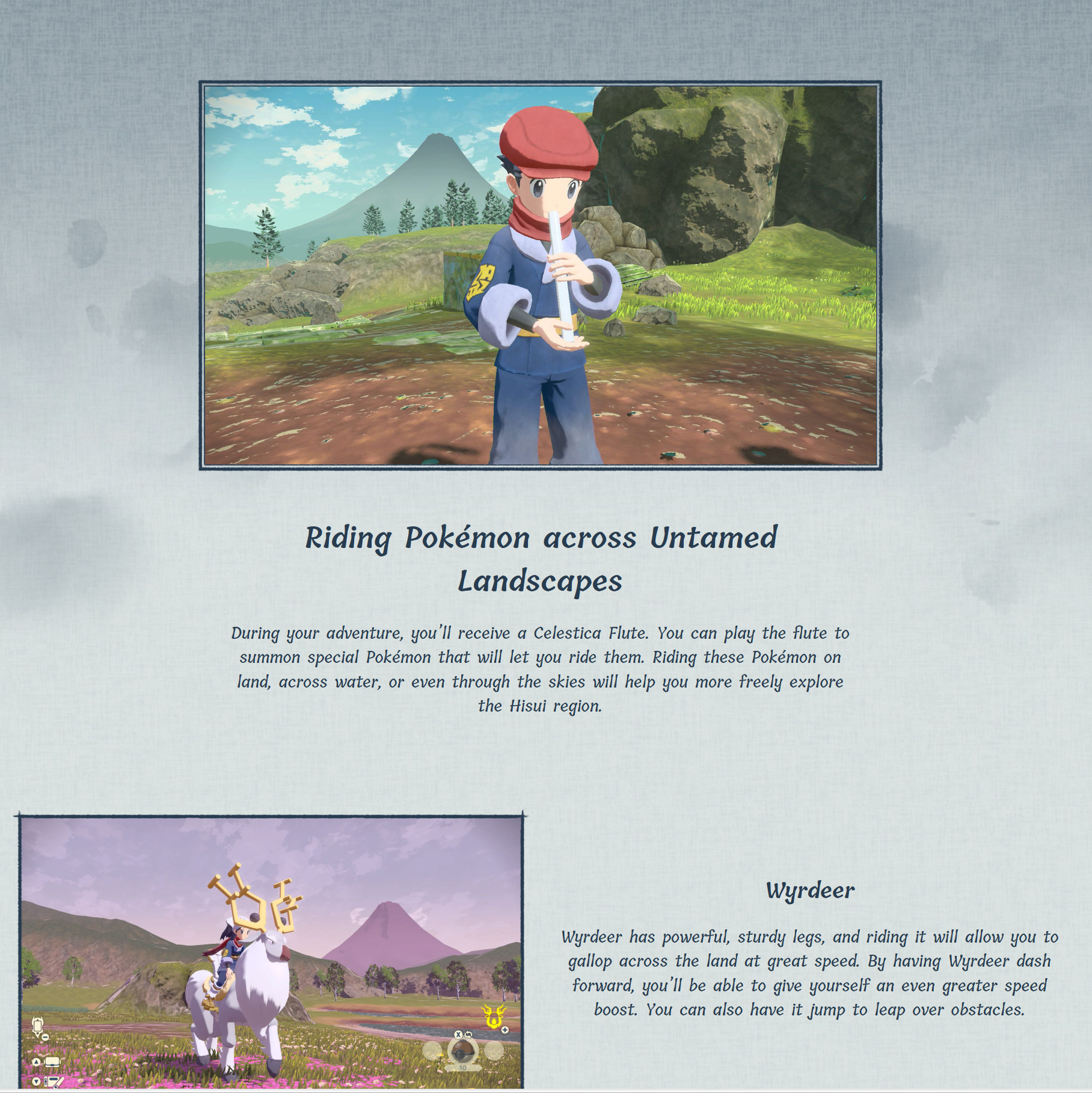
To look into how GameFreak (the company behind the development of Pokémon for Nintendo) first handled a more open world game with Pokémon Legends Arceus. I found the website for the game the best place to gather secondary research as it was quite detailed and still was available due to it being a relatively new game. It had information on all the mounts, which area you acquire them in and how they help the player navigate.
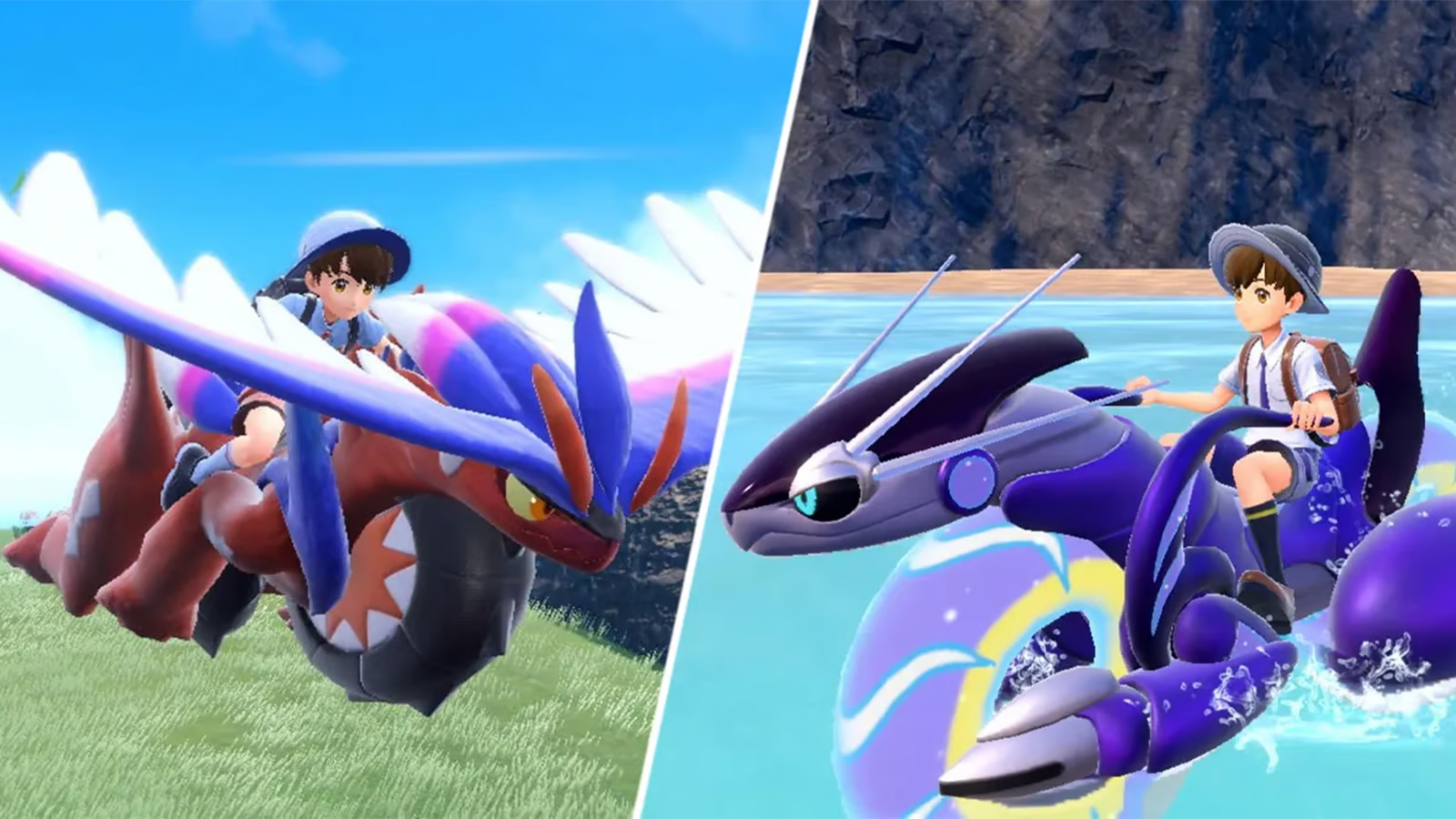
When looking at Scarlet and Violet after I failed to find free access to a guidebook I found a walk-through of the games written by IGN. It was detailed enough to make my own frame on the Miro board timeline about how the Miraidon and Koraidon mechanic works and how GameFreak still somewhat path the player with the mechanic.
Unit 7: Game Mechanic Example
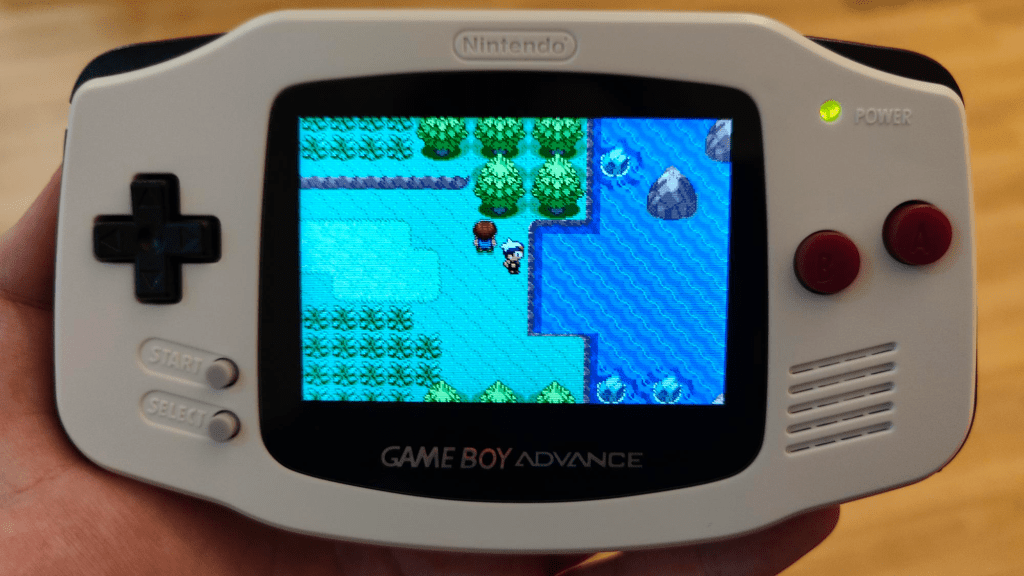
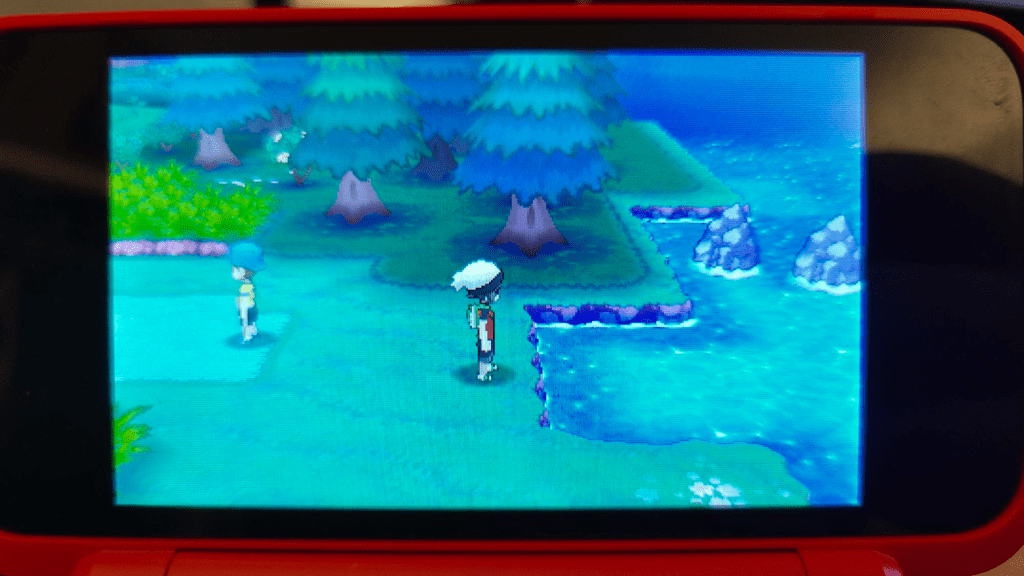
I began my research for the mechanic example by replaying through Pokémon Ruby and its remake Pokémon Omega Ruby. Based on my experiences replaying these games I would say that a key factor to the HM system working is that you get the necessary HMs as you progress, given at key points so the player cannot advance without them but at a point that it feels natural. Another feature is that all Gym Leaders tell you when you gain the ability to use a HM from acquiring their badge. I like the aesthetic of the older games and I will try and replicate the towns and routes that seem boxed in by endless trees.
After watching this tutorial I believe I can recreate the HM system with an interactable key that instead of simply entering the item’s collision box you have to interact with it to collect it. However, I feel substantial modification to the code is needed to make it work for me as I was considering the collectable item to be a creature that can move which may drastically change the code needed.
HM survey Feedback
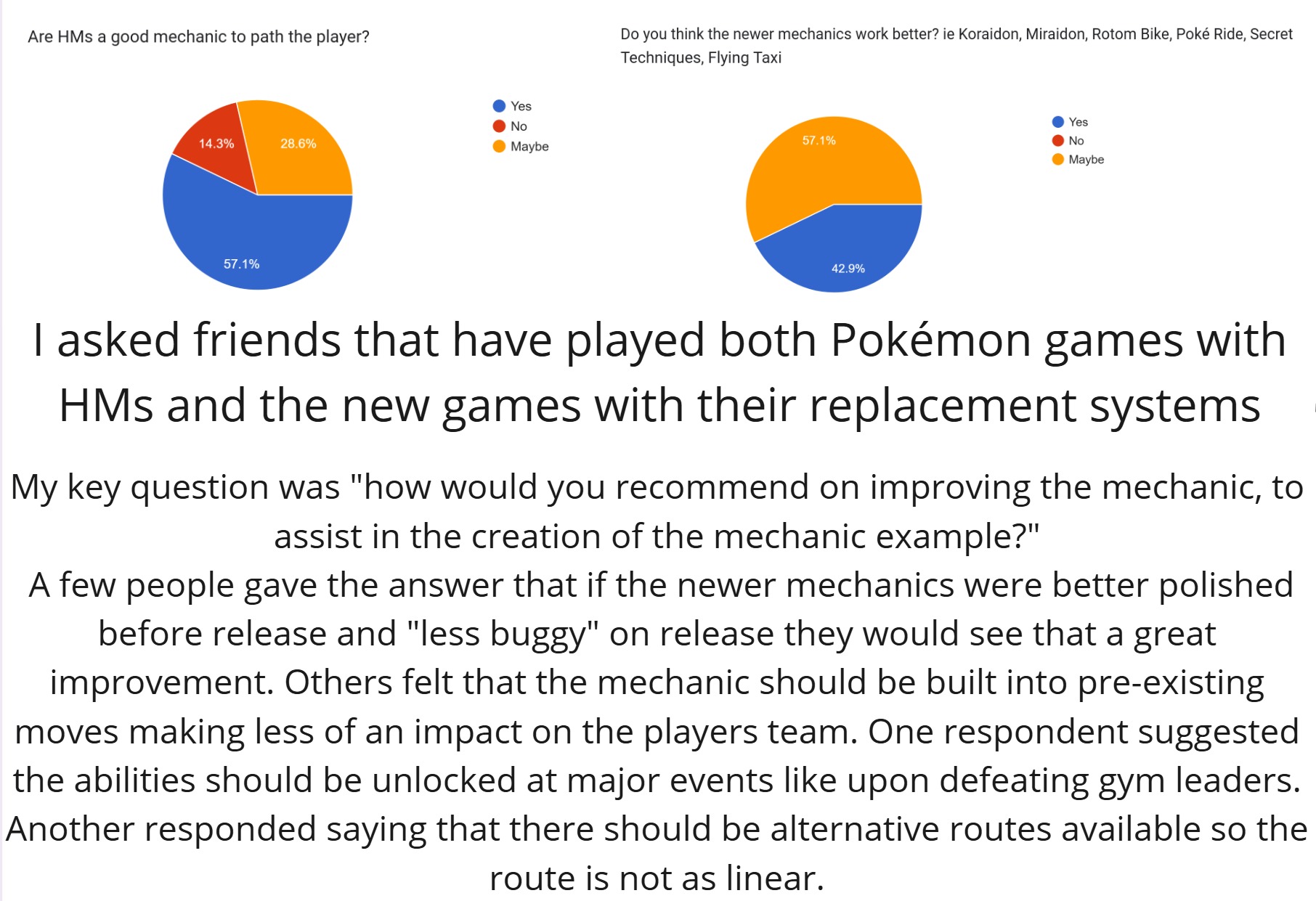
I included a question in my survey on the HM system about how it and the mechanics that replaced it, could be improved upon in the mechanic example. A dominant answer was “make it less buggy”, this I feel was regarding the Miraidon and Koraidon system from Pokémon Scarlet and Pokémon Violet and the ride Pokémon of Hisui from Pokémon Legends Arceus. I feel given time I can achieve this but I may have to reassess my plan for the Rock Climb ability as I feel a high jump could be exploitable, maybe translate (teleport) the player from one location to another, if they have the relevant item. An answer I received was to integrate it into existing moves, but for how I intend to set up my mechanic it is not relevant. Another response which suggested that I make them unlock at major events is something already in consideration from my research on Pokémon Ruby and Pokémon Omega Ruby. Finally, an answer suggested a non linear path option which is something I will at as an extension but it will be low priority.
Production
Unit 4: Timeline
A History of Hidden Machine Moves in Pokémon and their Obsolescence: A Miro Board Timeline
Unit 7: Game Mechanic Example: Professor Mahogany’s Slime Adventure
Reflection
Unit 4: Timeline
I set out to create a timeline for all ages that would inform others about the now defunct HM system in Pokémon, how and why it was replaced and what it’s replacement was. I increased understanding by showing the key details of the HM system, it’s flaws and interesting changes that were made along the way such as the addition of mechanics that would stop the player from being stuck. My initial aim was to not put much regarding the replacement systems but early on in the production I found them interesting and thought it prudent of me to explore them as I felt it would help in the creation of the mechanic example. The greatest part of the timeline was the information I gleamed from the guidebooks I researched and how I translated that into my Miro board. The largest mountain I overcame was the amount of information that I had to go through and refine as some of the guidebooks were at least four hundred pages long, poorly translated into digital form and difficult to find. I had planned to have a key for navigation, this did not happen due to having to move on to the mechanic example. If I were to start again I would pick a more clearly defined subject area and stick to it, this would hopefully avoid a mountainous workload that I faced in the production of my timeline. In summary, due to the volume of research matter that I looked through it degraded the quality of my timeline as I could not spend the time I wanted to improving navigation.
Unit 7: Game Mechanic Example
I set out to make a sample of the HM system that is in Pokémon. I conclusively achieved the creation of the mechanics however, substantial work would have to be done to get the visuals for it set up. In the production phase I liked how the slime creatures I had created in Blender looked and decided that I wanted them to be what the player collects to gain the abilities. It is as planned simple to play, I was able to sort a small maze for the water slime but when attempting to make traps for the rock slime I found it wasn’t as easy as I had first thought so I simply made it move faster so the player would have to think harder on how to catch that slime. For the majority the production went as expected, however my biggest challenge was when creating the obtain and use interaction due to having multiple errors that I had to fix. The major error that occurred was that the obstacle was not recognising that the player had acquired the relevant slime and this was solved by getting the actor of the relevant slime class in the obstacle blueprint, this solved the issue and I was able to progress. However, I feel that I made my biggest challenge was my greatest success as I ended up using the interaction function for most events in the game.
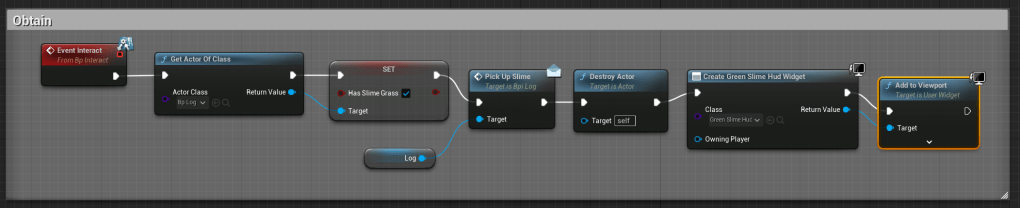
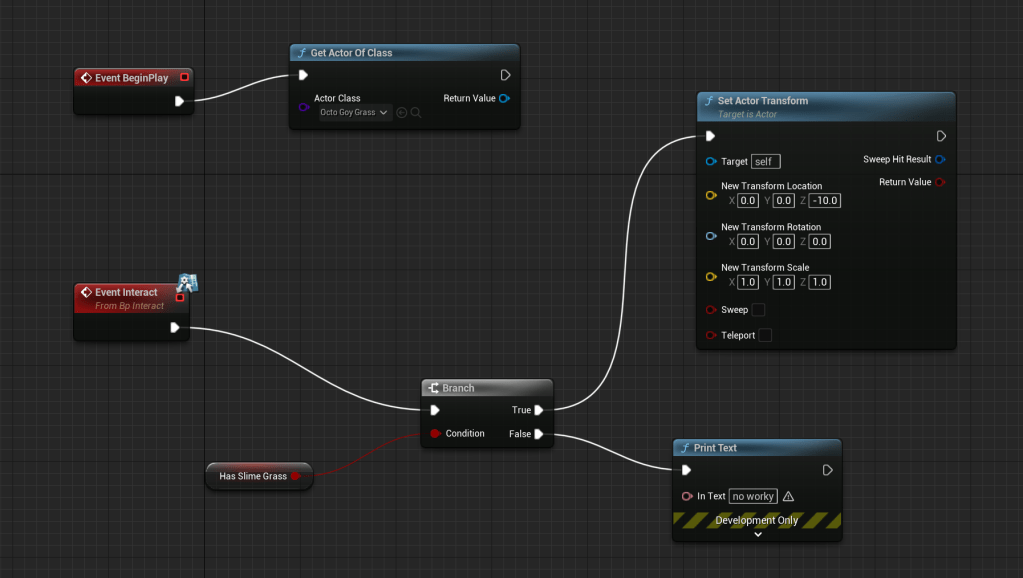
I was correct in my research that a jump would lead to issues of a “buggy” nature, so I settled for the player to be able to teleport on interaction at the cliff if they had the rock slime. If I were to expand on these mechanics I might add mini games for collecting the slimes, so on interaction the mini game would appear. I would also figure out the animations and visuals for the slimes performing their abilities. This could be as simple as an image representing what they do, a classmate suggested pixel art animations but the best would be full 3D animation. In conclusion, I have greatly expanded my understanding of the blueprint system in Unreal Engine due to having to overcome many errors and used my research effectively when creating my mechanics.
Reference List
Averill, A., Leang, J. and Williams, D. (2000). Official Nintendo Power Pokemon Gold Version and Silver Version Player’s Guide. [online] Nintendo of America. Available at: https://archive.org/details/NintendoPower2000PokemonGoldSilver/mode/2up [Accessed 12 Jan. 2025].
Folsom, J. (2004). Official Nintendo Power Pokemon Ruby and Sapphire Player’s Guide. Nintendo of America.
IGN. (2022). Walkthrough – Main Quests by Level – Pokemon Scarlet and Violet Guide – IGN. [online] Available at: https://www.ign.com/wikis/pokemon-scarlet-violet/Walkthrough_-_Main_Quests_by_Level [Accessed 23 Jan. 2025].
Loe, C. (2007). Pokémon Diamond and Pearl: Official Nintendo Player’s Guide. [online] Nintendo of America. Available at: https://archive.org/details/pokemon-diamond-pearl-nintendo-players-guide [Accessed 12 Jan. 2025].
Nintendo of America (2022). Pokémon Legends: Arceus | Official Website | Pokémon. [online] Available at: https://legends.arceus.pokemon.com/en-us/ [Accessed 23 Jan. 2025].
Pokémon Company International (2011). Pokémon Black and White: Prima’s Official Strategy Guide. [online] Translated by H. Yamamori. Translated by T. Hove. and Translated by S. Munday. The Pokémon Company International. Available at: https://www.docdroid.net/h57f/prima-2011-pokemon-black-white-pdf [Accessed 15 Jan. 2025].
Pokémon Company International (2013). Pokémon X and Pokémon Y: the Official Kalos Region Guidebook. [online] Pokemon Company International.
Pokémon Company International (2014). Pokémon Omega Ruby & Pokémon Alpha Sapphire. Pokemon Company International.
Shinoda, P.J. (1998). Pokémon: Official Nintendo Player’s Guide. [online] Nintendo of America. Available at: https://archive.org/details/Nintendo_Players_Guide_GB_Pokemon_1998 [Accessed 12 Jan. 2025].
Stratton, S. (2016). Pokémon Sun & Pokémon Moon: The Official Alola Region Strategy Guide. [online] The Pokémon Company International. Available at: https://archive.org/details/SunMoonGuide/mode/2up [Accessed 15 Jan. 2025].
Unit 4 & 7 Blog Posts
These posts are relevant to the work I’ve done towards Units 4 & 7
-
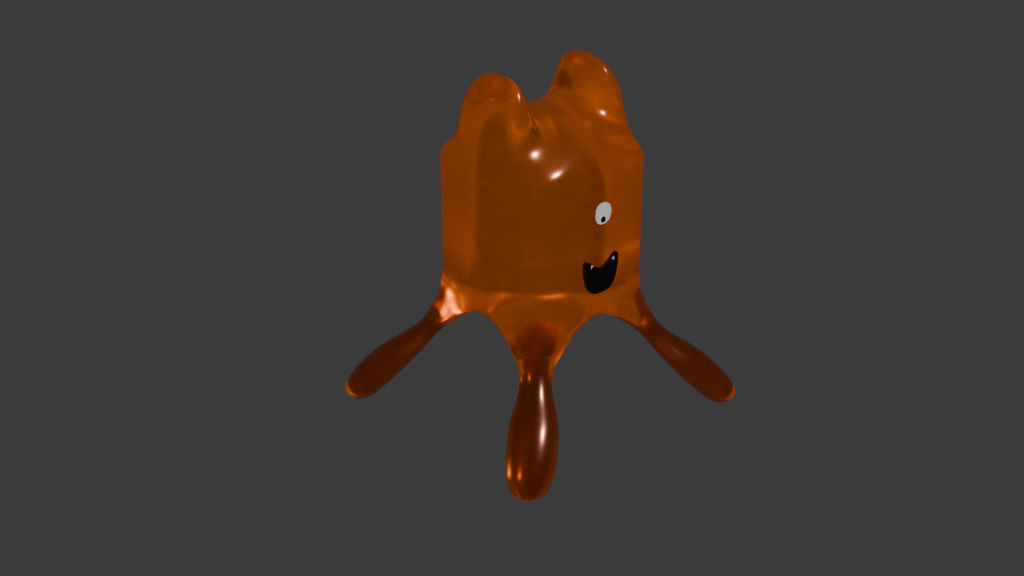
Unit 4 & 7: Asset Creation 2
Today I wanted to practice what I have learnt in blender since the Unit 1 assignment, especially in regards to…
-
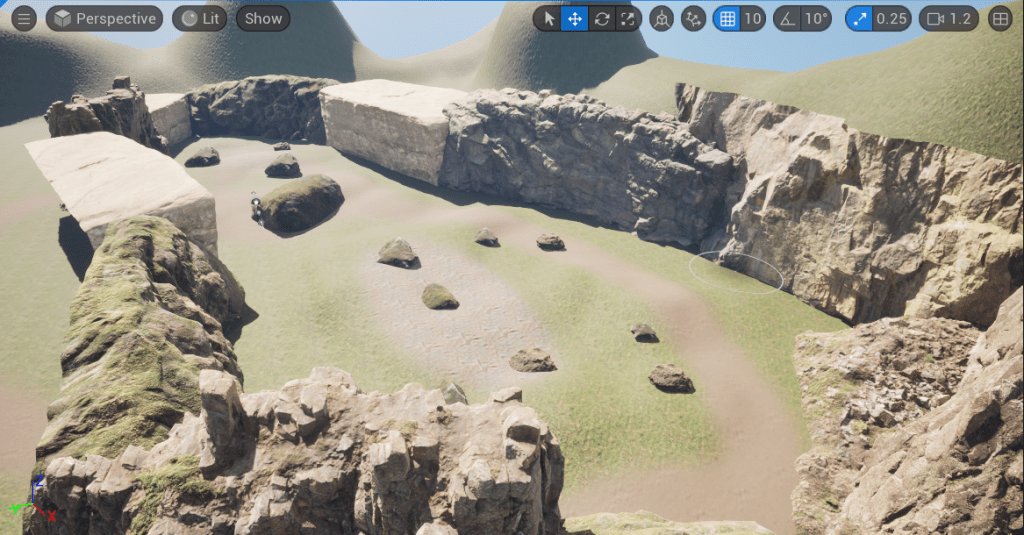
Unit 4 & 7: Unreal Practice
I followed a tutorial for creating an environment in Unreal Engine 5 It started off by explaining how to make…
-
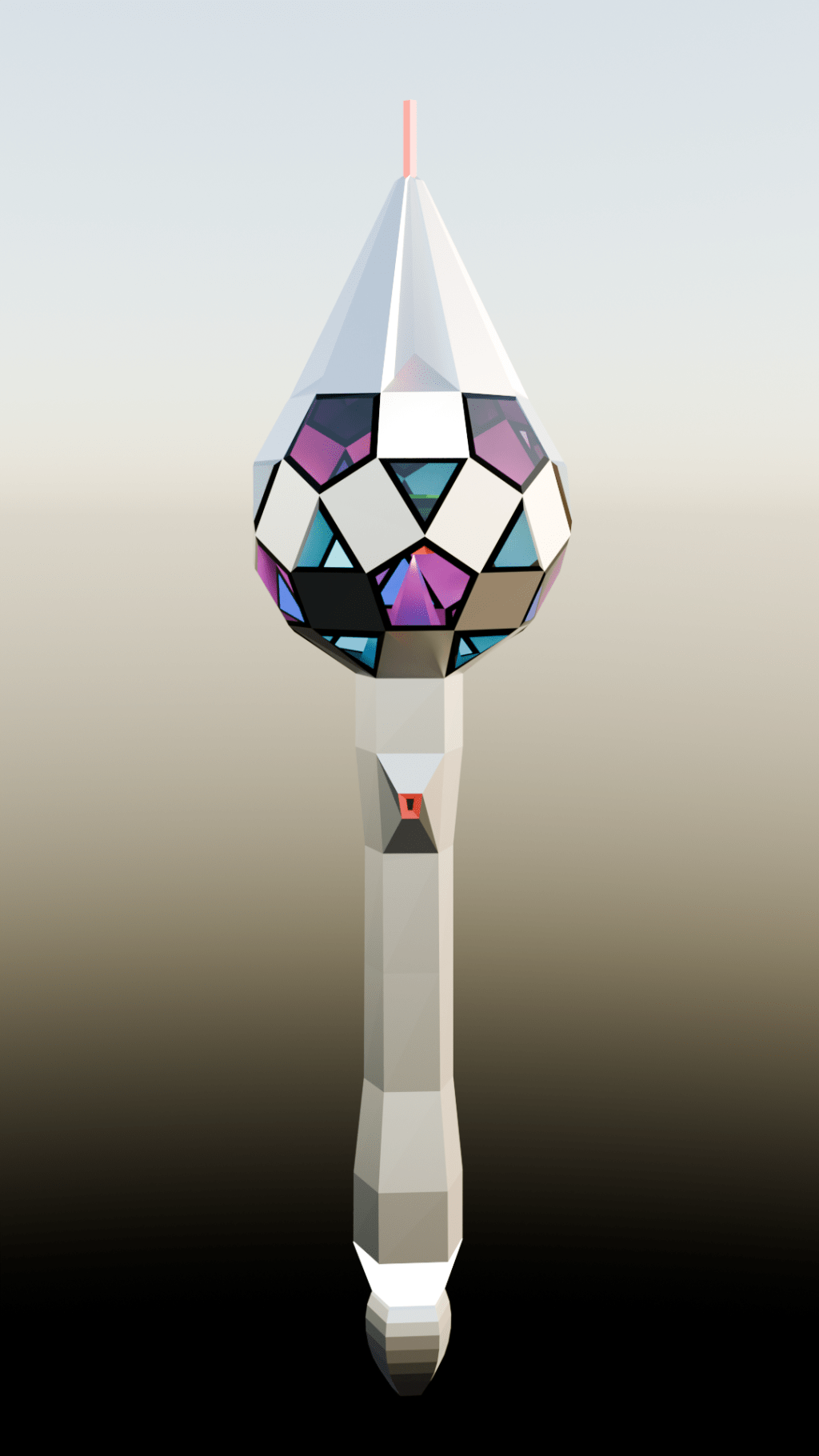
Unit 4 & 7: Asset Creation 1
I spoke with one of my tutors about the next assignment, he said that the Unit 4 & Unit 7…
 Sublime Theros