

Survey on Pixel Art (Primary)

Further sprites for Pixel Art Survey 1
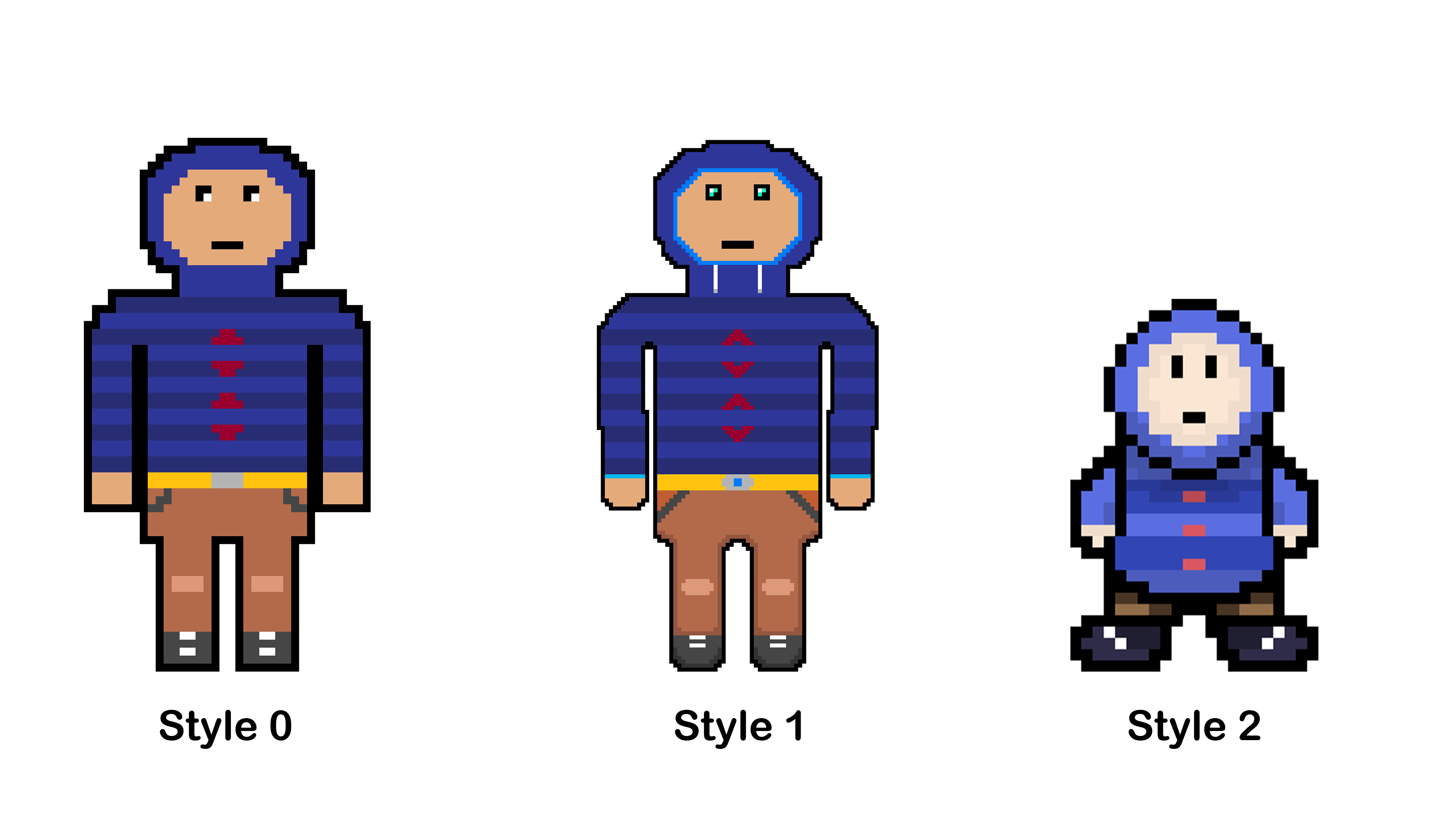
I had been making pixel art in the lead up to the start of Unit 8 and I decided that I wanted to use some of what I created for sprites for my game. I had started with the first image (Style 0 above) which I liked but after creating a second character that I had got too exuberant with the design and had doubled the pixel density without thinking for my prior designs. I ended up doubling the density of my original sprite. As a result of this, I decided to include pixel density in my primary research along with other factors of 2D sprites. I created a survey comparing the two density levels and asked for the following:
- Their rating on Style 0 (see above)
- Their rating on Style 1 (see above)
- Their preference between the two styles (Styles 0 & 1)
- What swayed their preference?
- If they thought idle animations were important?
- What the terms 2.5D and HD-2D meant to them?
- Their opinions of further sprites I had made.
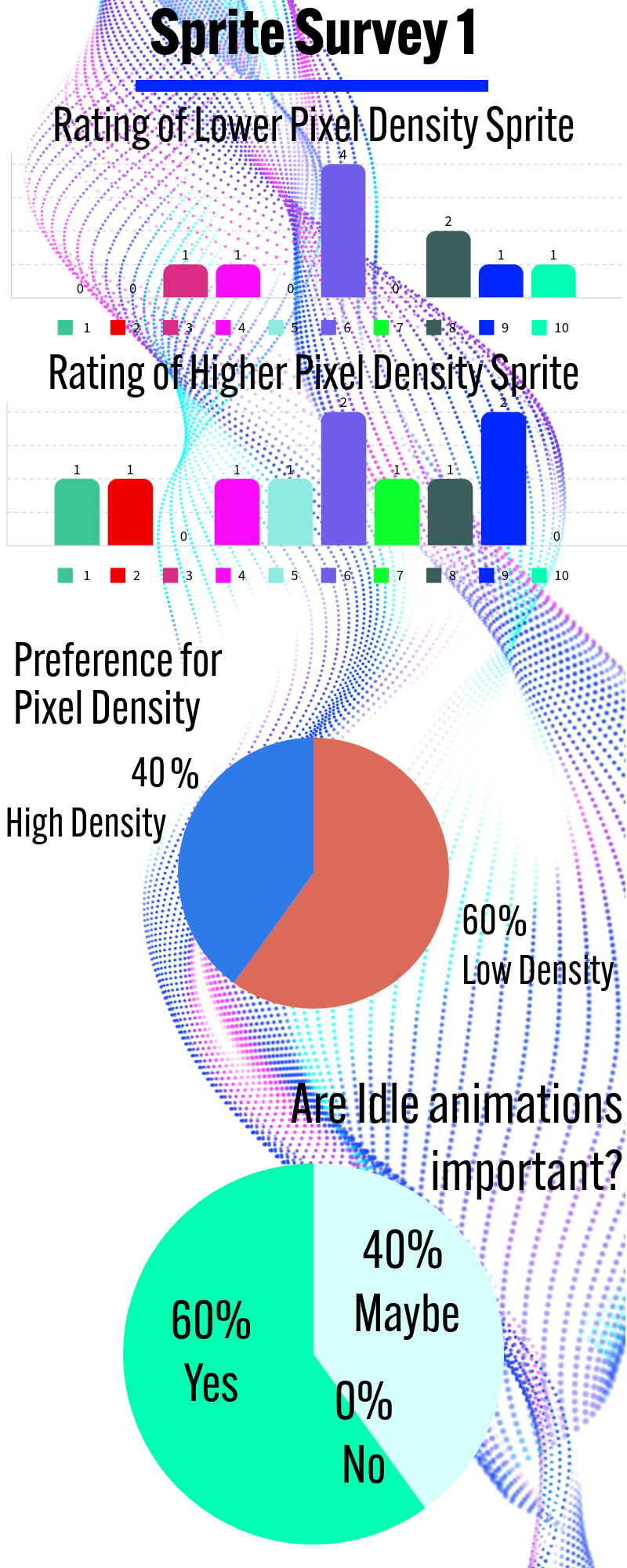
The response was not as I expected. I expected the higher pixel density sprites to be more popular but the lower density sprites got 60% of the preference vote and were higher rated overall. People did not like the eyes of the higher density, they also felt the lack of shadows on both reduced the overall appeal. There were also comments about the blocky shape and that the sprites looked stiff. They felt my style was consistent and the answer to my question about idle animation was that they were important. The questions on what 2.5D and HD-2D meant to the respondents, returned answers which were encouraging as they gave reasonable answers about the style popularised by Octopath Traveller and the Dragon Quest Remakes. When it came to what else I could do to improve, people felt the sprites were too similar, that they all looked stiff and there was a serious lack of shading on all of them. The results made me question the use of sprites in my game but I still like the idea of a 2.5D game.
I set out to overhaul my sprite work. I started this time with a skeleton for all the characters to be built off and used visual references, like Ness from Earthbound and Brendan from Pokémon, in designing the shape. After I created my skeleton I added shading to it that would then be consistent across all my sprites. This was thanks to a recommendation of a different software called Aseprite, which has a lot of useful features such as a lasso tool and complex layers. The main additional layer type I used was a multiply layer which combined with grayscale shading added the consistent shading I sought.
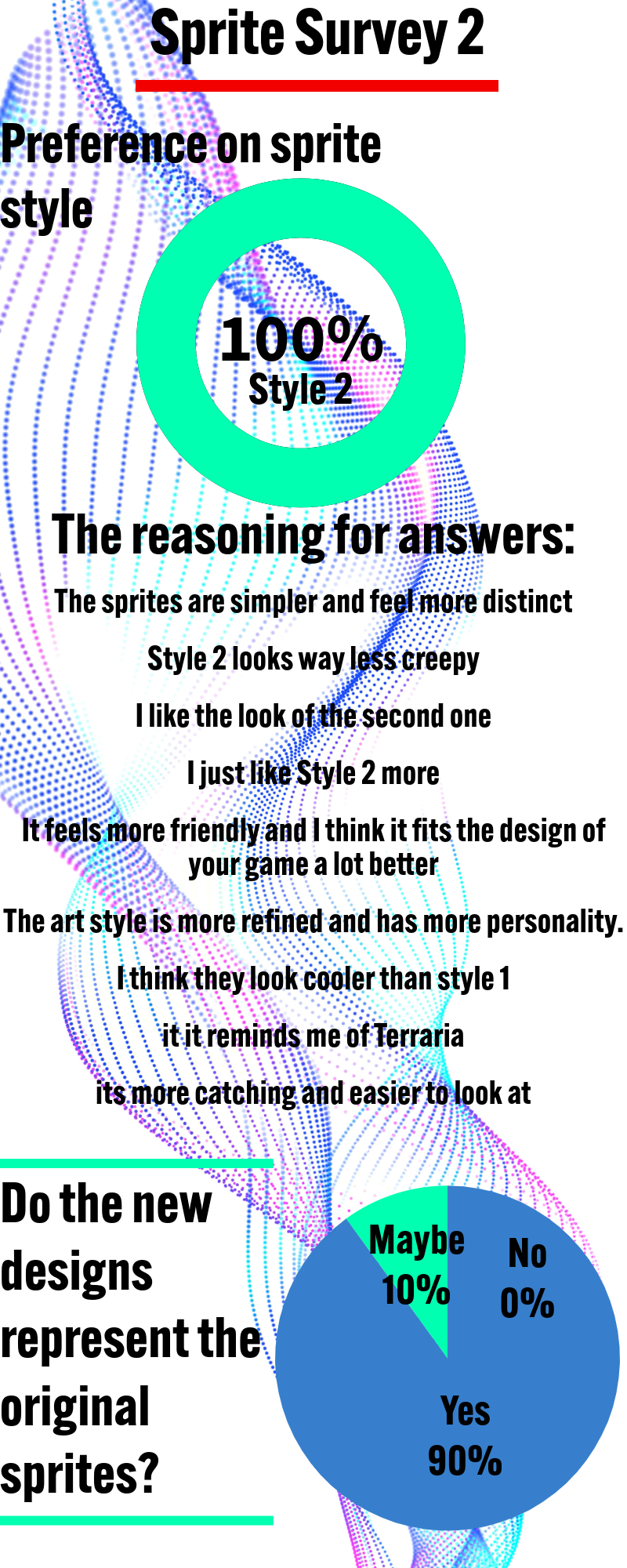
Once I had three new sprites, I created a second survey to establish if these new sprites were an improvement. I had a clear response from this survey that the new style was superior. Some responses to the question, “What is the reasoning for your answer?”, were:
- The sprites are simpler and feel more distinct,
- Style 2 looks way less creepy,
- It feels more friendly and I think it fits the design of your game a lot better,
- The art style is more refined and has more personality.
I then continued to remake my all sprites I had made prior to this new style.
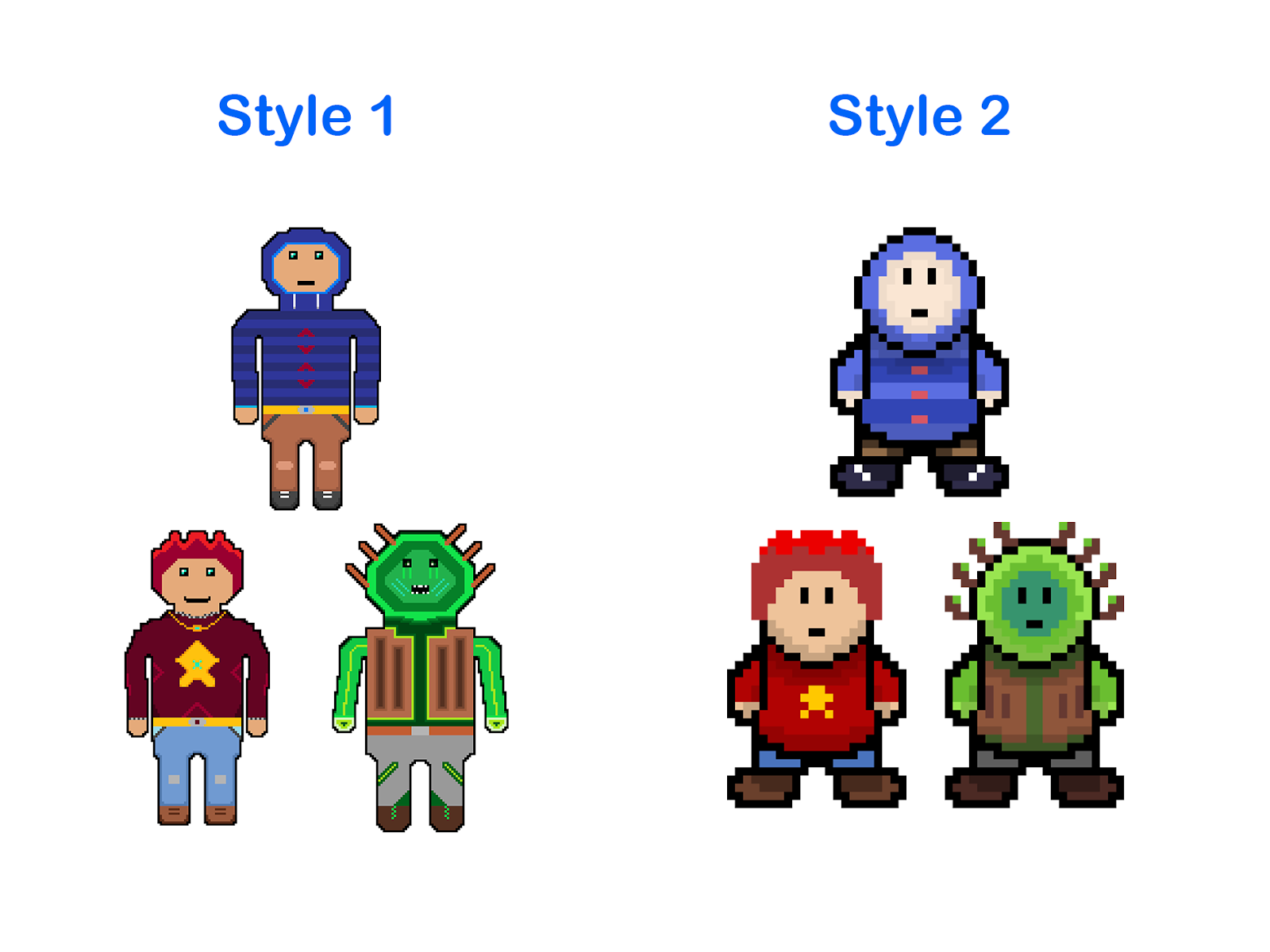
Pixel Art Survey 2 Sprite Comparison
Pokémon Super Mystery Dungeon (Primary)
Story Breakdown
I carried out primary research on the story of Pokemon Super Mystery Dungeon focusing up until the credits as the extended story, which is beyond the credits, is too long to play within the time allocated. Below I outline my experience of playing during and prior to my FMP I then discuss what I will take from my experience playing the game into my game development.
Part 1: Serene Village and School
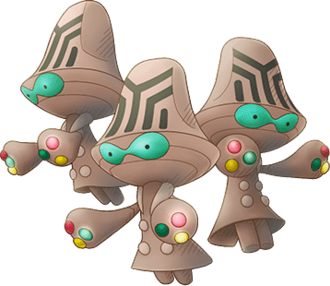
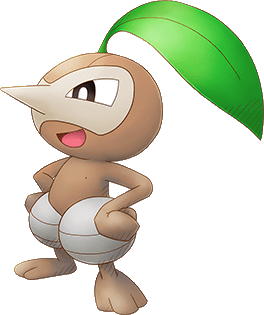
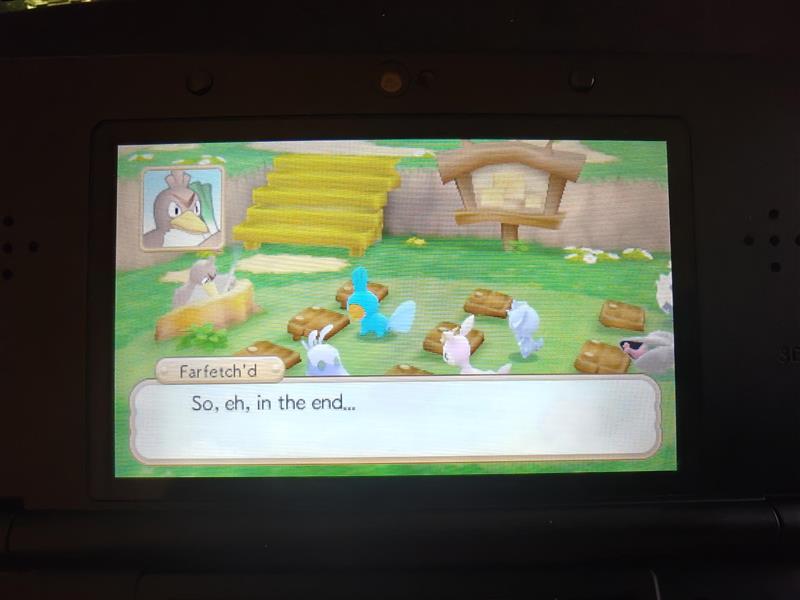
The game starts with the Player character waking up as a Pokémon having no memory apart from their name and that they were a human last time they checked. They are then attacked by a group of Beheeyem (an alien looking Pokémon) and the Player flees. The Player runs and bumps into Nuzleaf (an acorn looking Pokémon) who helps the Player escape the Beheeyem and offers the Player, who is described as being a child, a place to stay with him at Serene Village until they recover their memories.
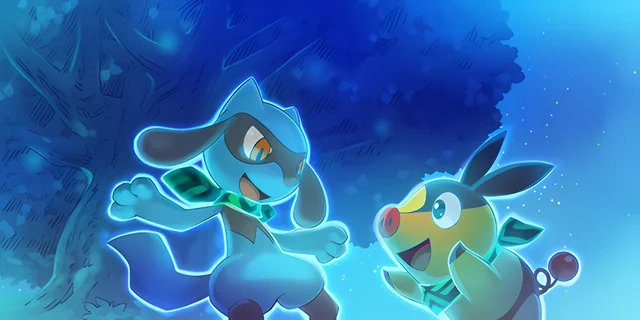
The game then introduces the Partner who is kind but mischievous and has a reputation to this effect. This is made clear shortly after the Player meets the Partner. The Player soon discovers the Partner has a great appreciation for the world and their excitement for exploring the endless unknown of the world. The Partner and Player quickly become friend and for trusting them the Partner gives one of the two scarves that the Partner was found in when they were a child.
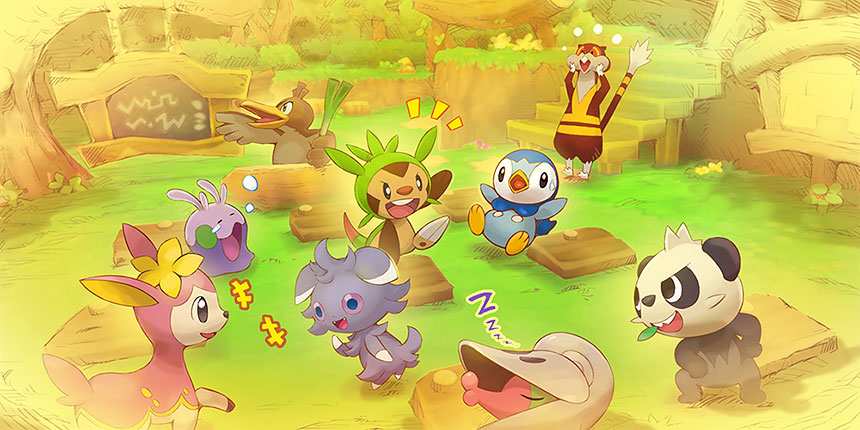
The Player then enrols at the village school where the Player meets some side characters like the school bullies: Pancham and his subordinate Shelmet who goad the Partner into dangerous situations that often drags in the Player. Deerling, Espurr and Goomy are also school children and accompany the Player and Partner at times.
After their first adventure together the Partner reveals their dream to join the Expedition Society and after many adventures together a wandering Ampharos comes to town. He seems to have completely lost his way and the Player and Partner help him multiple times. He reveals that he is a Expedition Society member and as thanks he rewards them them Junior Expedition Society Badges (as children are not allowed to join as full members, due to rules by the chief). During this arc the Partner realises how much their antics and mischievousness cause problems for those around them and recluses from the Player for a brief time but after resolving to do better they are back as a team.
During the Player’s time at Serene Village Nuzleaf gets the idea to visit the nearby Revelation Mountain as there are various legends about it about and human turned into a Pokémon. The mountain is closely guarded by the villagers except Nuzleaf as he only recently moved to Serene Village and the other villagers are suspicious of him. They try to sneak up the mountain managing to get past one gate but call it off as they reach a heavily guarded gate halfway up the mountain. After many adventures the Partner resolves to leave the village to join the Expedition Society full time and asks the Player to join with them. After sneaking off at dawn and being seen off by their school friends the Player and Partner make their way to Lively Town.



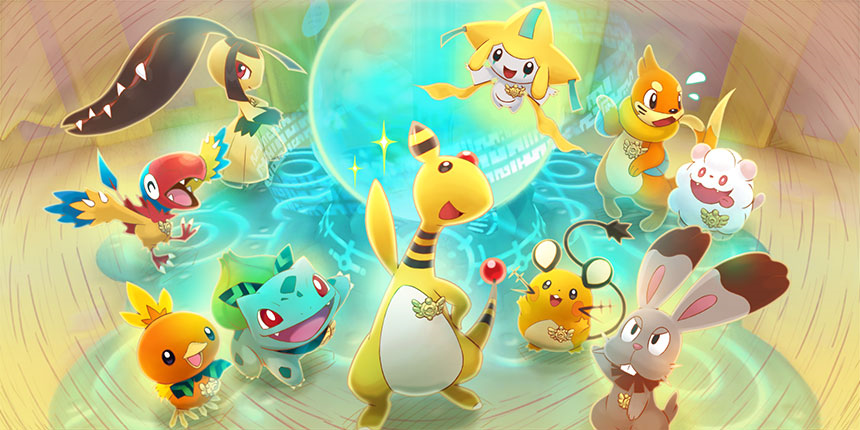

Part 2: Expedition Society
When the Player and Partner get to Lively Town the go to they Expedition Society Headquarters but find only a sleepy Jirachi who attacks them in its sleep. After they overcome Jirachi the rest of the society return, they are extremely cautious about letting children into their ranks. However, when the wandering Ampharos returns and announces that he is the leader of the society and wants them as member, the rest decide to have faith in their leaders judgement.
Over the course of their adventures the society discover that lots of Pokémon across the world are being turned to stone including powerful Pokémon of legend like Latias and Latios. The legendary beast Entei appears before the Player and Partner and accuse them of being responsible for Pokémon being turned to stone and challenge them to battle him at Fire Island Volcano. Ampharos decides that the whole society will confront Entei to prove the Player and Partner’s innocence. When the Player and Partner confront Entei they are nearly defeated but when all seems lost their scarves glow and both the Player and Partner evolve into the final evolutions and overcome Entei. They gain Entei’s trust and respect and he concedes that they are not the ones responsible for the Pokémon being turned to stone.
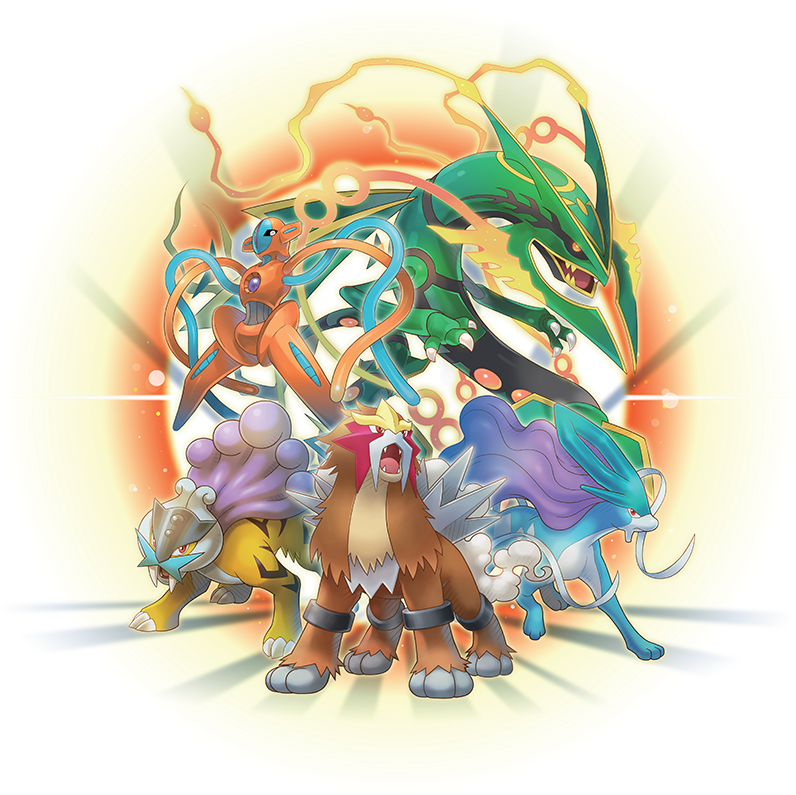
Some time after the fight, written warnings appear in Lively Town, declaring that Legendary Pokémon are the ones being targeted and the next victim will be Entei. The Society go to assist and intercept the enemy but they are too late and Entei is turned to stone. After suspicion falls on a local gangster Krookodile the society spilt, one team to investigate the transformations and one team to pursue Krookodile who has gone in the direction of Serene Village. As the Player and Partner know the lay of the land at Serene Village they are sent there in pursuit of Krookodile. The chase leads them up Revelation Mountain and they meet Nuzleaf along the way and when they reach the top they find a pyramid protecting a shining lake. The investigation team report that it is Luminous Water that revives petrified Pokémon. To everyone’s surprise the Partner can read the ancient runes on the pyramid that says only a human turned into a Pokémon can break the barrier. At this point Krookodile appears with Raikou and Suicune in pursuit and fearful of being turned to stone Nuzleaf begs the Player to break the barrier and use the water to protect them all. However just after the Player breaks the barrier Krookodile reveals that it was Nuzleaf that had told him to write the warnings. Nuzleaf’s demeanor changes, revealing himself to be the one responsible for turning Pokémon to stone. He calls Yveltal to his side and turns everyone there to stone and the investigation team are attacked by the Beheeyem and are also turned to stone. The whole world is then warned by Yveltal to stand down or be turned to stone.
Part 3: The Void
The Player and Partner awake in a desolate place called the Voidlands where the spirits of Pokémon that are turned to stone go. After some exploration they regroup with the petrified members of the Expedition Society. The group find some runes that tell the story of the Dark Matter; That it is the embodiment of the darkness and negativity that lives in all Pokémon. In an ancient times it was stopped before it could take over the Tree of Life. The group realise that the Dark Matter has returned to claim the Tree of Life and destroy the world. The group is swarmed by void shadows that capture most of the group and attempt to capture the Player but they are saved by the arrival of the Legendary Beasts; Entei, Raikou and Suicune. This group then make there way to Reverse Mountain after learning that the Door to Hope resides there, the can return them to the normal world from Voidlands. The Legendary Beasts initially appear to be trying and use the Player, Partner and Mawile (the only remaining member of the Expedition Society) to get them out of the Voidlands, exclaiming that they will be better equipped for taking down the Dark Matter. When they reach the Door of Hope and their backs are against the wall, with an insurmountable amount of void shadows between them and the Door of Hope, the legendary Beasts and Mawile sacrifice themselves to get the Player and Partner through the Door of Hope.
When the Player and Partner return the their world they quickly learn that the Luminous Water has been drained and most of Serene Village and Lively Town have been turned to stone, with only the shopkeepers being safe inside the Expedition Society Headquarters. However, one of the Beheeyem appear claiming to have broken free of the control of the Dark Matter. He claims to know where the Tree of Life is and can take the Player and Partner to it. Unfortunately, this is another trap and Nuleaf reveals that the Player had their memory when they first arrived but an attack from the Beheeyem caused the Player to lose their memory and Nuzleaf saw the opportunity to get to the Luminous Water. Just before Nuzleaf can turn the Player and Partner back to stone they are teleported away by Jirachi and Celebi.



Part 4: Tree of Life and The Dark Matter
Celebi confirms to the remains of the Expedition Society that the Dark Matter that once threatened the world in ancient times now threatens it once again. It intends to destroy the Tree of Life which will cause the planet to crash into the Sun. In the ancient past the Dark Matter was stopped by a human and a Pokémon working together. They assume from what Nuzleaf told them that the Player is the human that fought the Dark Matter in ancient times. They also learn from Celebi that the Player was sent forward in time by an ancient Pokémon, Mew, as well as the Harmony Scarves that the Player and Partner wear that are made of the Tree of Life and are the source of their evolutions in their fight against Entei
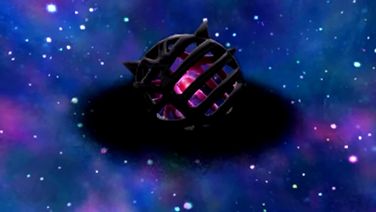
The remnants of the Society and Celebi form a group and make their way to the Tree of Life but learn that it has already mostly claimed by the Dark Matter. Nuzleaf, Beheeyem and Yvetal attack seeking to take out the group before they can interfere. When the group overcome their foes they seem to regain their minds from the evil of the Dark Matter. However, they are teleported away by the Dark Matter and the Tree of Life begins to uproot and fly into the sky. The Player and Partner are telepathically contacted by Arceus, the creator of the Universe to reveal the Ampharos had been rallying the strongest Pokémon to make a stand against the Dark Matter. With the help of all these Pokémon the Tree of Life’s ascent is slowed. Arceus teleports the Player and Partner within the Tree of Life’s roots. The Player and Partner evolve into their final evolutions again due to their proximity to the Tree of Life. As they climb the Tree of Life the Player and Partner discover and free Nuzleaf, the Beheeyem and Yvetal from the Dark Matter’s control. The Player and Partner reach the core of the Tree of Life and the physical manifestation of the Dark Matter. It pulls the Player and Partner into a pocket dimension where the first phase of combat begins.
Phase 1 ends and the Dark Matter rebuilds and gets stronger as the Player and Partner get weaker as their evolutions are taken away as the Tree of Life starts to die. The Dark Matter proceeds to petrify all the Pokémon outside of the Tree of Life. The freed enemies from earlier come back and attack the Dark Matter but are quickly turned to stone as well. As all seems lost the Player and Partner hear all the petrified Pokémon spirits call out for them not to give up. The Player is the first to get up and begins to strike the Dark Matter and then the Partner joins them repeatedly striking it until they are able to chip the Dark Matter’s armour and the Tree of Life bursts back to life and Phase 2 begins with a fanfare with very dramatic and epic music.
Once the Player and Partner have defeated the Dark Matter, before they can land the final attack the Dark Matter threatens to return once again in the far future as its power comes from the darkness living in all and that it can never be destroyed. The Partner resolves that if the Dark Matter is part of everyone then it deserves to be accepted and shatters it’s core with a final attack. The Player and Partner hear the faint whisper of the Dark Matter thanking them before fading away.
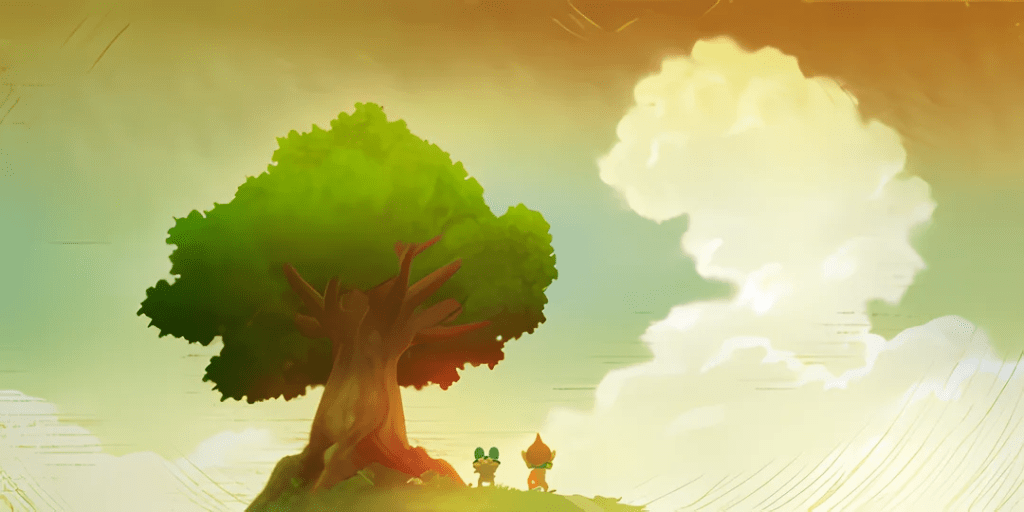
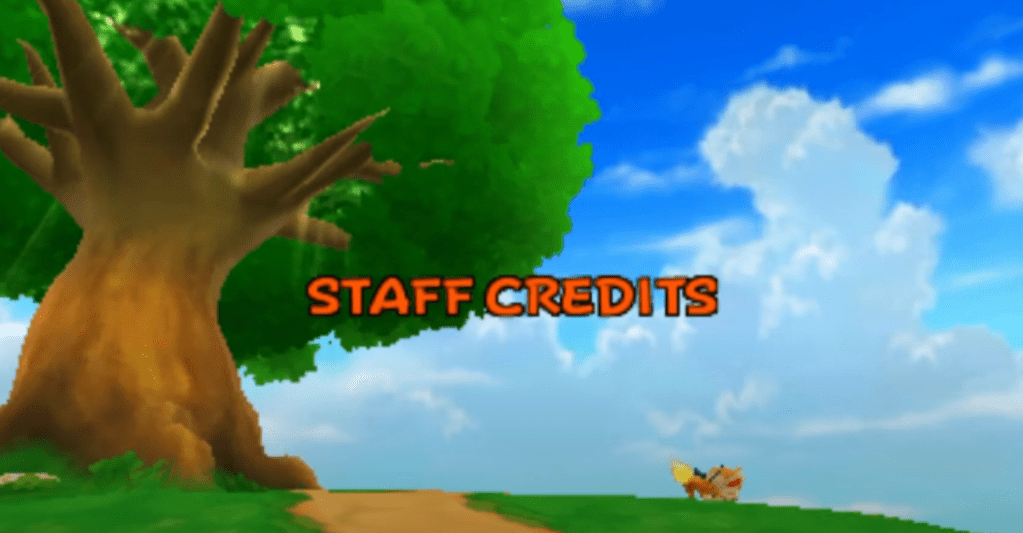
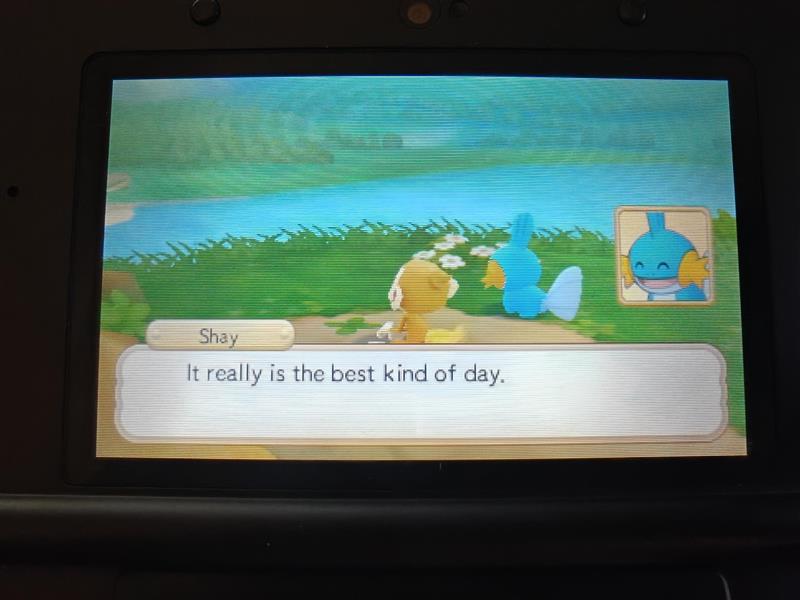
The Player and Partner wake up at the base of the Tree of Life which has returned to its place and Xerneas stands before them as the embodiment of the Tree of Life. It tells the Player and Partner that accepting the Dark Matter helped it find peace and it has now completely gone, it continues by saying that all petrified Pokémon have been restored. Returning, first to Lively Town and then to Serene Village the Player comes to the realisation that they will have to return home as they do not belong in this world as a human. The next day the Player goes to discuss this with the Partner and finds them at the tree where their friendship began. The Player finds the Partner talking with Xerneas and the Partner reveals that they are the reincarnation of Mew from ancient times who fought the Dark Matter. This means now instead of the Player having to disappear the Partner will. The Partner then rises into the sky in a ball of light and the credits roll as the Player cries.
Key Points and Takeaways
This was the most substantial and time consuming yet enjoyable part of my research, getting through a 40 hour game while taking notes and building my own game at the same time yet I wouldn’t have played any other game. Every PokémonMystery Dungeon game is an emotional rollercoaster with key lessons to learn along the way. In each of the games before Super Mystery Dungeon, at the end the game the Player disappears due to them being a human or from a deleted timeline. In Super Mystery Dungeon the writers of the game knows you as the Player expect that you will disappear and flips it making the ending sting all the more. I would love my game to reflect all the amazing storytelling in this game and the series but I can only achieve so much in two months. I will attempt to put these focus points from playing Pokémon Super Mystery Dungeon into my game:
- Build the player character’s emotional journey, to this end I will put them at a low point at the start then give them more power until they are able to defeat their father, the boss.
- Surround them with friends, this will be in the form of the Meadow Village population who will all support the Player in different ways, similar to how the Player in Pokémon Super Mystery Dungeon has their Partner and the Expedition Society.
- Redeem the boss if I have time. A key part of the story of Pokémon Super Mystery Dungeon is the letting go of the darkness which actually saves the day in the end. I want to do this for my boss by having either a greater evil or the boss repents after his child strikes him down.

Final Boss Analysis
Dark Matter
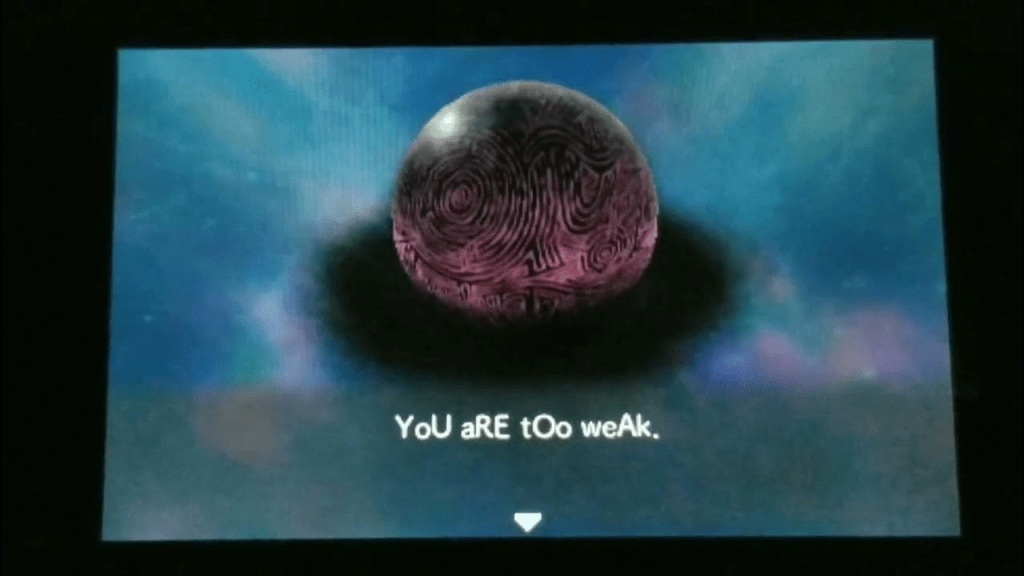
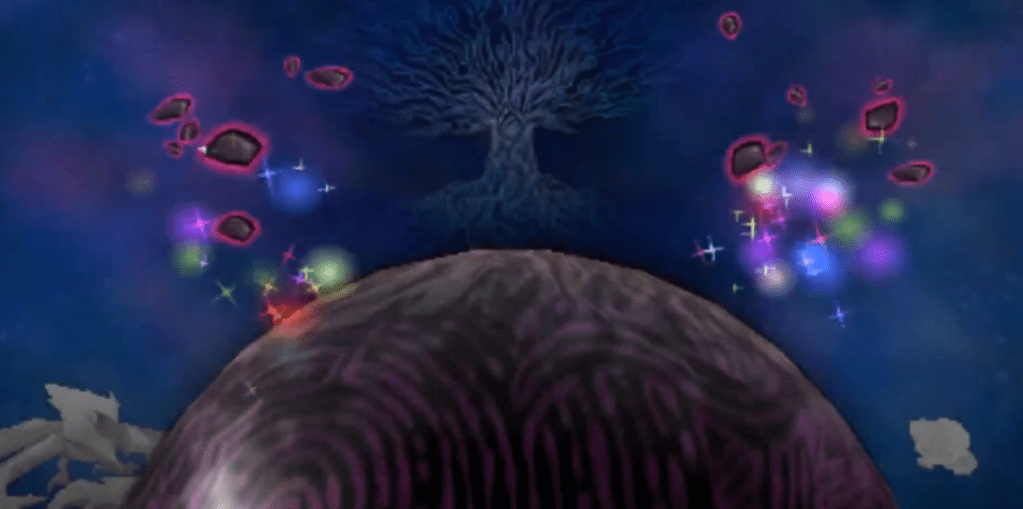
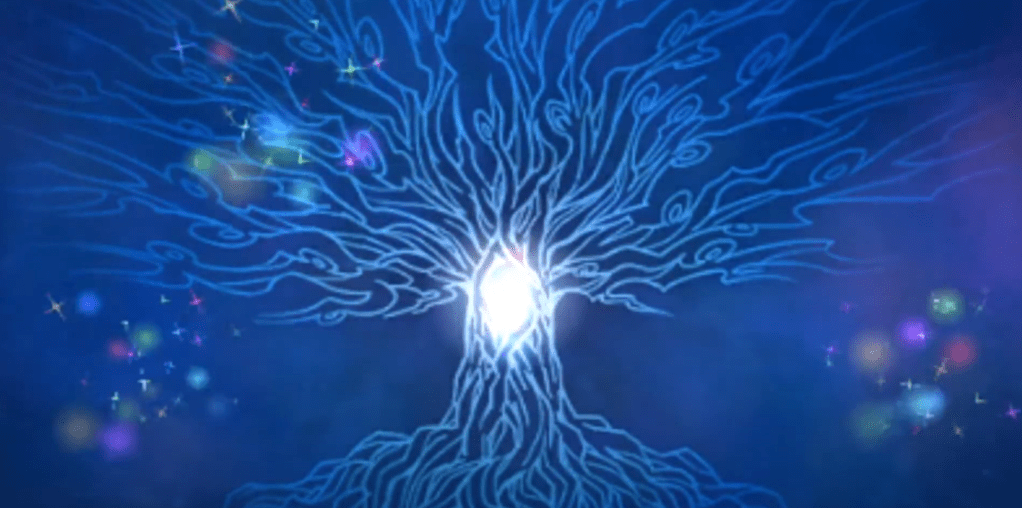
I set out to analyse this boss’ attack patterns and what attacks it had. This would give me more of an idea on how my boss could attack. I will now lay out what I learnt and how it will help me build my boss. I played the game myself however, for this section I used a YouTube video (PMD Gang, 2021) to refresh my memory of the fight when writing out this research and a Bulbapedia article (Bulbapedia Contributors, 2024) to ensure I saw all attacks and provided accurate information.
Dark Matter has two phases, for phase 1 the Player and Partner are their fully evolved forms so their damage output is a lot higher than usual.
- Charged Spikes in Phase 1 – Dark Matter charges up for five turns, then unleashes countless dark spikes around the battlefield, inflicting massive damage on the Player and Partner if it hits. The area affected by the spikes will be indicated by red tiles on the battlefield. There are clear tiles that the Player must move into to avoid damage, the Partner will automatically move into one of these spaces. This version is only used in its first phase.
- Charged Spikes in Phase 2 – Almost identical to Charged Spikes in Phase 1, the difference is only the charge up time, it goes down to three turns to charge up before it attacks.
- Swinging arm – The Dark Matter creates an arm like appendage of dark energy, it then swings this arm attacking the area in front of it. This attack depletes by roughly a quarter, the health of the Player and or Partner if they are in the attack’s radius.
- Animosity – Dark Matter uses “animosity” against it’s target, surrounding a target with its dark energy. It will either inflict a random status condition or reduce a random statistic, sometimes one of each, on the Player or Partner.
- Take aim and Strike – The Dark Matter swirls dark energy around itself, then uses it to strike. it deals damage of about a third of the Player or Partner’s health, whichever character is closest.
- Blown away – when the health dips below certain amounts text will read “Dark Matter blew away its surroundings!”, and the Dark Matter will send anyone nearby it flying away. This only happens in the second phase.
In Phase 2 the damage output of the Dark Matter is slightly higher while the damage output of Player and Partner is significantly lower due to them being in their base forms. This leads to a longer fight with stages of the fight indicated by the sphere protecting the Dark Matter’s core being broken.
What did I take from this:
- Phases of a boss battle are key to make the game feel like it is scaling.
- A range of attacks helps, especially if they fit the boss’ theme, for the Dark Matter all his attacks utilise his dark energy.
- A static boss needs ways to manage the player so they can’t just sit on top of them and repeatedly attack, which can become boring.
- A good theme to the battle needed to engage the player.
Focus Group (Primary)
For a part of my primary research I wanted to run a focus group. To this end I asked some students from a local college to participate in my research. I had planned 4 meetings of the group so they could give me feedback on my idea, play my game during development, the final version and give me feedback on how I should develop my pitch.
Meeting 1 (28th March 2025)
Initially I set out my aims and ideas for my game for to fully understand my FMP and how they could contribute. I started my research by asking about what they thought of my ideas and what drew them to game pitches. These are the discussion points I posed and the answers I received:
1. What makes games pitches interesting?
A general answer given was that identifiable brands and eye catching gameplay help. Some said they were typically drawn to historical settings such as the Assassin’s Creed games and mentioned the movement of the game, such as parkour. They all mentioned showing key characters and story elements.
2. What did they think of my game’s story ideas and could they add to them?
They all liked the story outline I provided, one said it was a nice idea to have an anxious main character, they added that nice to see them manage and overcome their anxiety It was said by multiple participants that it was important for a story to stand out in modern climates where there is a clamour for attention from various game company making it hard for an indie developer to stand out.
3. Their thoughts on mechanic ideas?
They loved limiting the player’s vision in later levels and they suggested having the player’s light replenished by defeating enemies. It was mentioned that traps in the later dungeon levels would be interesting such as arrows to that slow the player. There was a general consensus that introducing a element of strategy would really help and make the game more engaging. They suggested enemy loot drops and rewards for exploring off the beaten path. A suggestion arose of a mini boss after the cave level to break up the levels, I liked this idea although with the time frame I will put it on a nice to have list. They wanted to see the boss platform without any barriers around the edge so the player had the risk of falling off.
4. Their thoughts on my environment moodboards?
Most echoed my own thoughts about how I should limit light in the cave due to the lack of natural light in such caves but agreed that it would be nice to have some little lights in the cave but not enough to see without the player’s light. They further mentioned that if I did a mini boss it should take place at a lake, similar to the one I had on the cave moodboard, to limit the players movement and make the enemy more threatening.
Meeting 2 & 3 (2nd & 9th May 2025)
I have had to compress the subsequent visits into two rather than three meetings as I had various scheduling conflicts with members of the group so we were unable to meet until two weeks before the assignment was due.
In these meetings I had all participants played my game and asked them for feedback. I had planned out my questions prior to the meetings as I wanted to gain consistent feedback.
1. Does my final product reflect my original idea?
The consensus from the group was that the final product was very much as I had presented in my idea to them but “with lots of nice added touches”.
2. What could I have done differently?
They found that The Land that Sleeps ran very poorly and it really “broke the immersion” of the game. They said that more features to the maps would have helped make the long corridors more interesting.
3. Was there any specific area that the group liked or disliked?
Some praised the lighting in Lumière Cave and how “it felt like pac-man at times”. Another participant enjoyed the boss fight as they felt gaining the boons, which boosted their magic, in previous levels made the boss fight and their victory feel more earned in the end. Again they mentioned The Land that Sleeps’ poor performance as a significant issue with the game.
4. What do you think of my ideas for further additions to the game after FMP i.e. more of their ideas from the first meet such as arrows to slow the player and a mini boss, with additional from other feedback including controller support?
The idea of a controller mode appealed as they said the game needed it for inclusivity. The liked that I hadn’t forgotten their ideas and looked forward to seeing more of their ideas included.
5. Any opinions on changes I made from my original plan i.e. change of pixel art?
They agreed with the survey and my own feelings that the new pixel art was a significant improvement and fit the game’s theme of exploration; others mentioned that they all looked a lot friendlier.
6. Any further feedback?
They said they were impressed in what I was able to achieve on my own and felt the game hit the spot of being immersive and challenging without being too much, although many said that it would have been interesting to see the game at more points during the development, this would have been ideal but with the project straddling the Easter holidays my options were limited.
My Feelings
The focus group was good to help me test out ideas and to work out what was important to an audience. I enjoyed bouncing off them for little additions to my game and despite not being able to include all they asked for I felt it was important to know what was desirable. They reassured me of my ideas and helped me come to a more rounded idea for my game. Although it was disappointing to only have limited meetings of the group it did help and guided my early production and any other improvements I make after the FMP is over.
Transforms in Unreal Engine (Primary & Secondary)
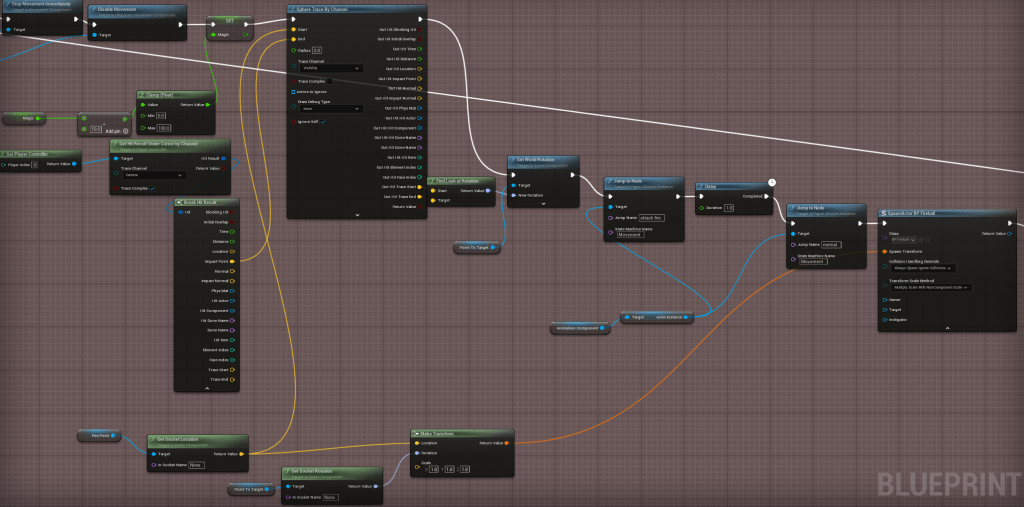
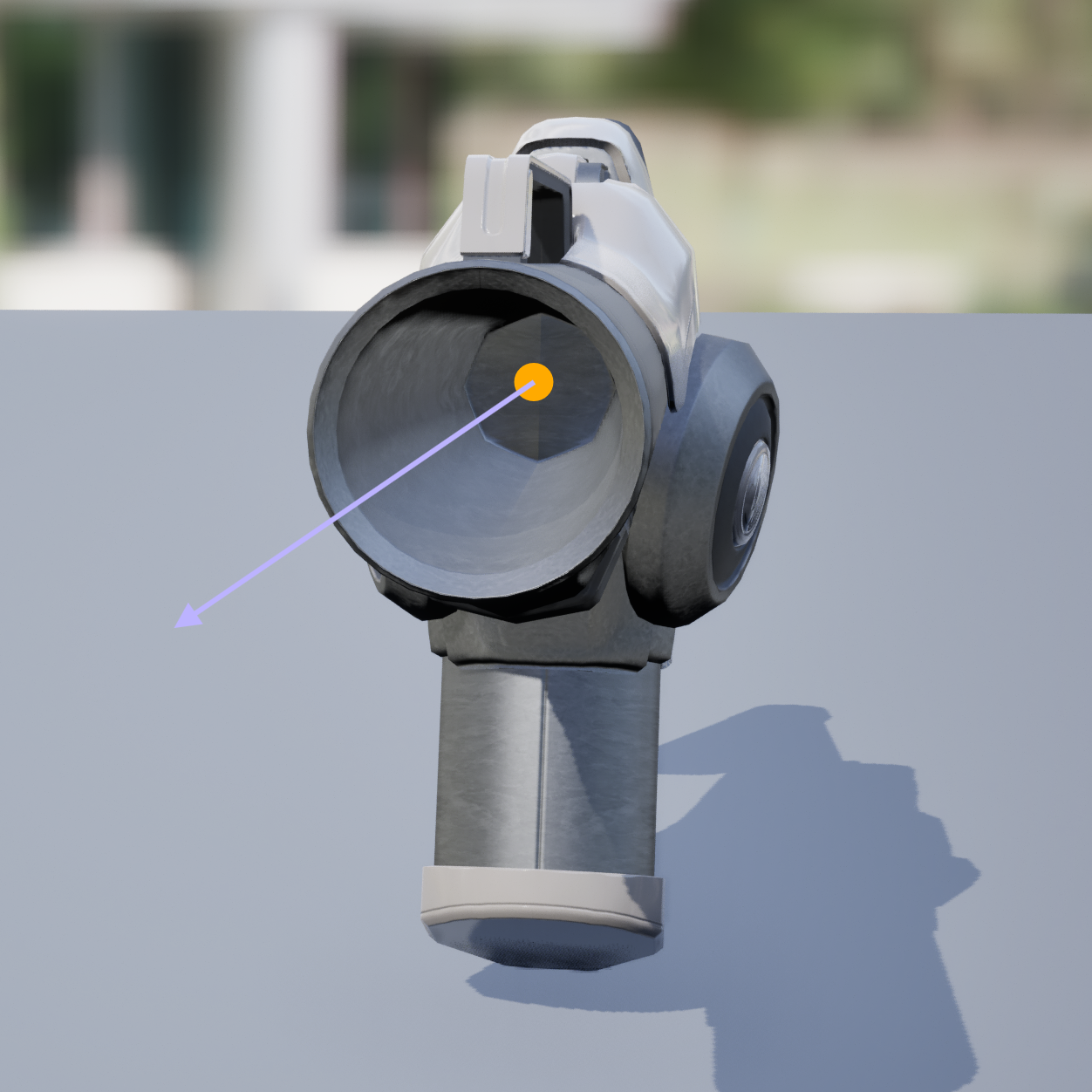
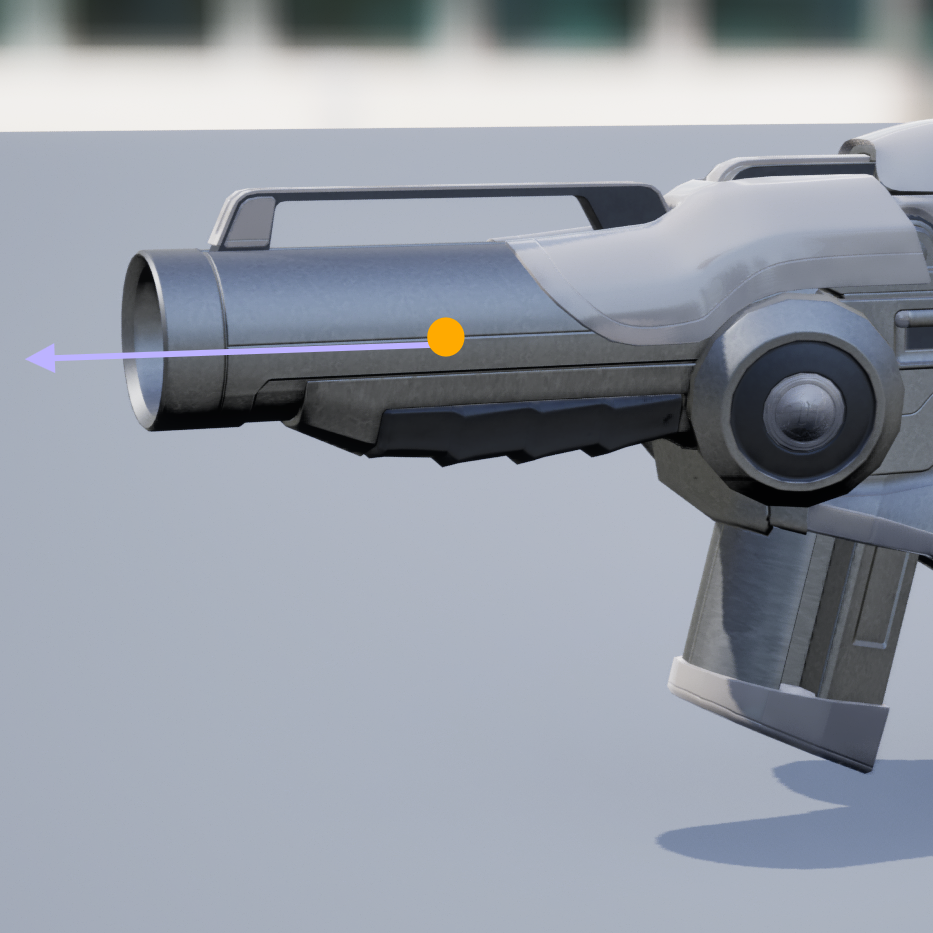
Early in the project I was having difficulties with making my fireballs fire towards my mouse click, see blog post. I looked at how Unreal uses “transforms”, that can be broken down into location (start point), rotation and scale, for projectiles. To do this I looked at the First Person template for Unreal Engine 5 and Unreal Documentation. In the Unreal template, I mainly looked a the projectile spawn logic of the weapon component, which uses the socket of the base of the barrel of the gun (orange dot on images to right). This is the location for the projectile to spawn from. It then uses the camera’s rotation for the trajectory of the projectile. For my problem, I know where my spawn location is (above my character’s head), I just needed to find out how to make my rotation as my game is top down not first person and I cannot use the camera’s rotation as in the template.
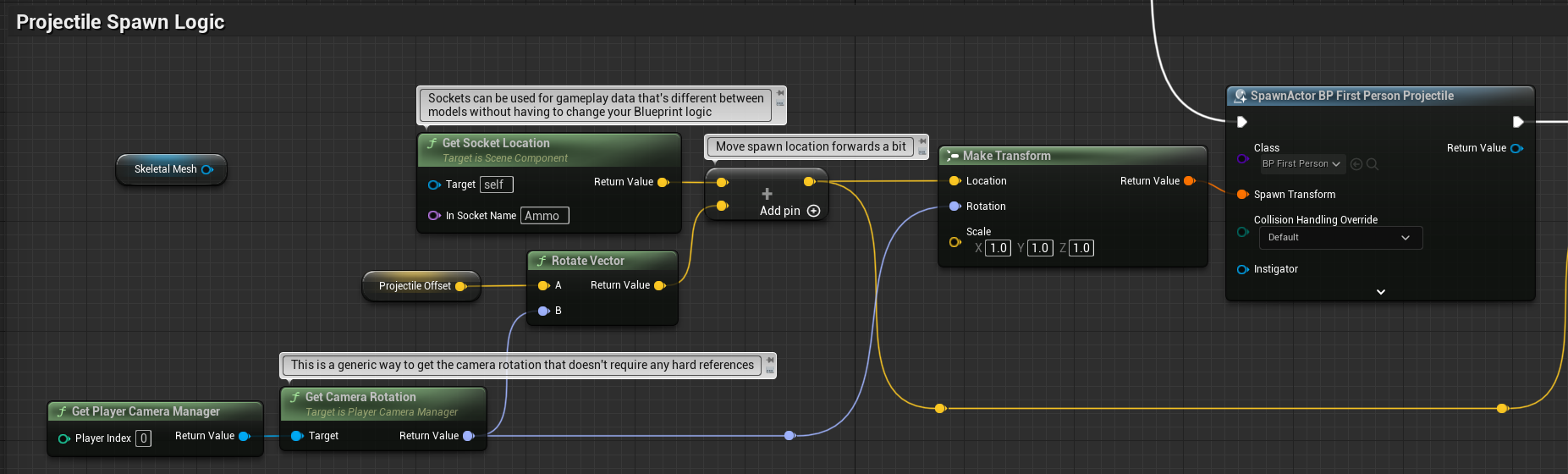
It led me down the thought process of gun barrels and how rifling ensures the bullet hits the target. The barrel creates the rotation. I then considered what could be my barrel and how I could set its direction. It was suggested that I look into line traces on the Unreal documentation and work out how I could use the result to make my fireballs function as intended.
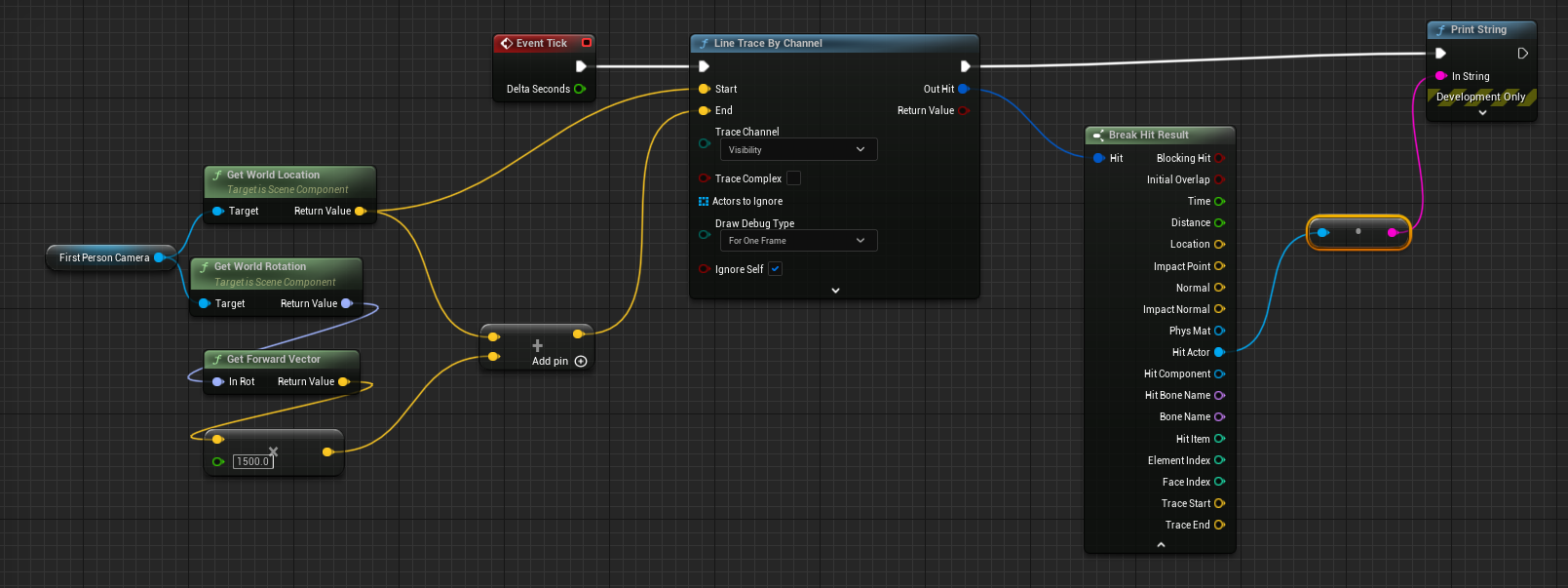
The information I learnt here is that line traces can be used to find objects on a line but I realised that if I break the “out hit” pin the data I gain from this includes “trace start” vector and “trace end” vector. I remembered that two vectors can be used to find a “look at rotation”. I created an arrow on my player character to be the “barrel” and used the “look at rotation” of a line trace from the fireball spawn point and the “impact point” of the mouse to set the rotation of the arrow. Then I used the rotation of the arrow for the spawn’s “rotation” of the projectile. This is what solved my problem with my fireball transforms.
Fire Emblem Engage’s Character Design (Primary & Secondary)


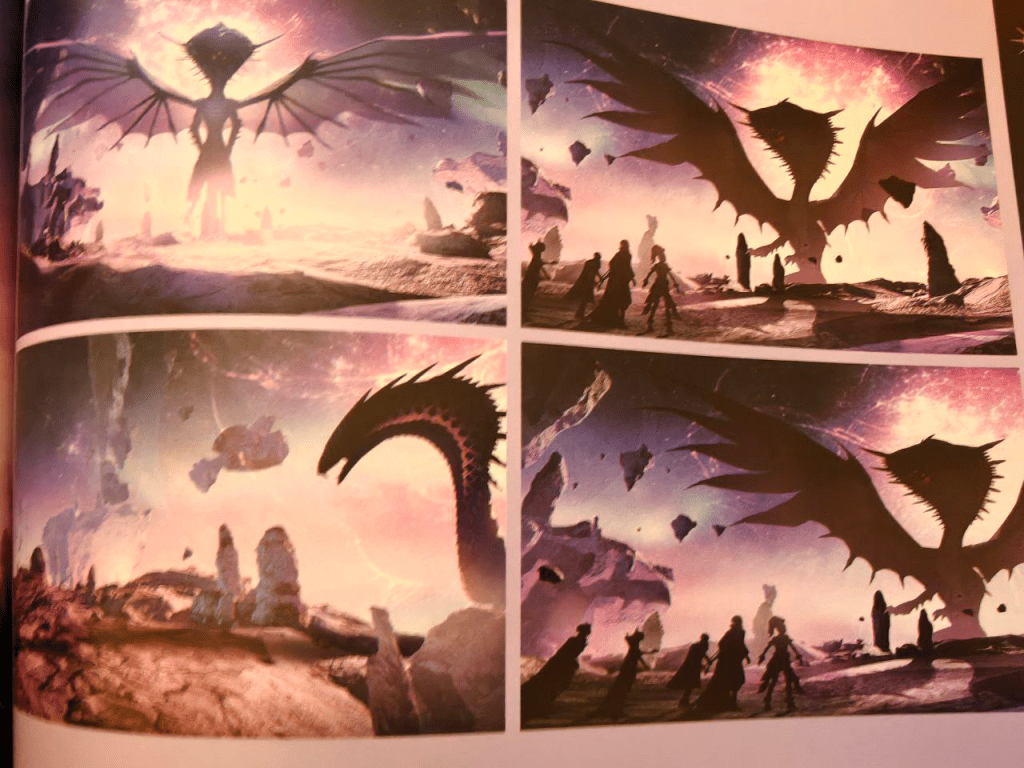
I was looking for character inspiration when designing the pixel art characters for my game. I looked around my room for inspiration and noticed my Divine Edition of Fire Emblem Engage sitting atop my wardrobe. I remembered it came with an artbook of the game art. I got it down and opened it and found the artbook. As I turned through the pages I found art I was immensely drawn to the art of the villian, Sombron I loved the elegance of his look but it had a brutalistic look to it as well with the spikes and sharp edges to his armour. I also liked the look of the outrealm where you fight him in the endgame, a mysterious land surrounded by floating rocks with a background that looks like a supernova.
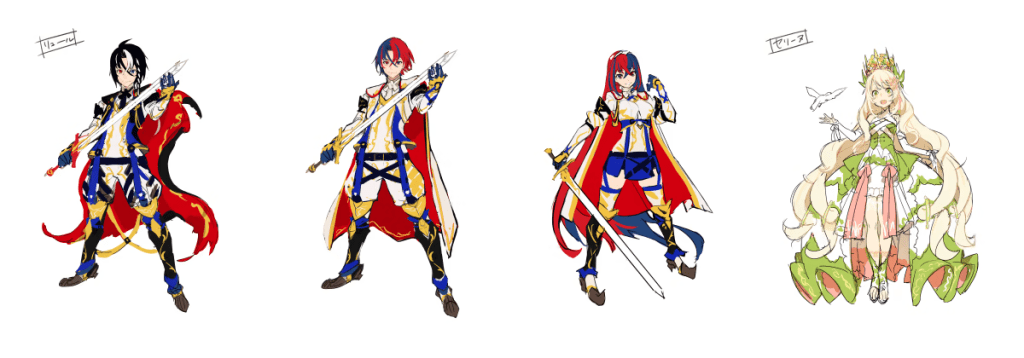
I thought to step back and look at whether the artist had changed from the previous game, Fire Emblem Three Houses, as there was such a distinct style change between that and Engage. I found an Ask the Developer article on Nintendo of America’s news site where the first question on the second part of the interview was about the new art direction. They mentioned that the art designer was Mika Pikazo, the article describes her as “An illustrator born in Tokyo” and that she is “interested in South American video technology, advertising design and music.” (Nintendo of America, 2023). The developers discuss about how they wanted to have broad appeal with the art style for Engage especially to drawn in younger players. They discuss how they were drawn to Mika’s art saying “Mika Pikazo-san’s drawings were colorful, vivid, and really popped!” (Nintendo of America, 2023). I have to agree with them I love her use of colour to make characters pop and stand out. They then show the interviewer the rough designs from her first draft. Her style is clear as the bold colour usage on a first draft, which is usually just pencil with light colouring sometimes with options of colours. It is clear her artistic style was not interfered with in the final game as the centre designs for Alear (the main character) are very similar to the final designs, see below.
To create my own style yet taking inspiration from Mika Pikazo I will have clear colours for each character and make the colours bold. I also want to make character have inherent personality in their designs especially the main character, I want the player to feel the anxiety this young man is going through.
What makes a Dungeon Crawler good? (Secondary)
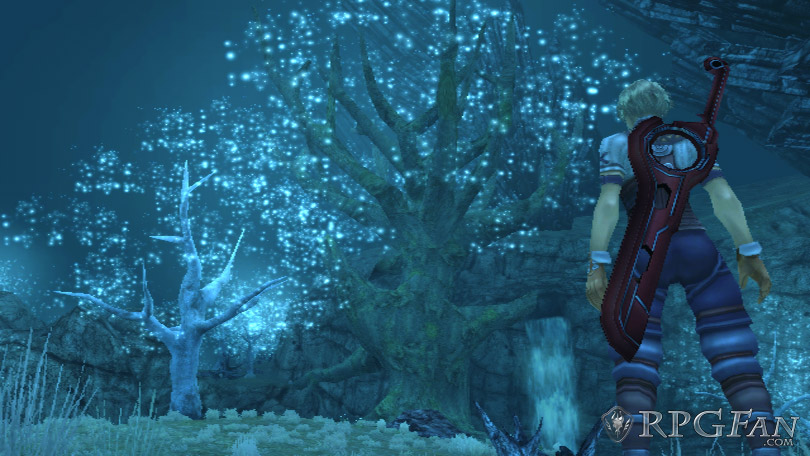
I wanted to examine what makes a good dungeon crawling game/level, to do this I looked at articles about what people find appealing within this style of game. I started with an article on RPGFan.com, it named key points that help the dungeons stay interesting. The author starts of by talking about the presentation and atmosphere of the dungeon saying, “When it comes to presentation and atmosphere, I find that the best RPG dungeons include at least some of the following: interesting locations, inspired visual styles, great sound design, and themes that play into your interpretation of the dungeon.” (Louis, 2021). The author talks through his appreciation of Xenoblade Chronicles and how despite it not having traditional dungeons it still has a good dungeon feel to it. They discussed about how when you first arrive in a swamp area the colours are bland but when the sun sets the swamp blossoms to life and it gets lit up by an ethereal light. The author talks a little about Undertale, about how for a game with a lot more limited visuals it uses colour and music to give areas different atmospheres.
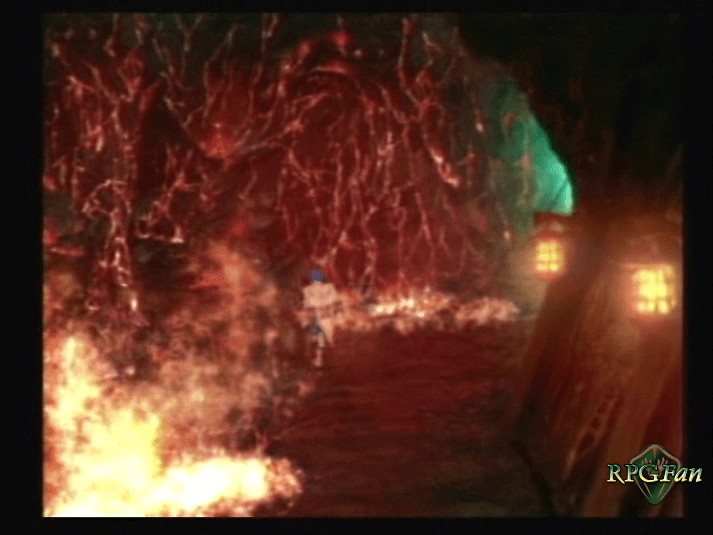
The next section is on memorable moments, he clarifies that these moments are different to atmosphere as the dungeon itself can be memorable or something inside can provide that sticking point in your memory. They mention a game called Baten Kaitos: Eternal Wings and the Lost Ocean and how it has one of their favourite moments. “The Lava Caves themselves are pretty forgettable, but the story beats that occur there seal it in my memory.” (Louis, 2021).
The author turns the readers attention to puzzles and how solving a complex puzzle can be one of the most exiting part of a game. “One wrong move and you can get lost in a winding maze of corridors.” (Louis, 2021). They explain that their favourite example of this is Golden Sun, how in that game you can utilise your Psynergy (the game’s magic system) to solve the dungeon’s puzzle in many different ways.
The author next discusses optional routes, loot or side objectives, how games hiding easter eggs and interesting features off the beaten path can be awesome to find and provide incentive for deeper exploration. For an example the author offers Shinra Mansion from Final Fantasy VII. “By exploring the dungeon, solving its puzzles, and beating its boss, you can earn an additional party member, Vincent Valentine, who has a twisted backstory you’ll also miss out on if you don’t explore the mansion.” (Louis, 2021)
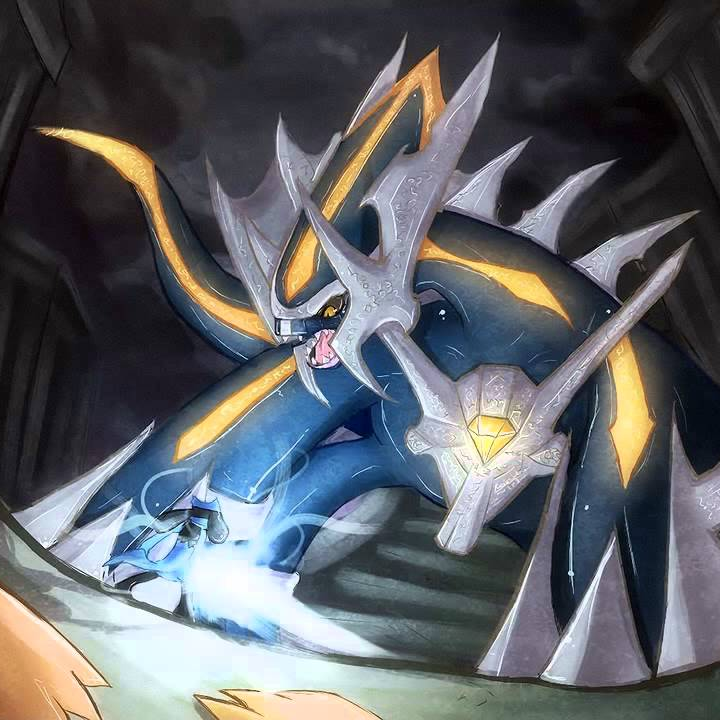
The final section is about “Tough as Nails Boss Fights”, as the author says that “a challenging boss fight can make or break your impression of an otherwise solid dungeon in many ways.” (Louis, 2021). I agree with them as I offer Temporal Tower as an example here; a wonderful dungeon, with an excellent theme followed up with Dialga’s Fight to the Finish. This boss fight was so hard and intimidating on the first attempt as Dialga’s abilities, especially Roar of Time, send an unprepared team packing.
The key takeaways I have here are:
- I need an atmosphere that goes with my dungeon’s vibe. I feel the key to this will be the music I use for each dungeon as I feel sound design does half as much work as visual design can and can complement it. The idea that you can close your eyes and still imagine you are there with just the sound of your environment is something I love in games.
- I need to have one complex puzzle between my three levels and I feel my fog idea will fit the bill. It is hard but also relies on the memory of the player to get through.
- I hope to have things off the beaten path so exploring dungeons doesn’t become boring. This will mainly be an extension task as I feel it is not essential to getting my game finished.
- I will have a tough boss fight, I want Arganoth, the boss, to be a memorable and engaging to not lose the player’s attention. I want to encourage movement and planning from the player so a clever player can win without taking damage.
Environmental Research
Needwood Forest, Staffordshire, England (Primary)
photos from Needwood Forest in March taken by Family


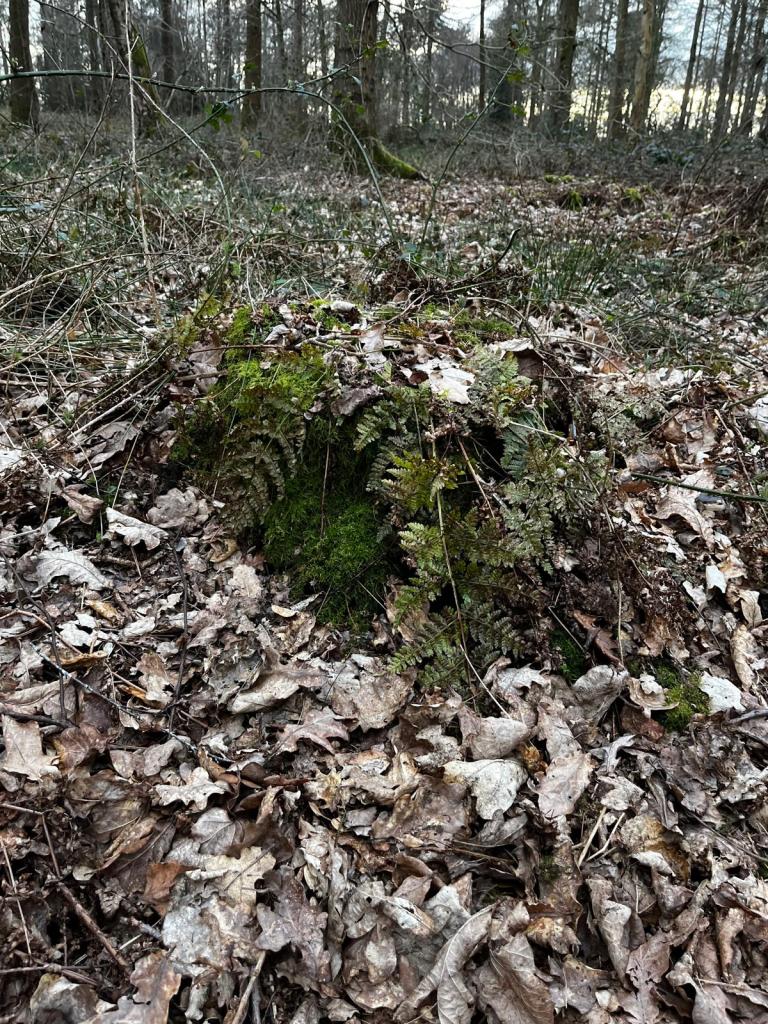


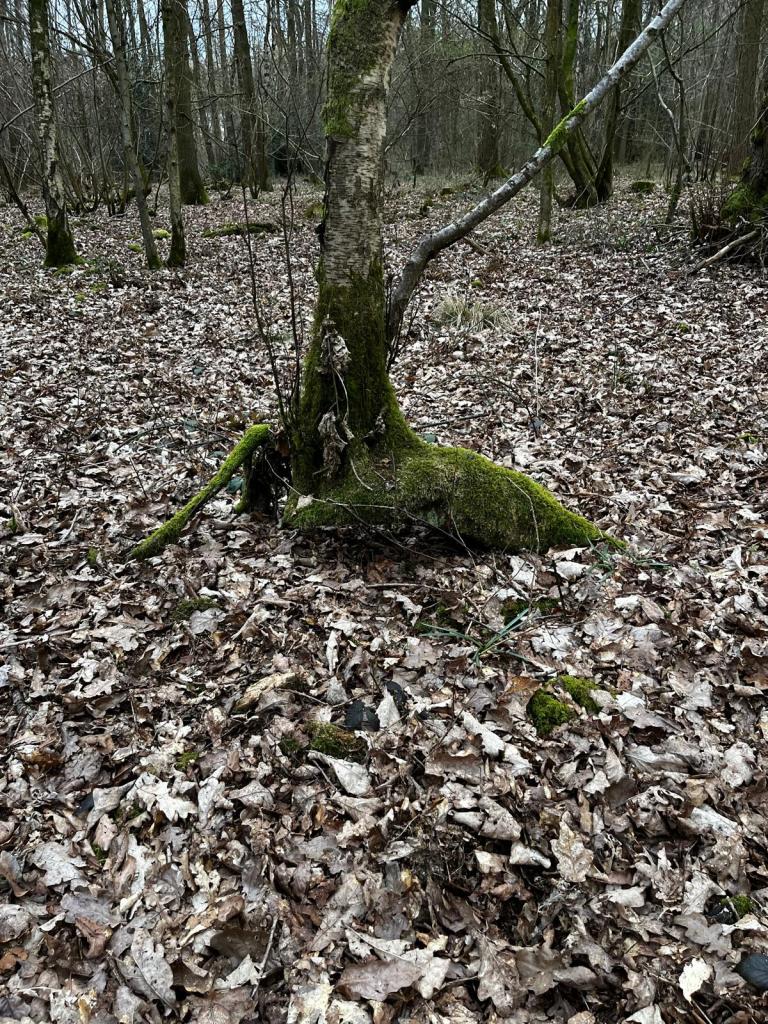
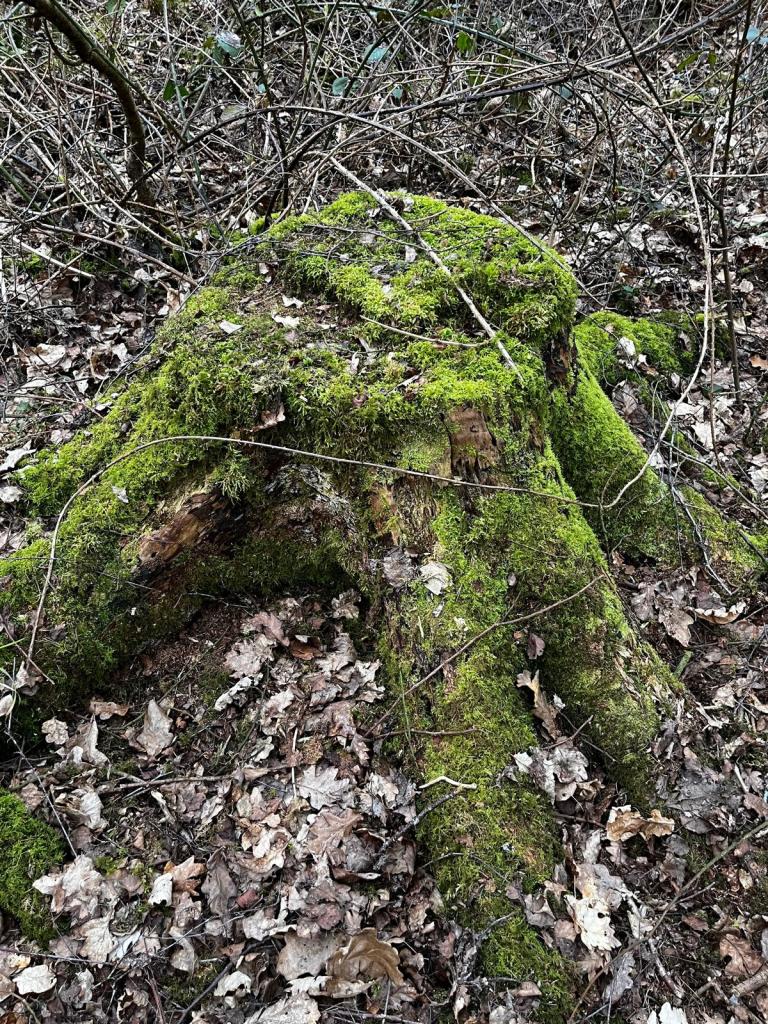
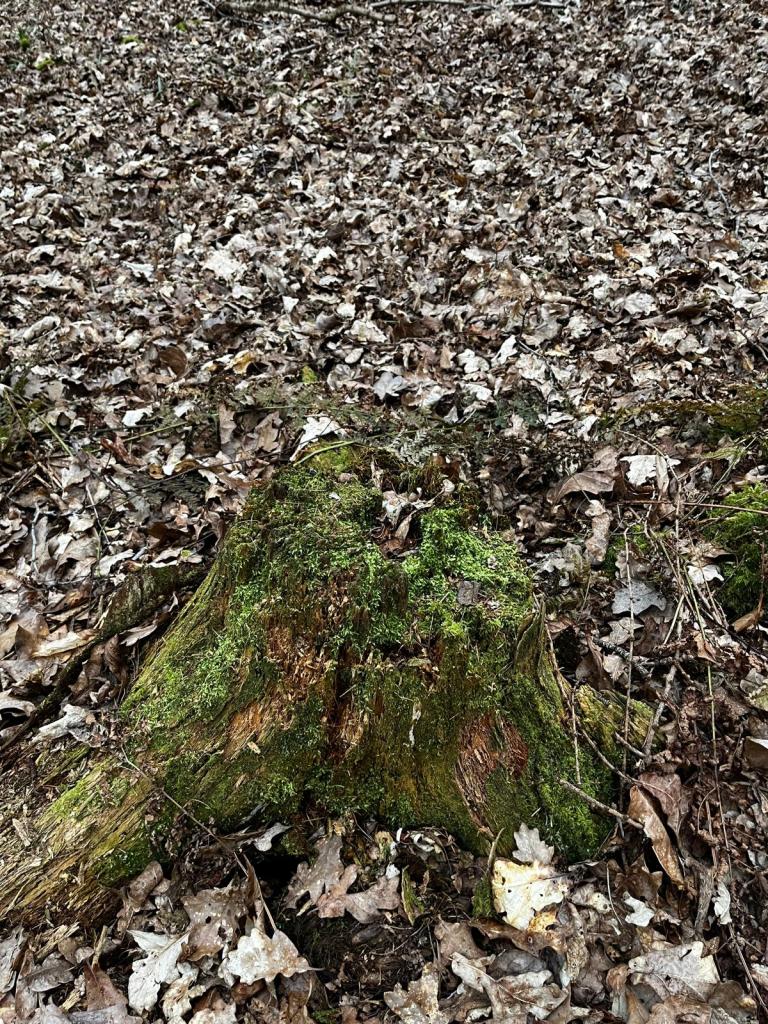

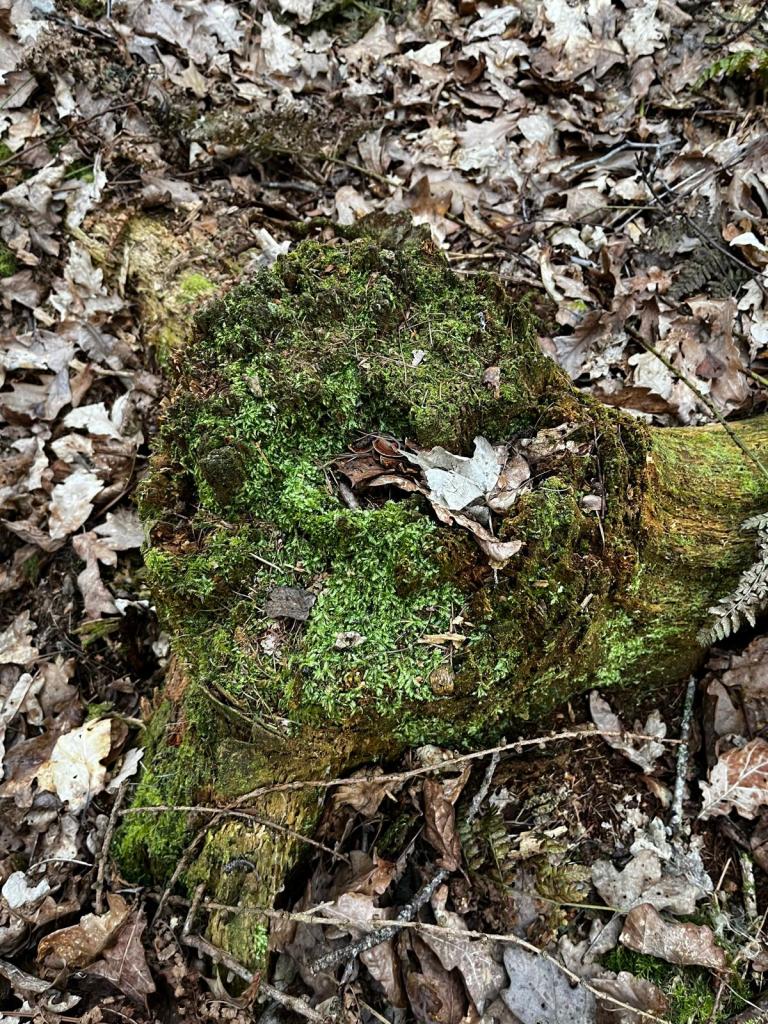


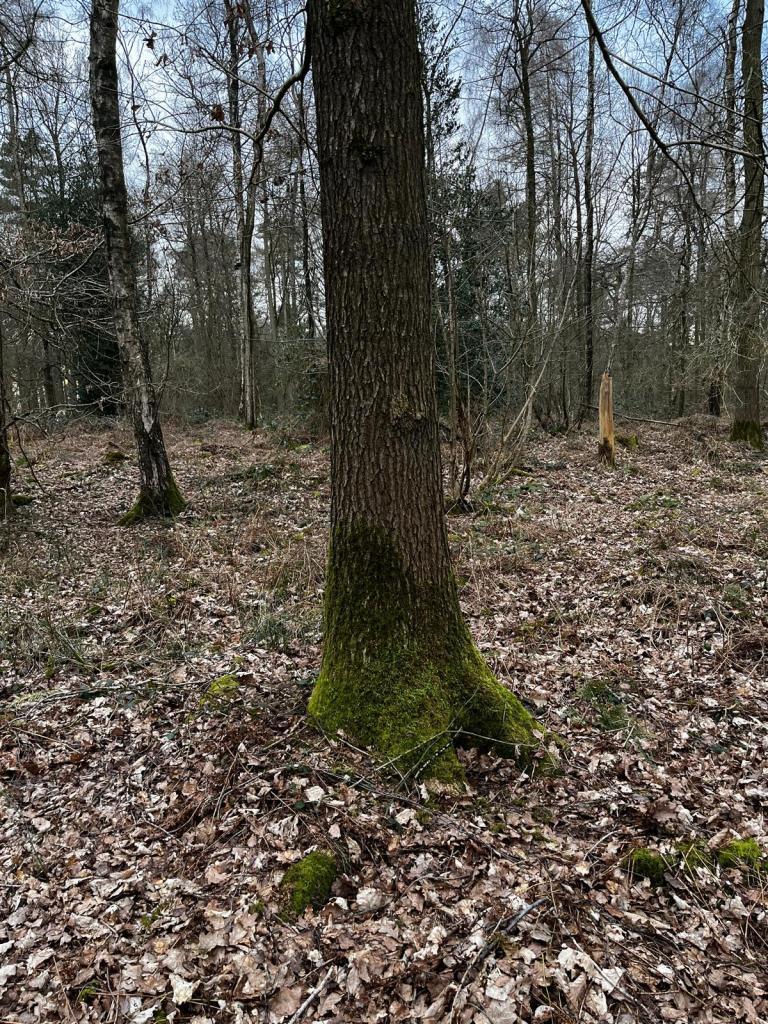

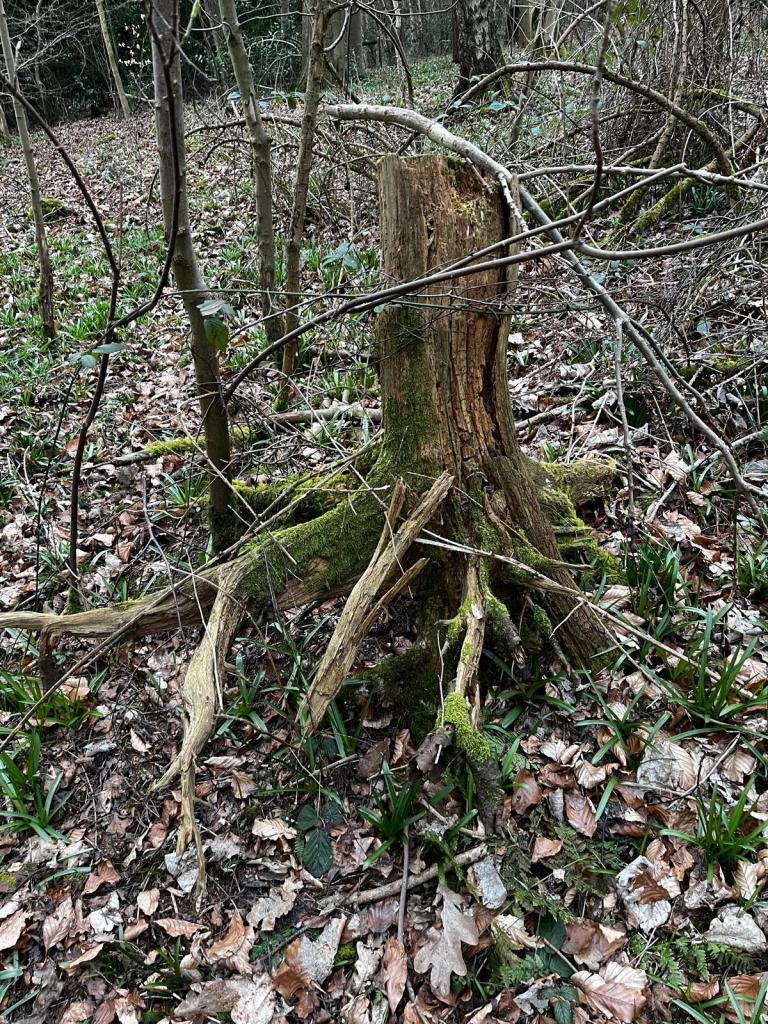


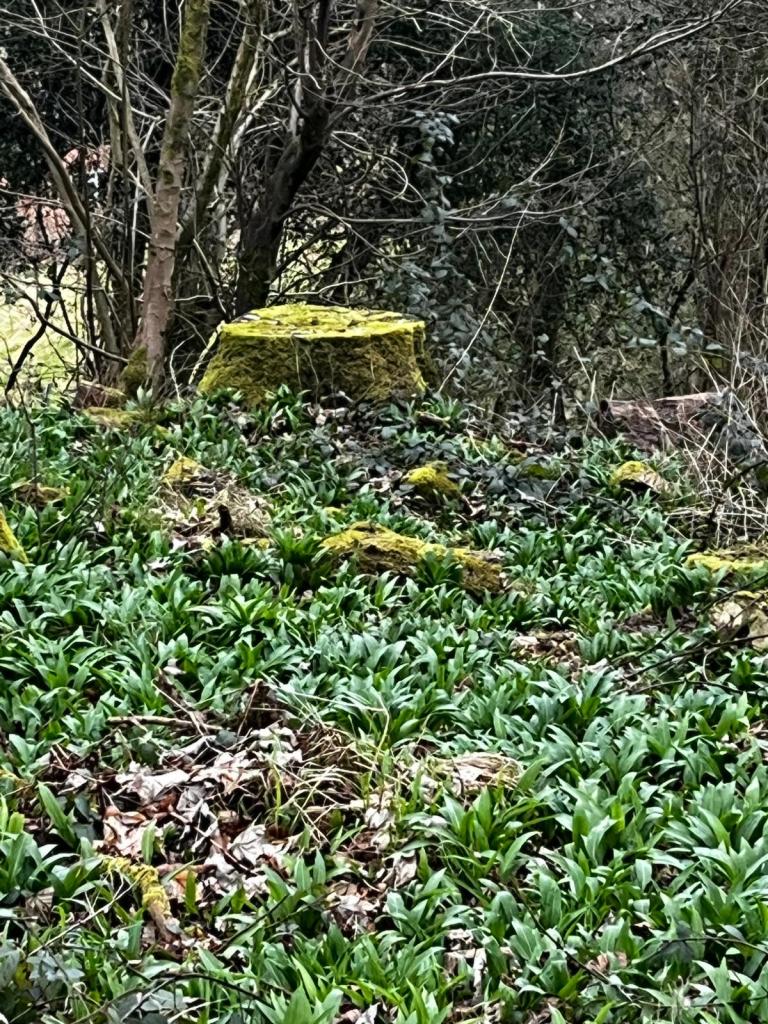


my first dungeon crawling level will be a forest so I decided to look at a forest near where my family live which I plan to visit in April. Currently, the forest is still in its winter state. The forest is subject to woodland management and harvesting so it is littered with tree stumps, mostly old where nature had started to reclaim them. These stumps have moss and fungi growing on them showing their age. The ground is a rich mixture of long dead leaves, twigs and damp soil interspersed with bramble and ferns. The forest floor was covered it leaves that had fallen months ago and had failed to decompose due to the dry weather. Bushes dead and alive are scattered around the area, brambles are one of the more prevalent plants being a very tough plant, it still had some dark leaves on it despite the time of year. One stump had been there, cut, for so long that it had warped from a flat stool like stump to become more angular and the layers of the wood had begun to decay and separate. This is nature’s way of reclaiming the felled trees’ stump back into itself. Signs of spring are here, bluebells are beginning to sprout and the wild garlic is starting to run rampant in some areas already. There are a lot of completely barren areas that I will avoid due to the culling of Ash trees due to Ash Dieback. Although it fits the theme of my forest in some aspects, the world I am creating in my game the characters would not know of diseases that affect trees and not have the equipment to mass fell the afflicted trees.
photos from my Trip to the Needwood Forest in April
The weather was stunning the day I went out for my reconnoitre, the weather had been abnormally dry for the past six weeks and the ground underfoot was bone dry. I found some grass on the way up to the forest that I thought would make a good texture so I took a few pictures. I took note of the wild garlic that was out in force that spread all across the forest floor. I took some pictures of it as I thought it would make a good texture. On the way down the path I found many fallen logs and tree stumps that were laid on the side of the path. There were many flowers around the area including bluebells and primroses which added a great colour to the forest. There was also signs of the berry bushes that are wild in the forest such blackberries and wild raspberries that are without their signature berries due to the time of year. There was still a lot of dead leaves around the area, which had not decomposed due to the dry weather. We passed a public footpath sign and I took a few pictures of the wood of the sign as it had some interesting textures to it. I stopped to take some audio so I could have some original sounds in my game and used an app, Merlin Bird ID, to find out what birds we heard. We heard Blackbirds, Robins, Chiffchaffs, Wrens, Pheasants and Great Tits, of all of them the most distinct was the Pheasants.
Once I had returned to my computer I was able to create a texture out of the images I took of the wild garlic. I tried adding them to my forest level but could not find a suitable mesh to use them on. However, I thought the resulting texture looked a lot like dense rainforest which fits into my theme for my third level and I will utilise it there.
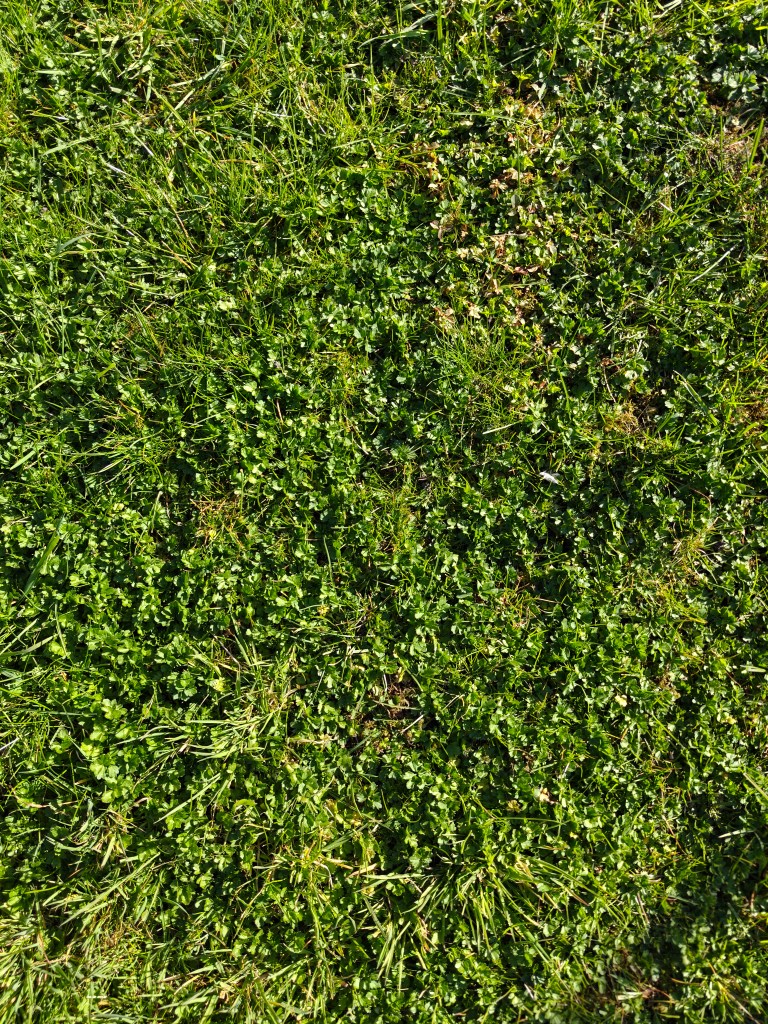
Grass on the way 
Grass on the way 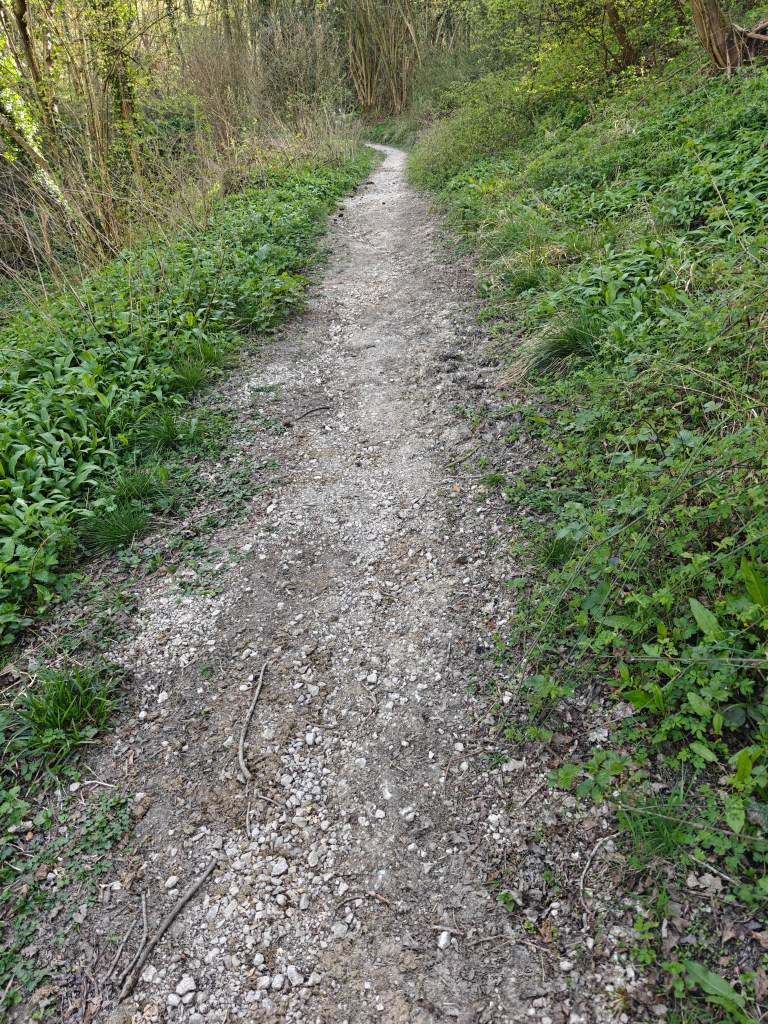
Path into the woods 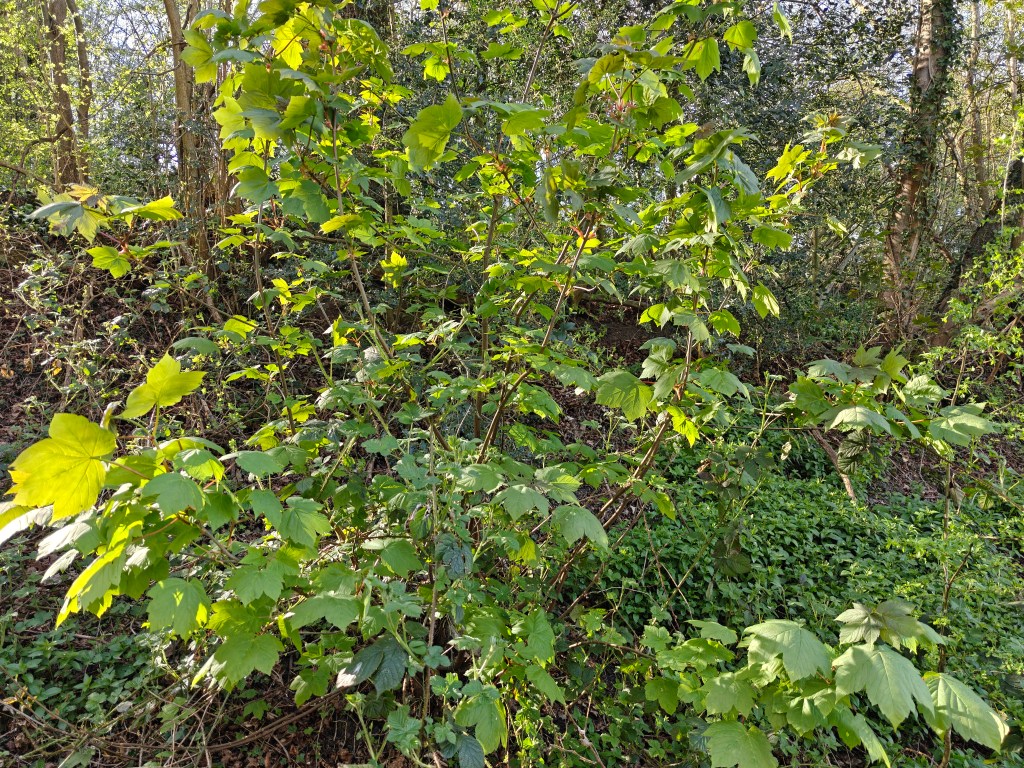
Bush near the entrance 
View off the path 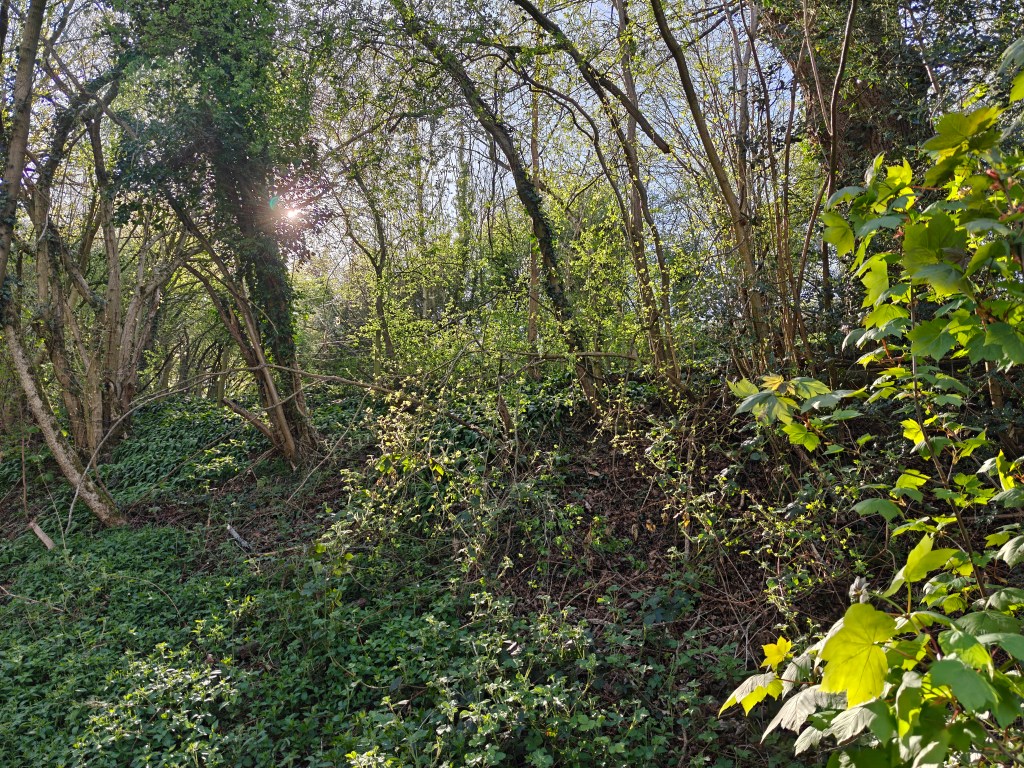
Sun shining through 
Wild garlic 
Wild garlic 
Wild garlic 
Wild garlic 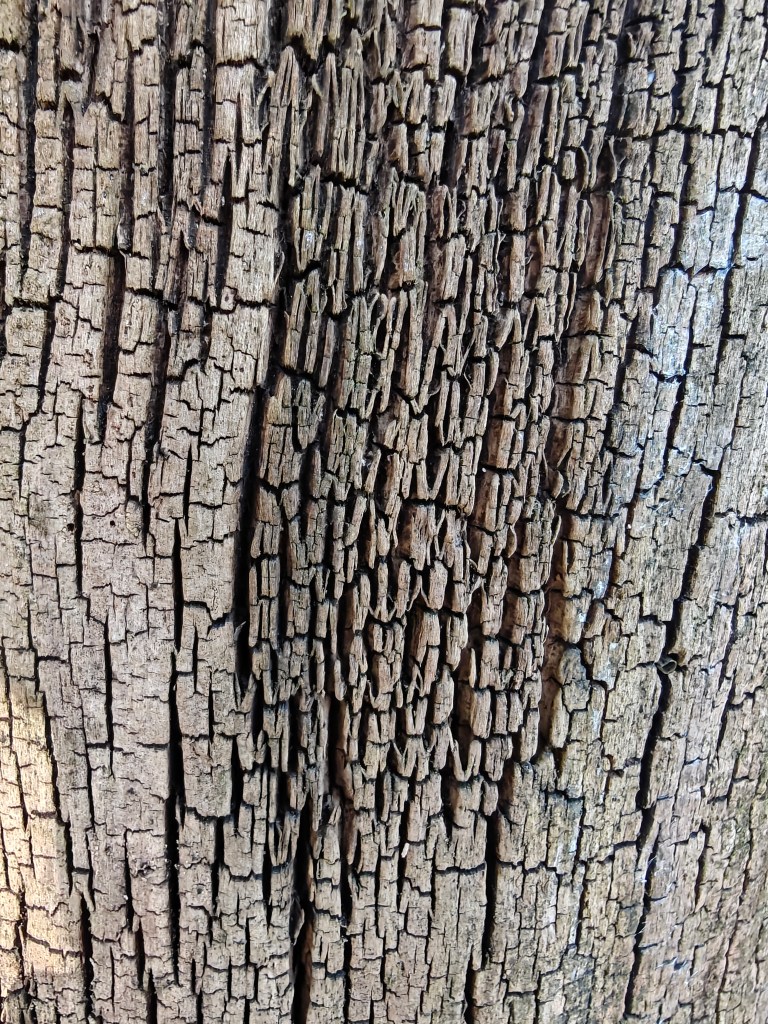
Exposed and dry wood 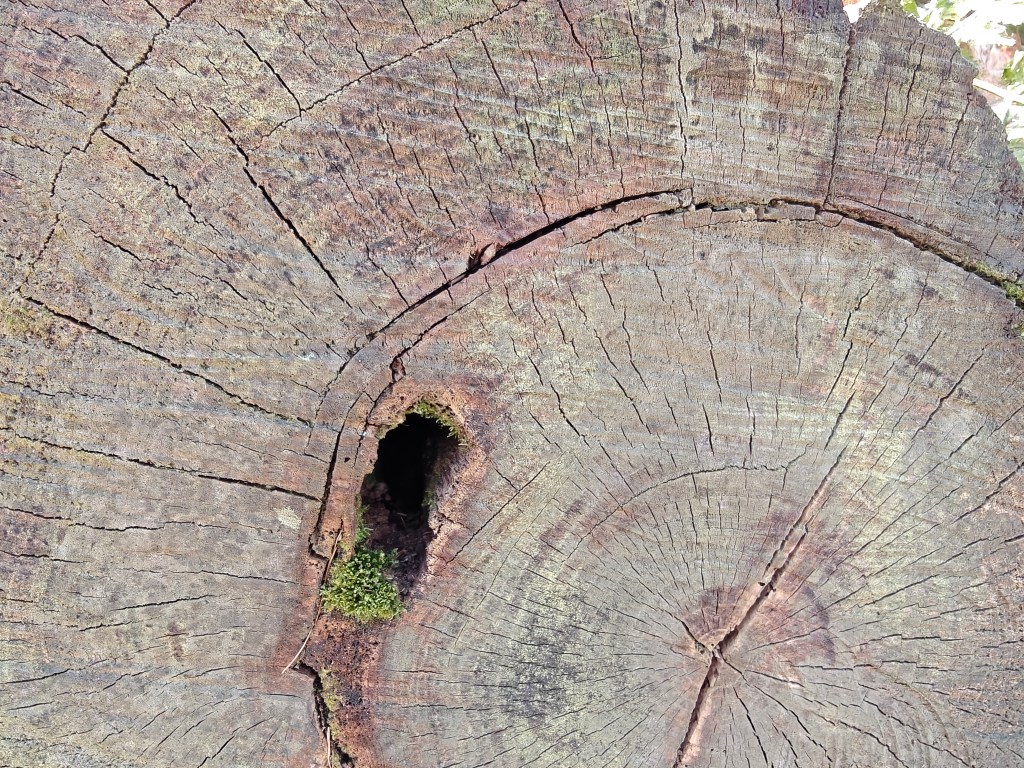
Top of stump 
Bluebell 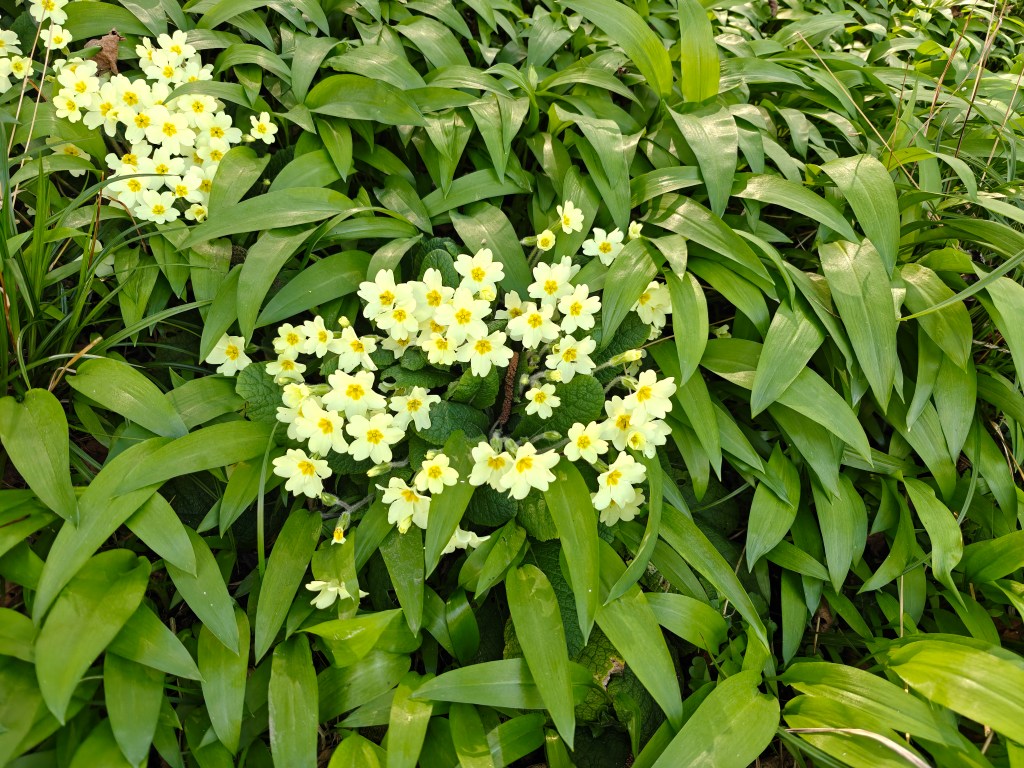
Primrose 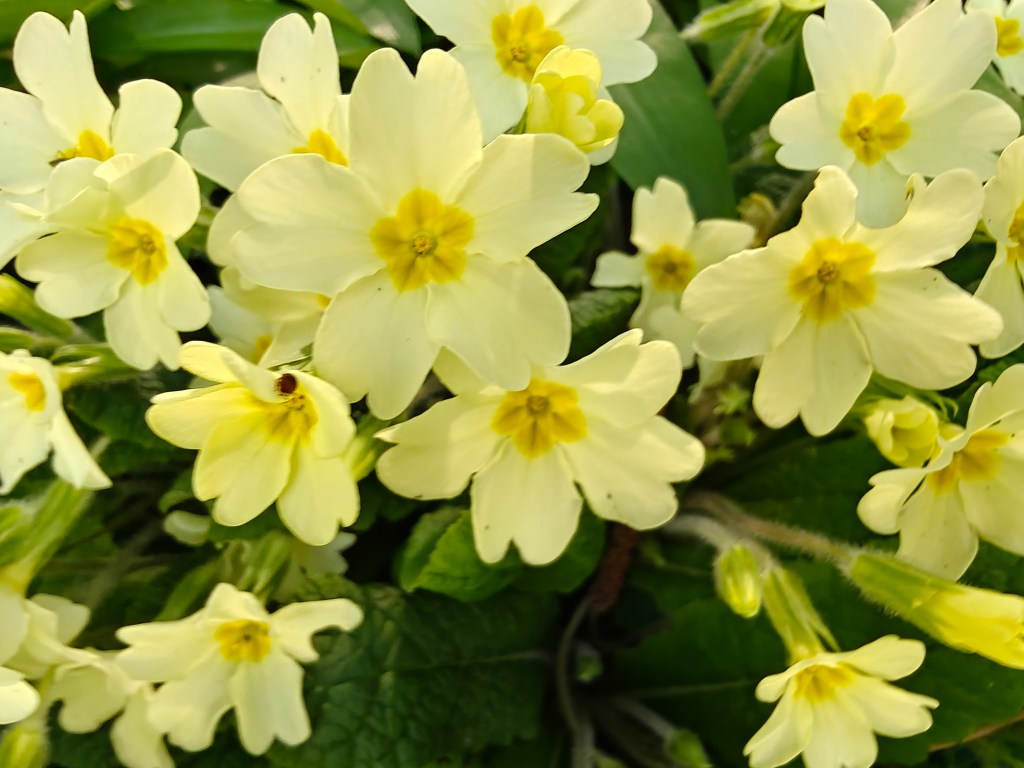
Close up of primrose 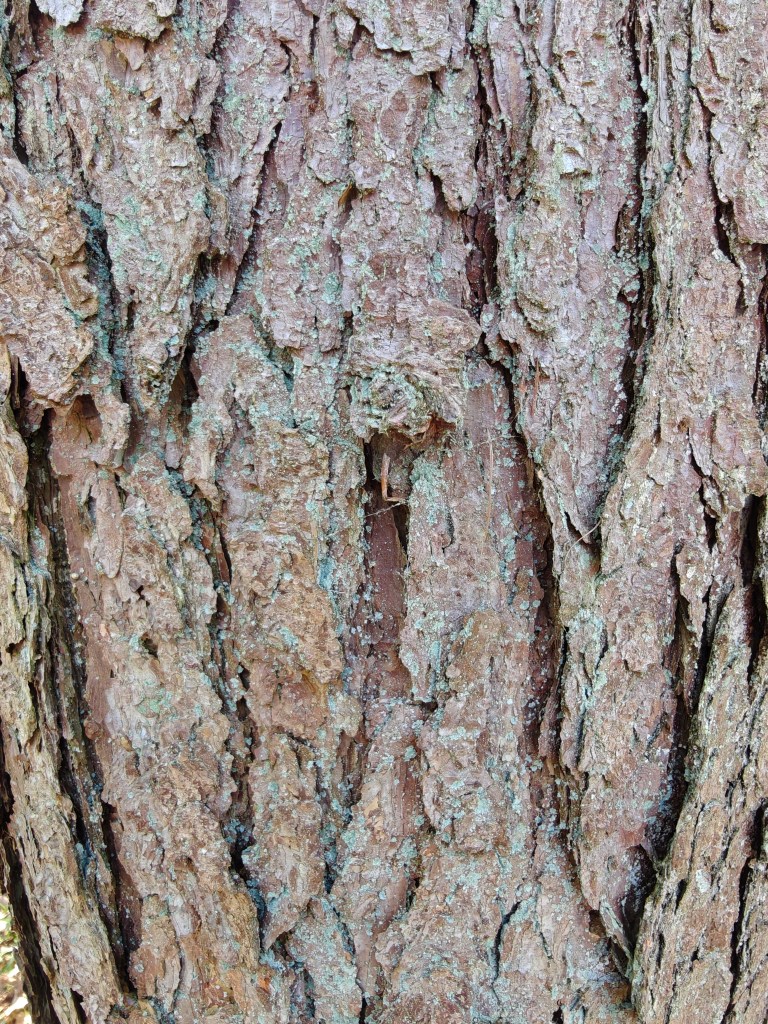
Close up of tree bark 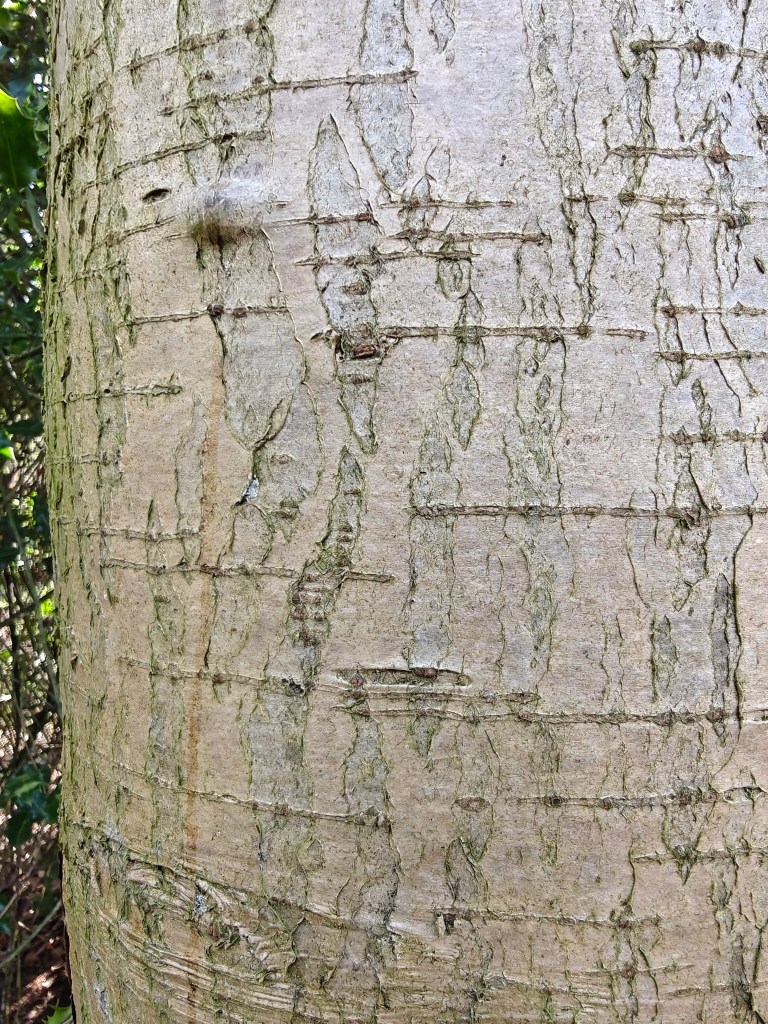
Close up of tree bark 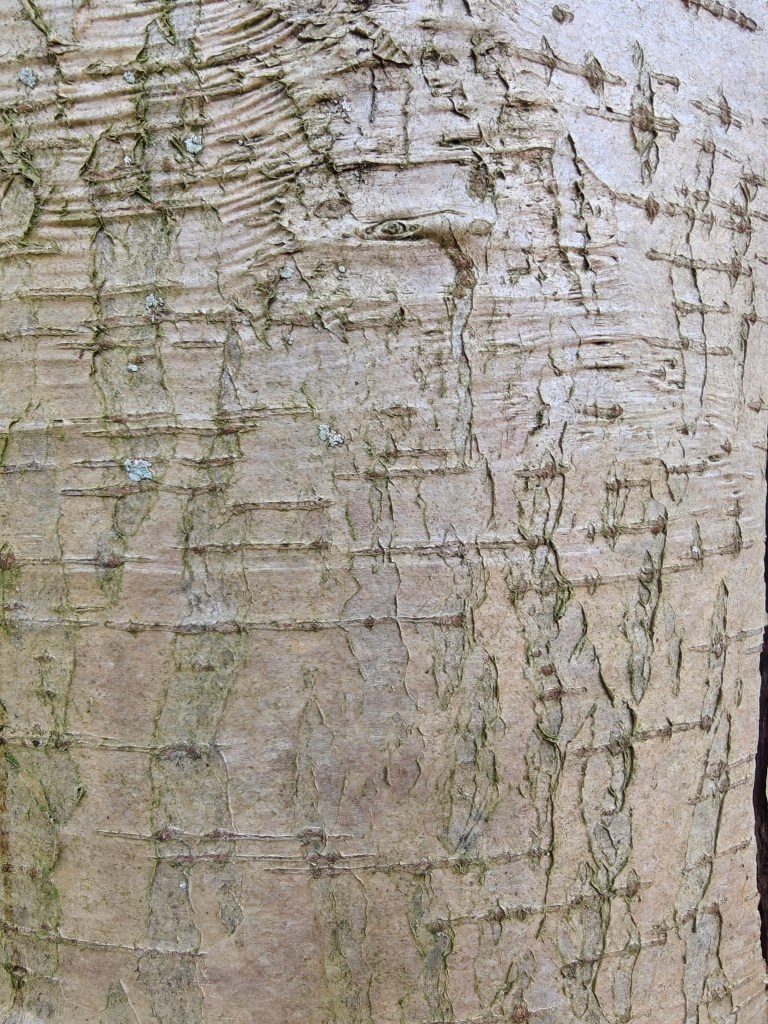
Close up of tre bark 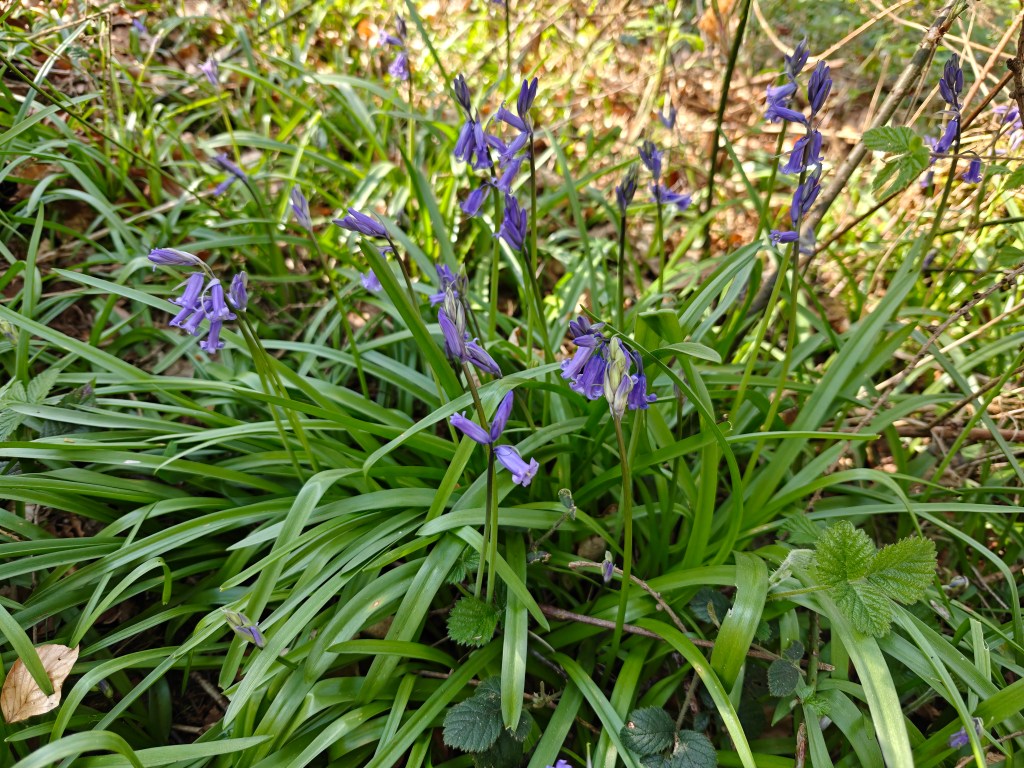
Bluebells 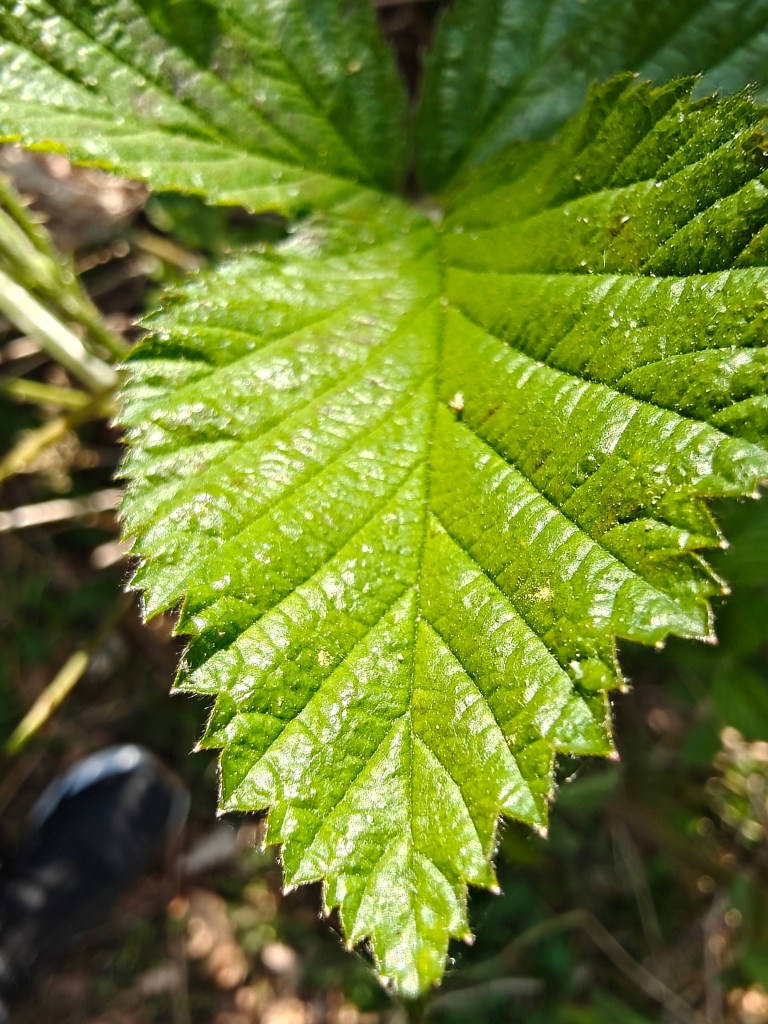
Blackberry leaf 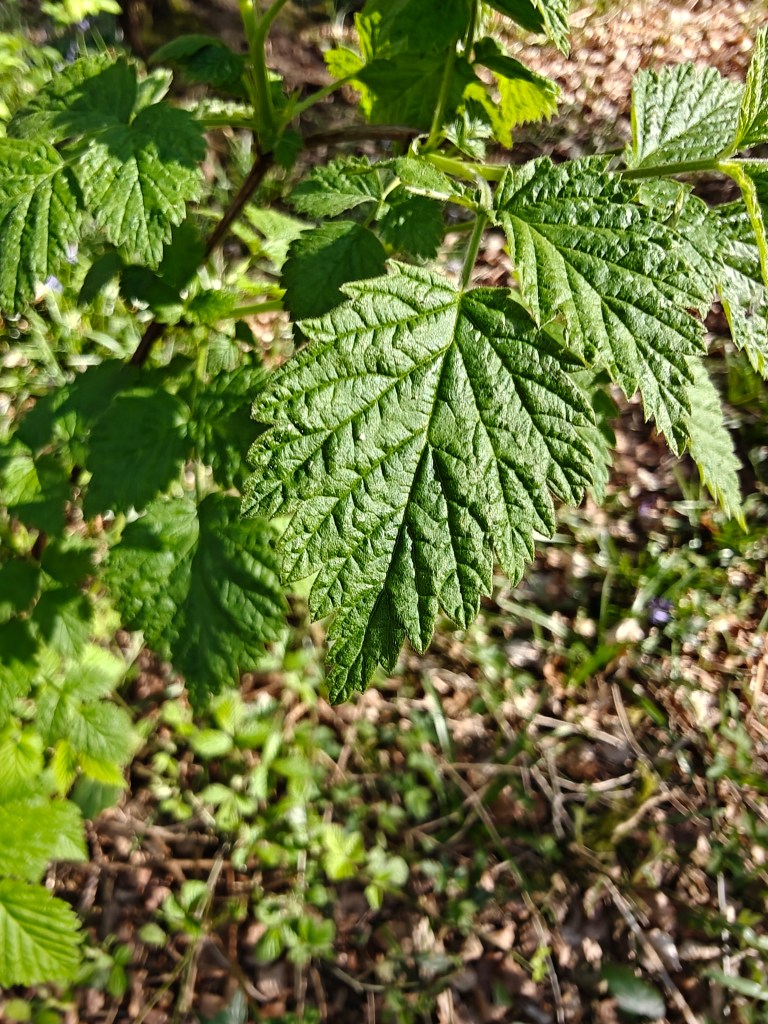
Raspberry leaf 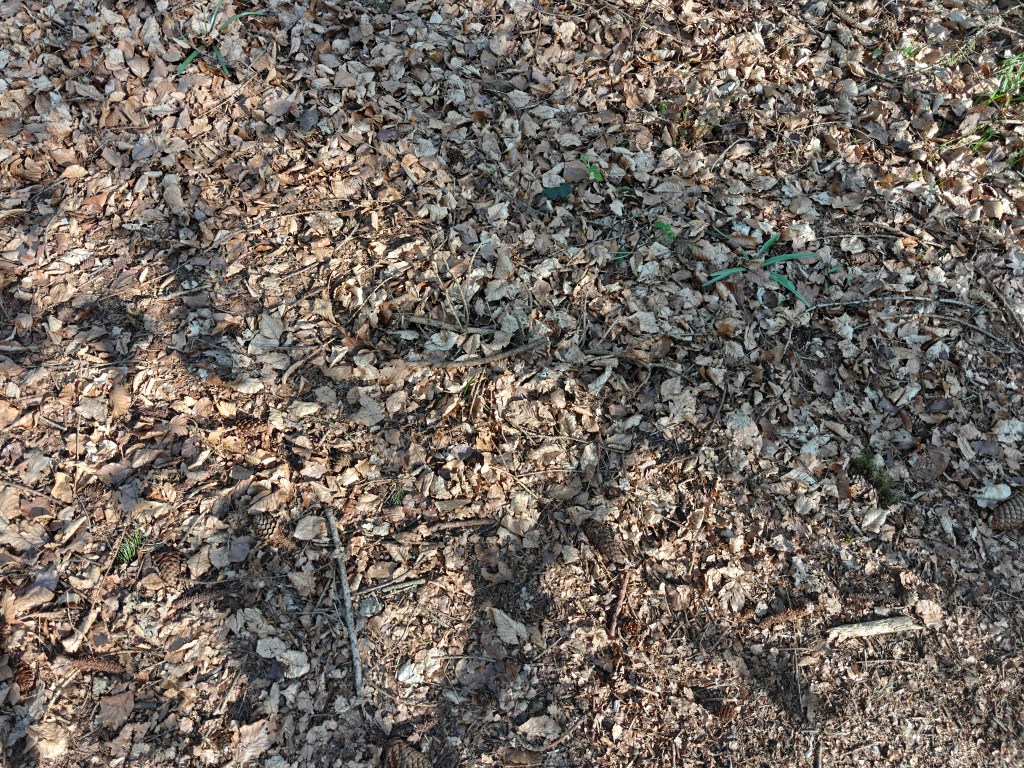
Ground near the path 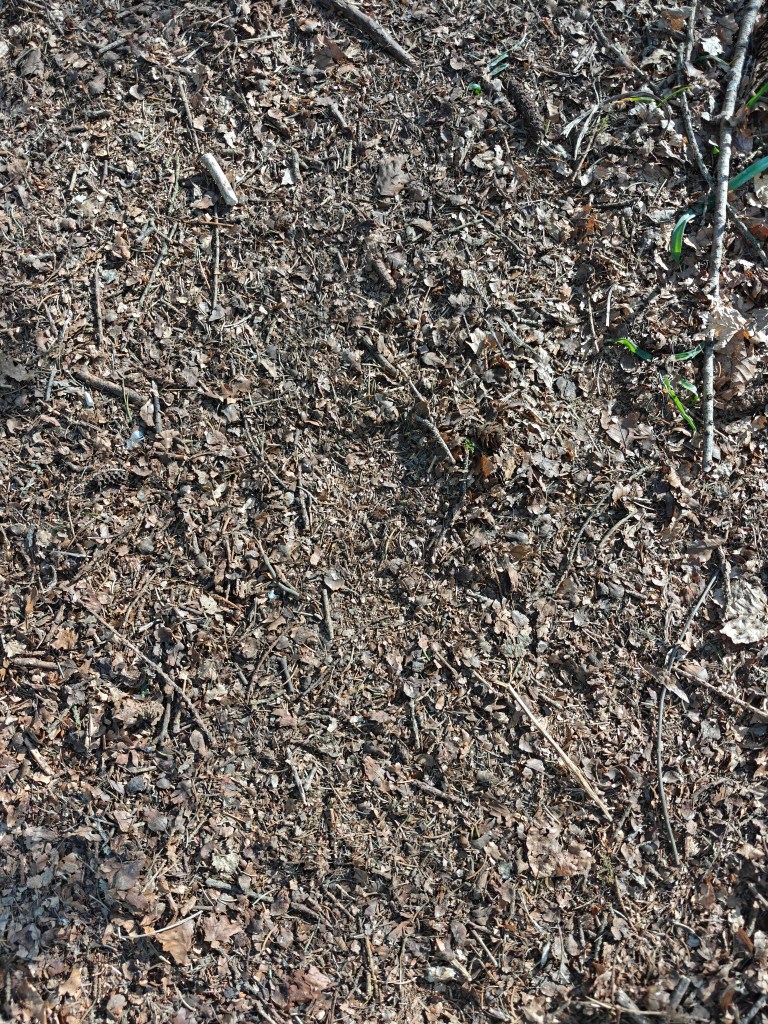
Ground near the path 
Sweet cherry leaf 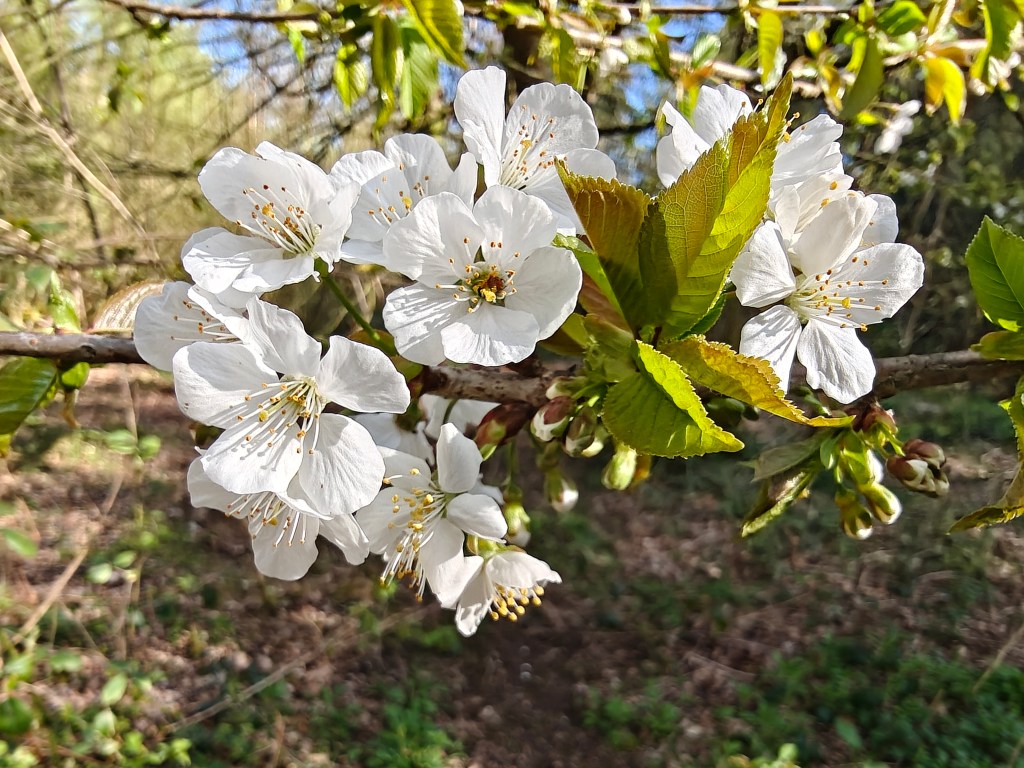
Sweet cherry blossom 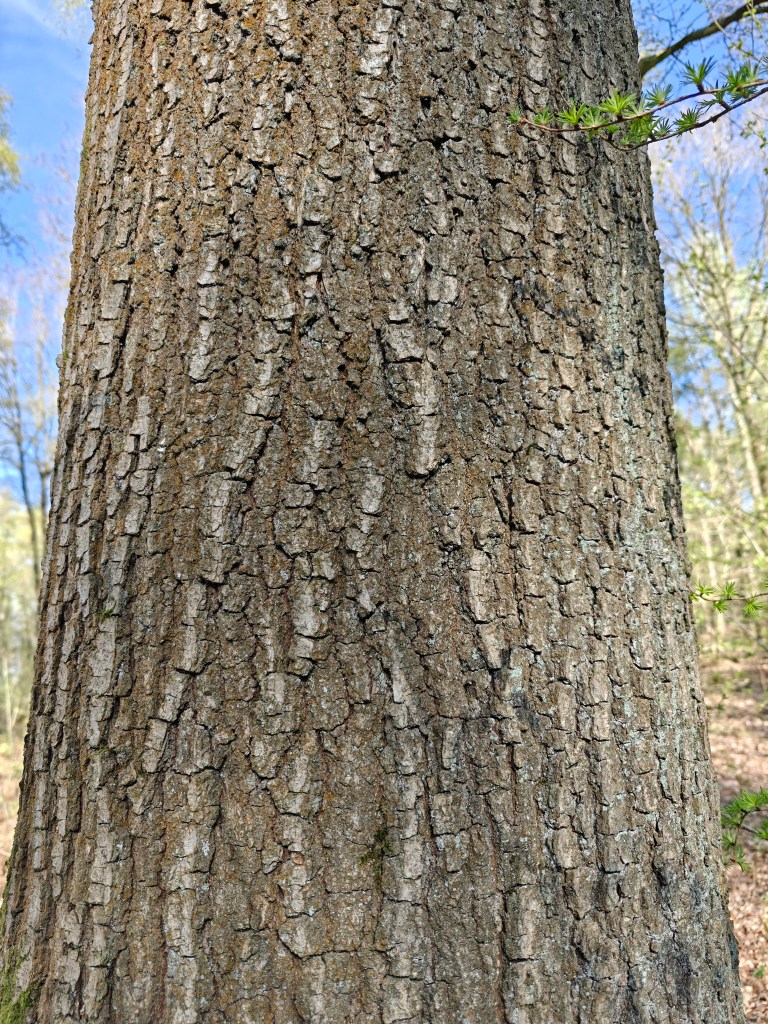
Tree bark 
Willow leafs 
Bark with interesting patterns 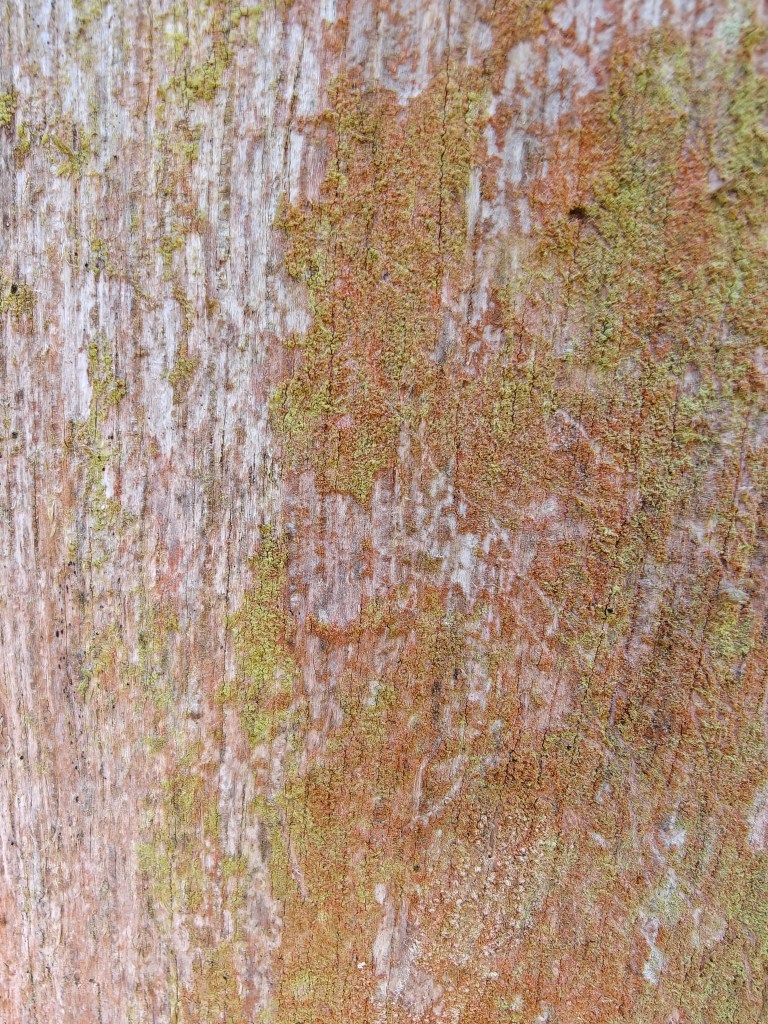
Wood from sign post 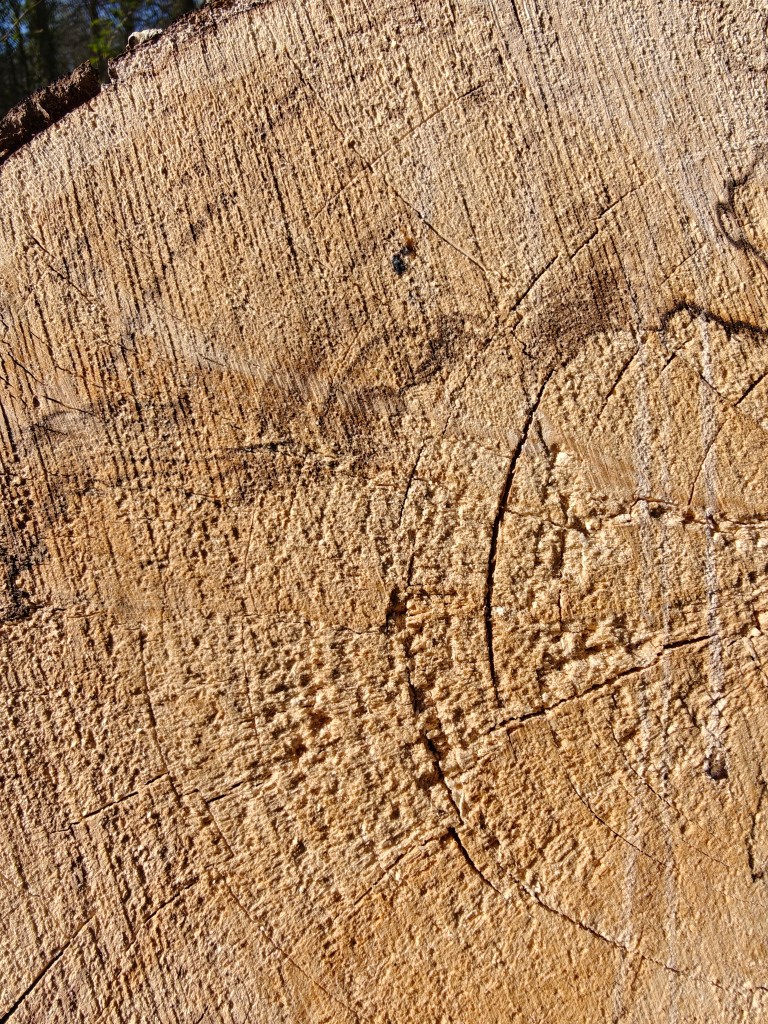
End of felled tree 
Tree bark 
Tree bark 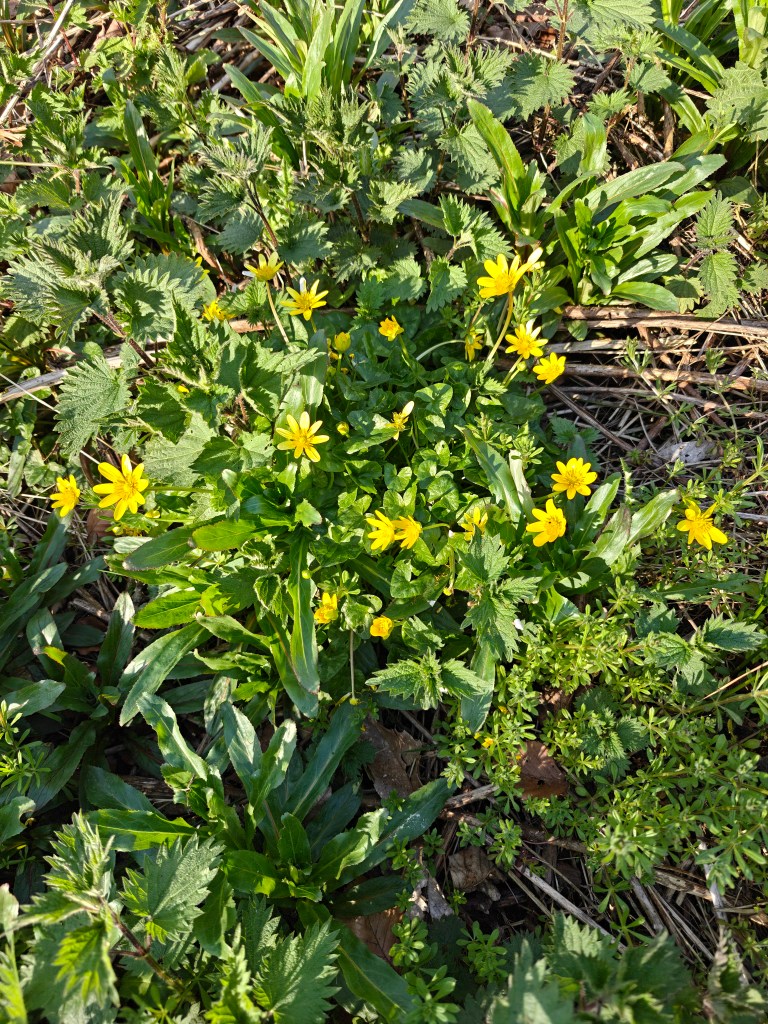
Chrysanthemum 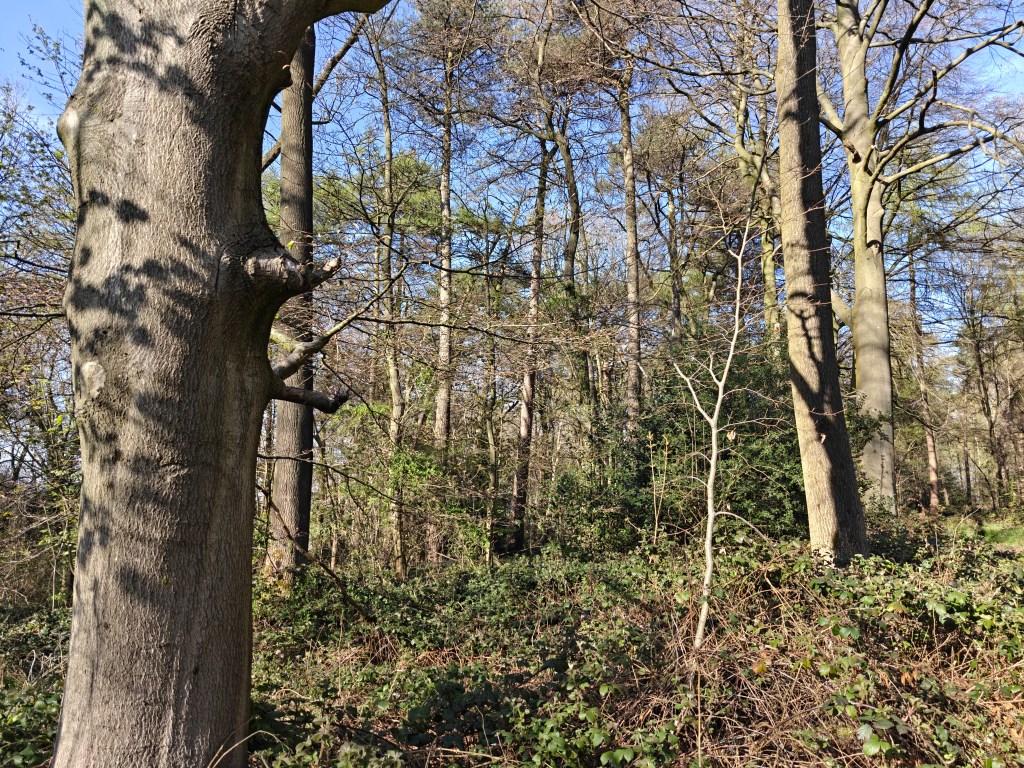
Trees and foliage 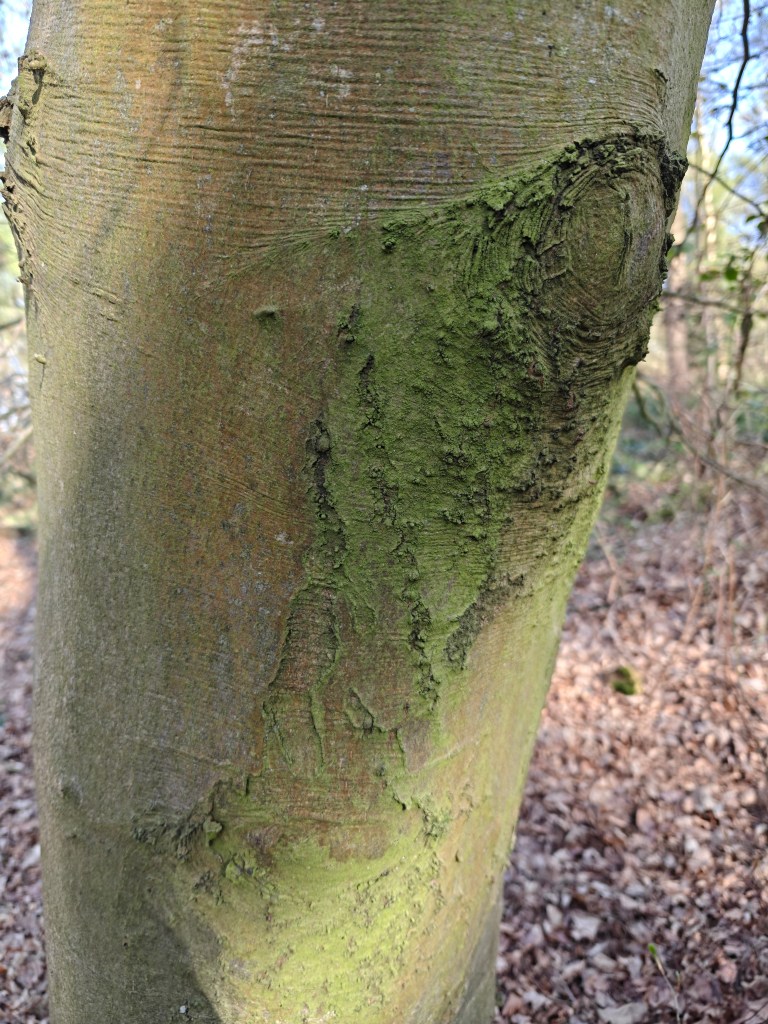
Tree trunk 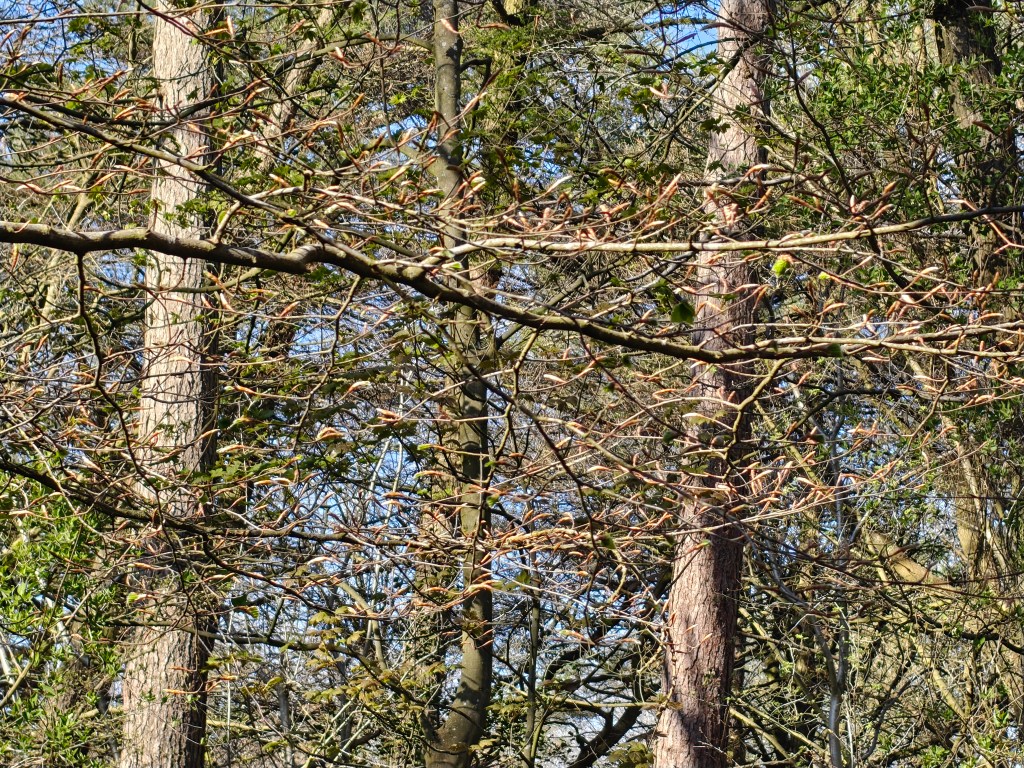
Tree branhes 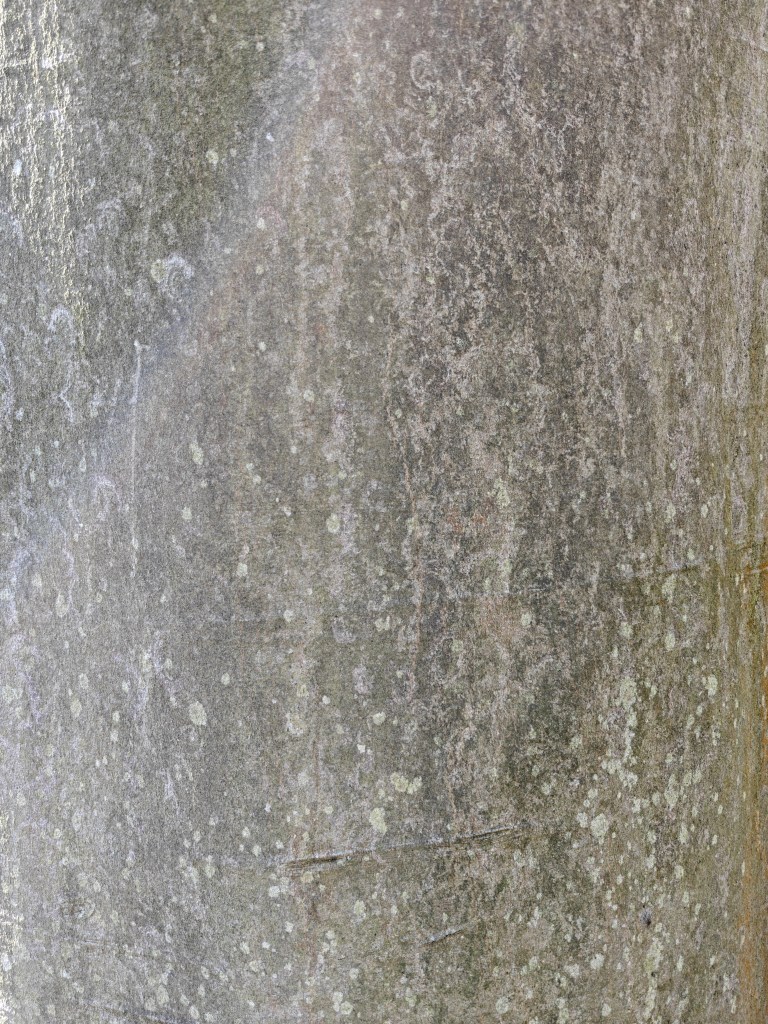
Tree bark 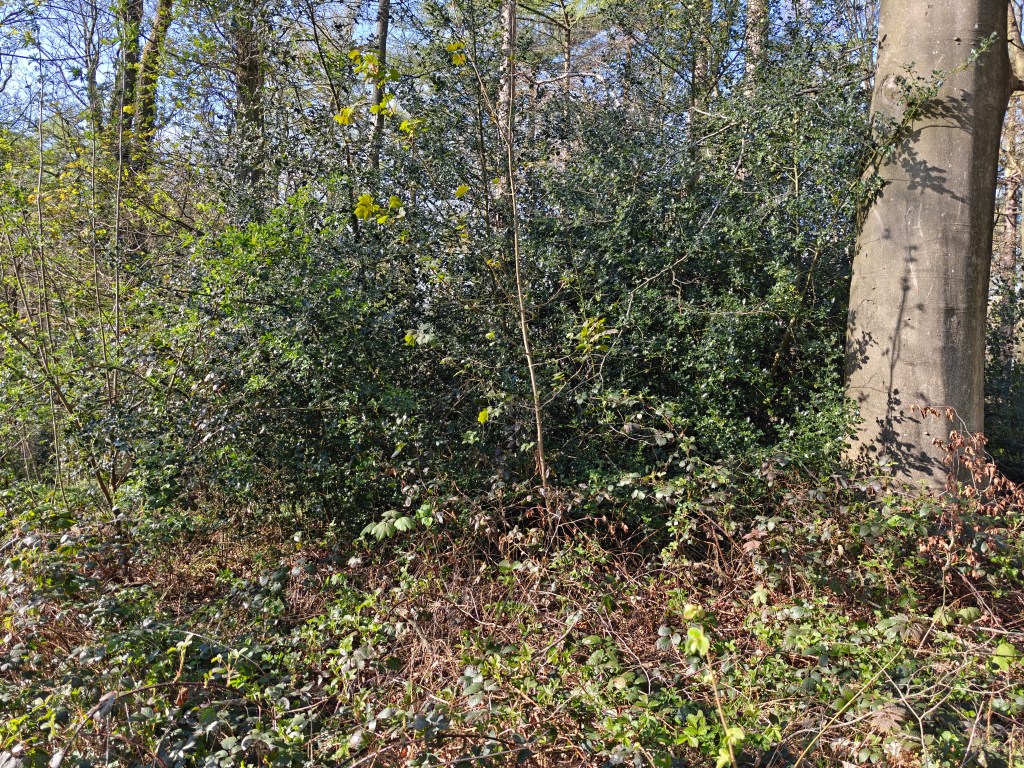
Holly bush 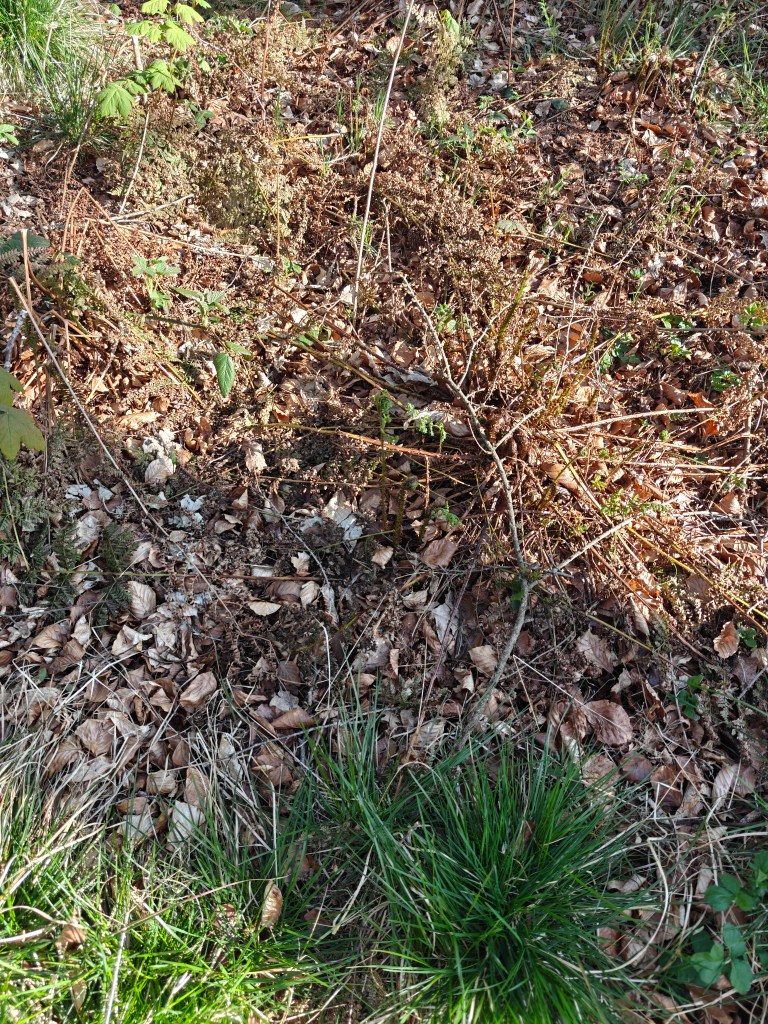
Dead bush on the ground 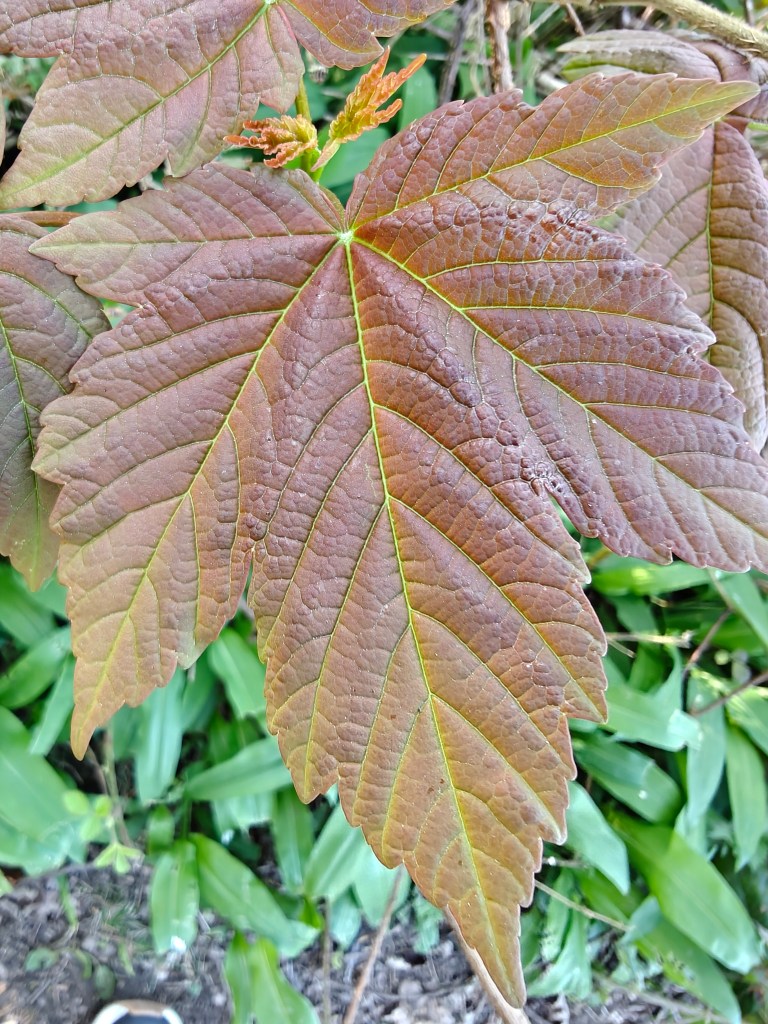
Redish leaf 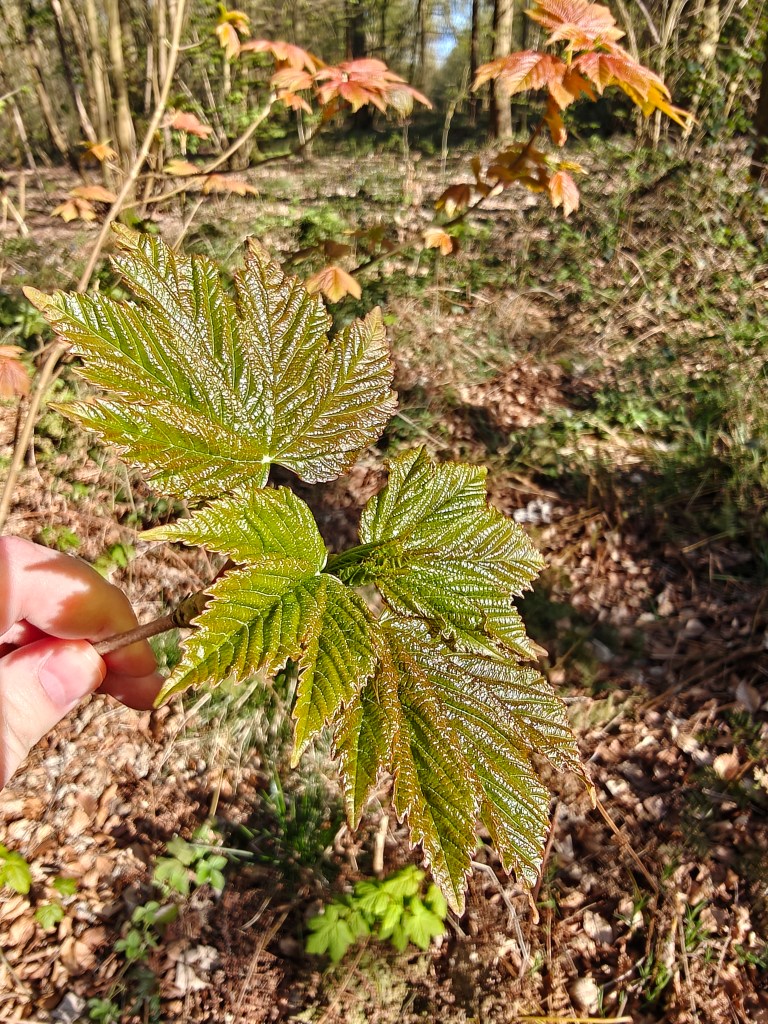
Sycamore leaf 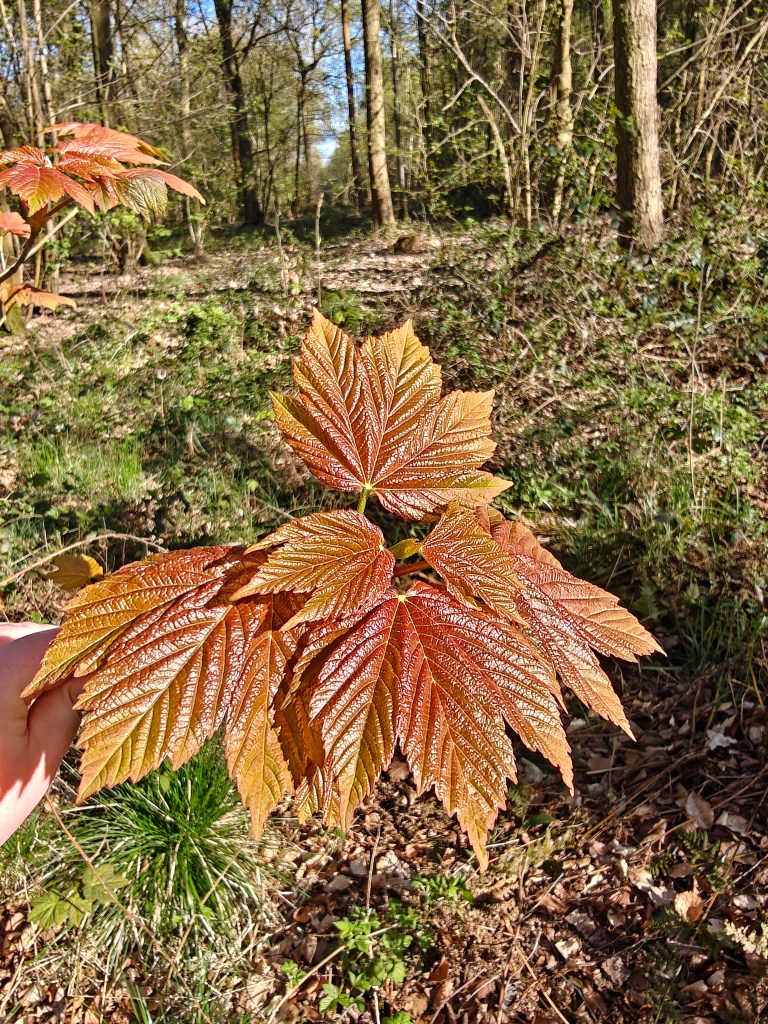
Sycamore leaf 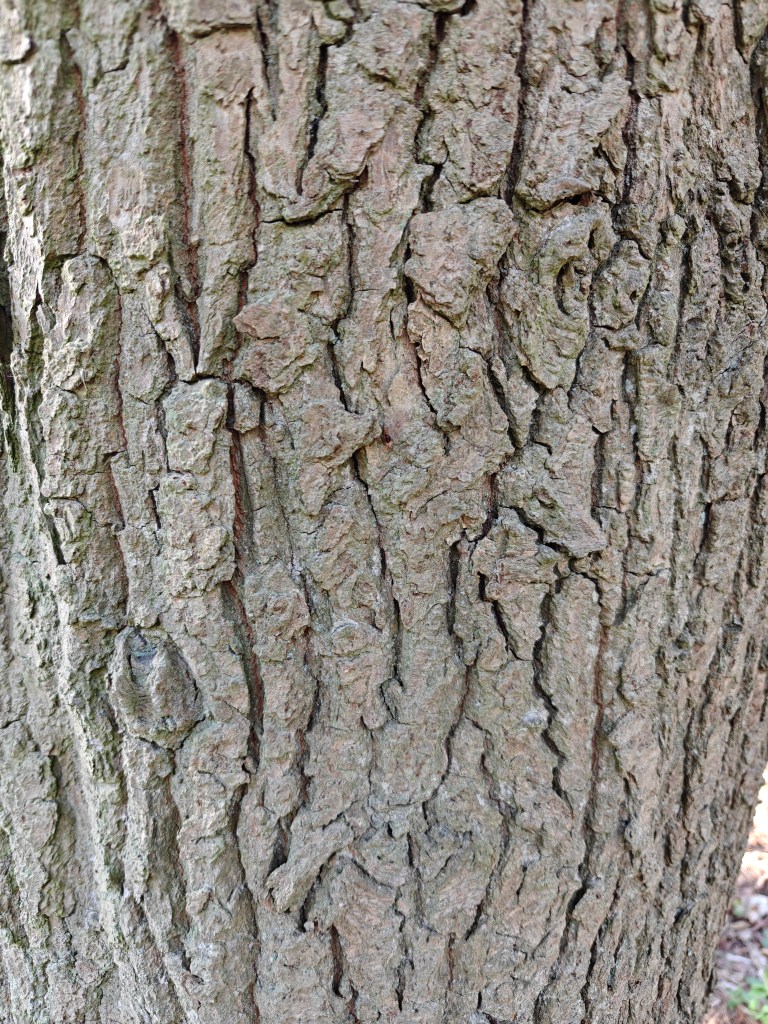
Tree bark 
Dried leaf 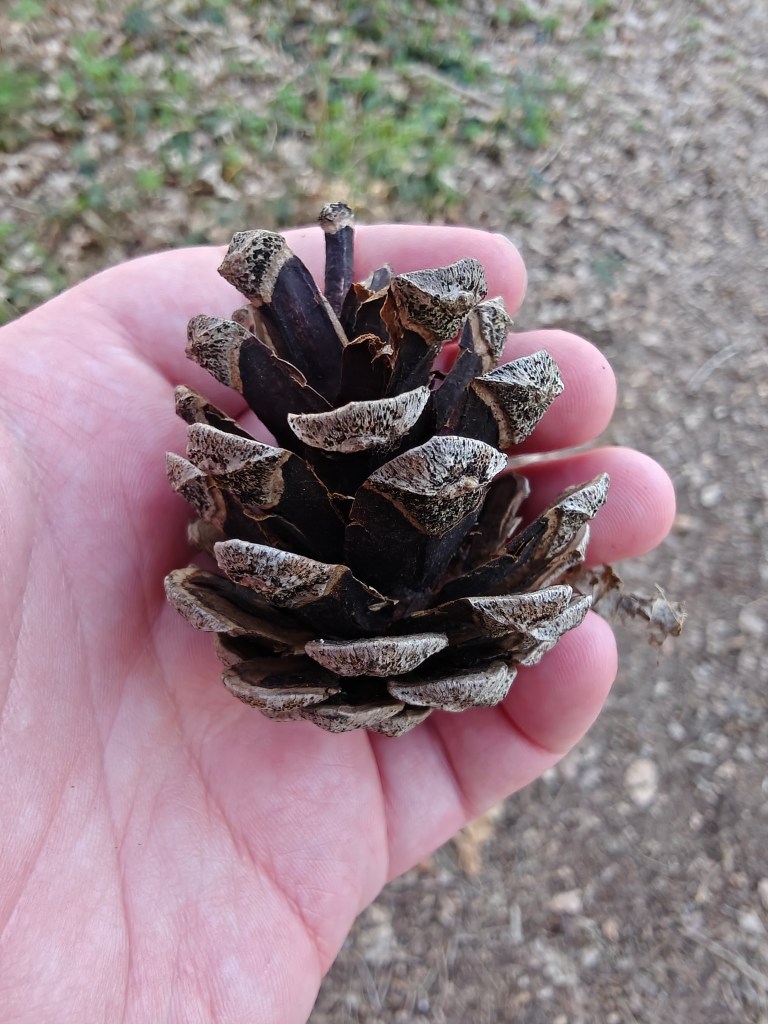
Pine cone 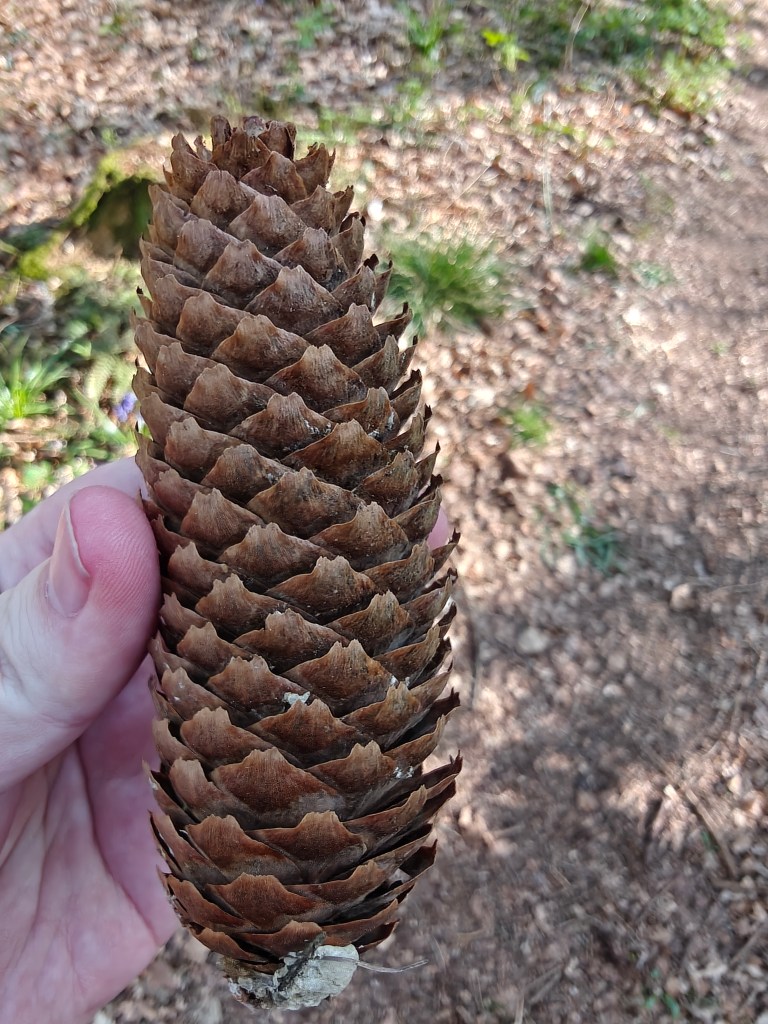
Spruce cone 
Dead foliage in a tree 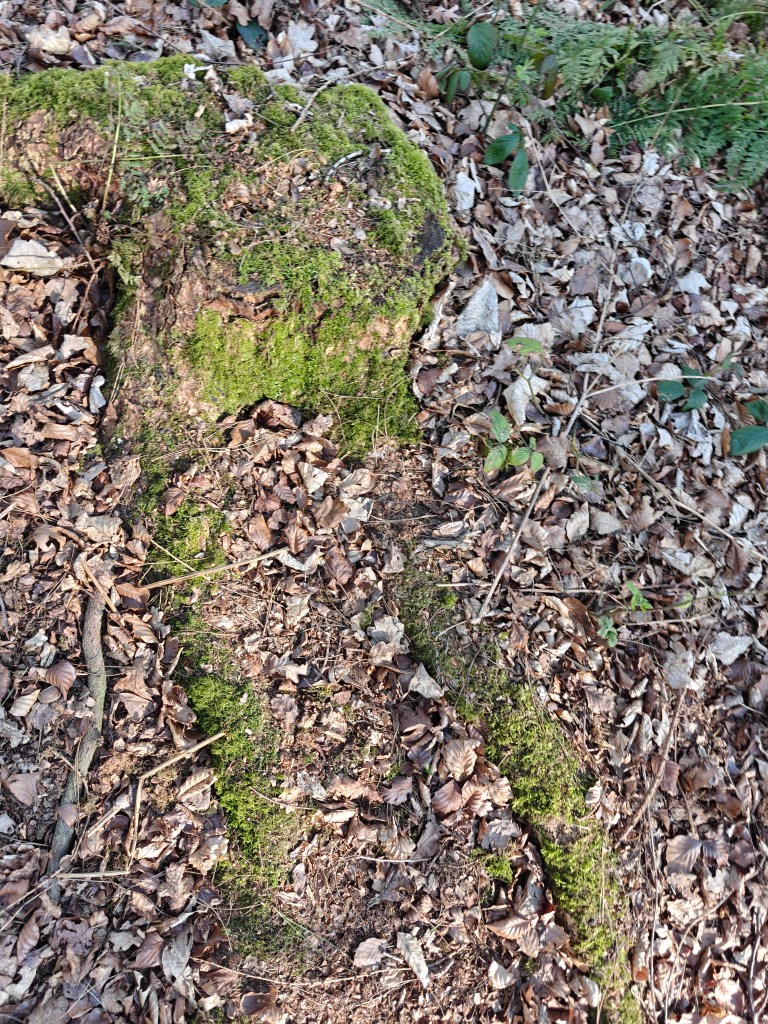
Tree roots 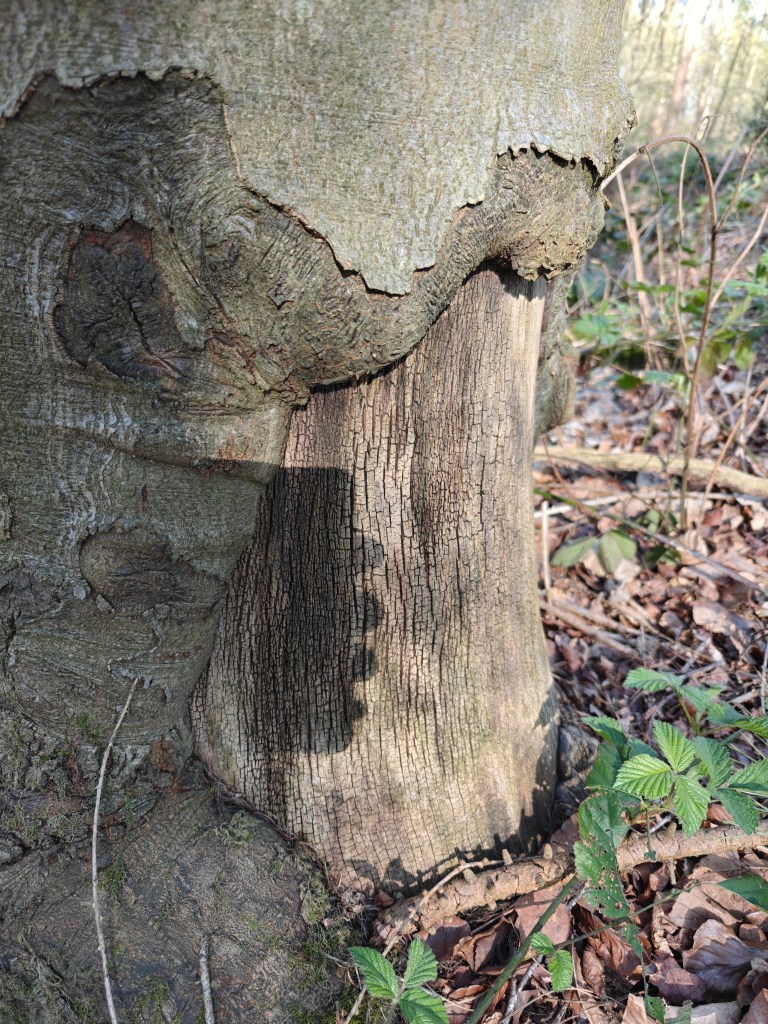
Tree with missing bark 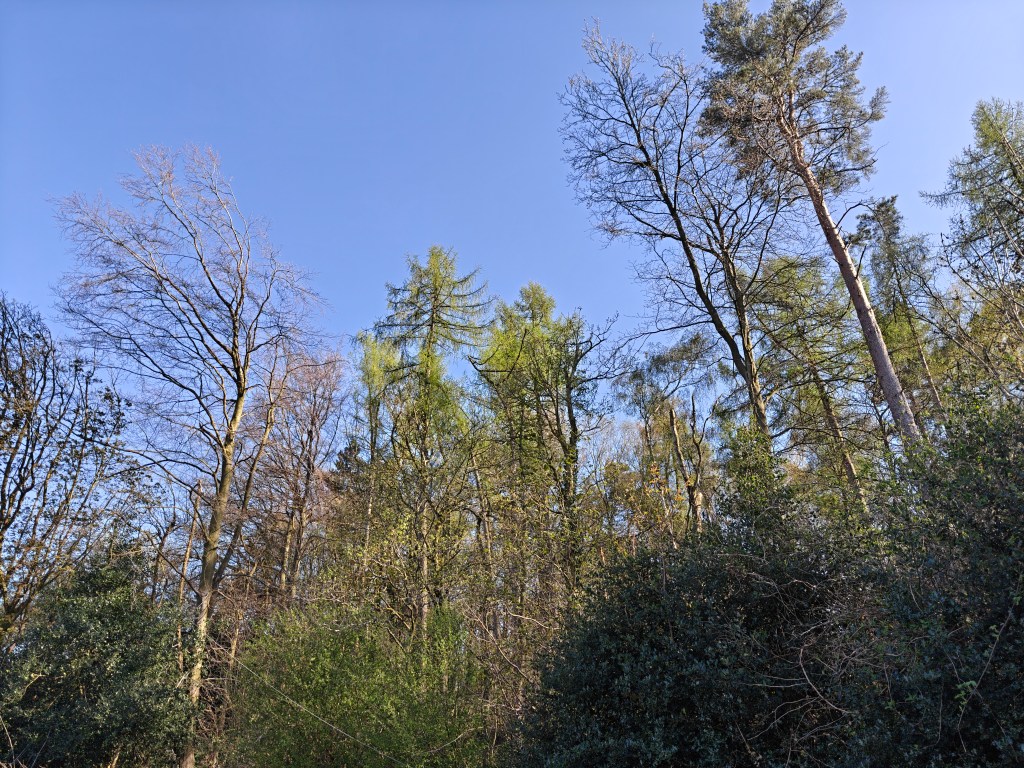
Tree line leaving the forest
The Mlynki Crystal Cave, Ukraine (Secondary)
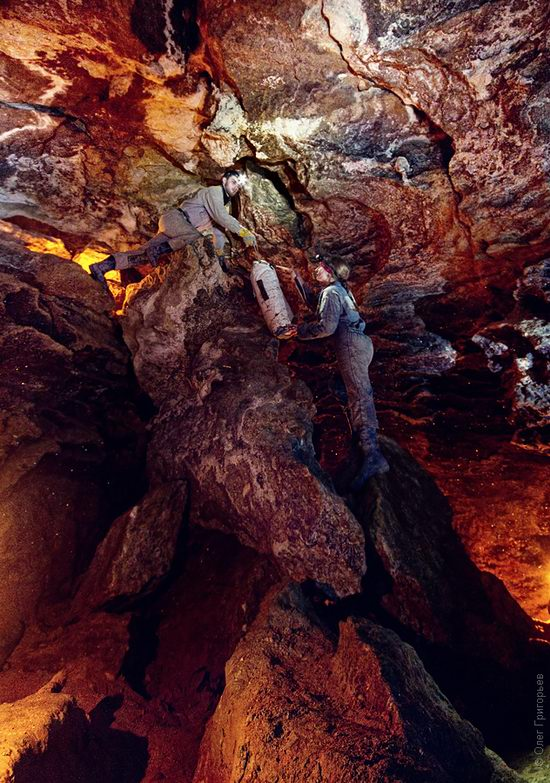
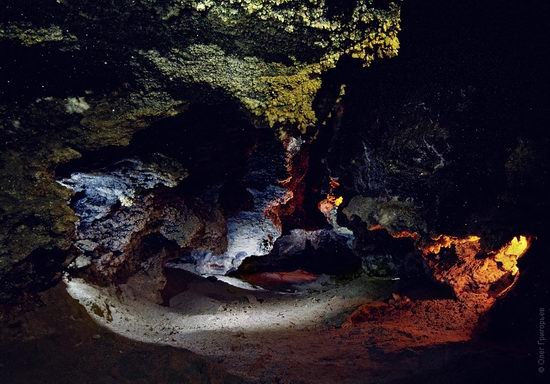
The Mlynki Cave is a gypsum labyrinth in Zalissya village in West Ukraine. Dotted about the walls of the cave are many crystals made of white, yellow, red and black gypsum. The crystals reflect and refract light, lighting up the cave as some have described as mini universes. It is known to be inhabited by bats. It is noted that there is not natural light in the cave so despite what some might think the cave is not lit up by crystals.
For my game I will create a cave that flows with energy that lights up crystals that will be scattered throughout. I could create and animate a torch for the character to hold and although this would create a better atmosphere, it would be hard to create the light reflecting off the crystals. I could look at the crystals having a small emission factor that lights up a very small area, I fear however that to see properly the player will need more light. It might be possible to give the player a light when they are within the cave. I will aim incorporate some water trickling and maybe sounds of bats to make the place feel more cave like.

Vilcabamba, Peru (Secondary)

The city of Vilcabamba.
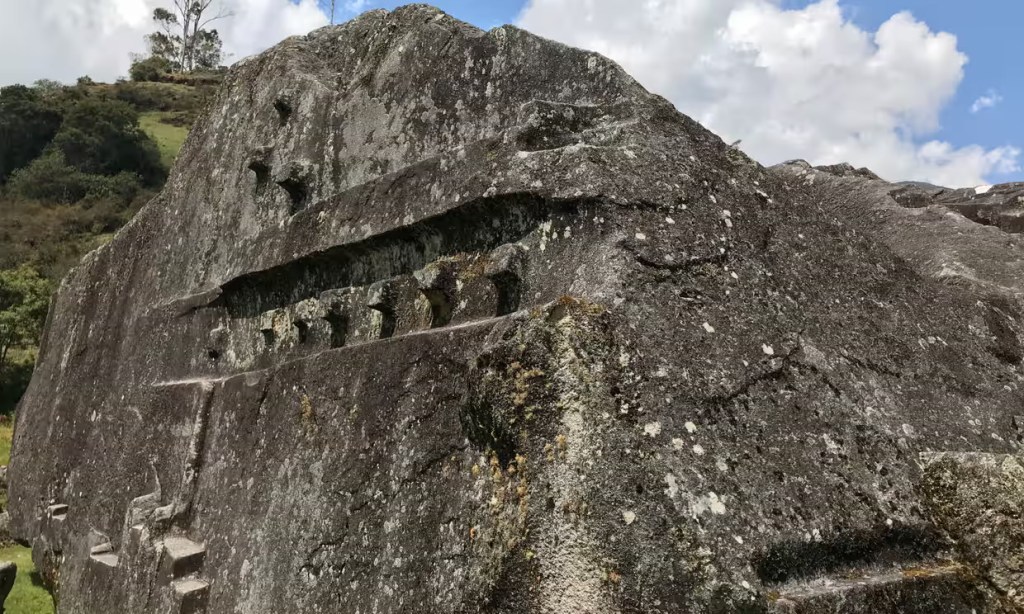
The Inca shrine of Yuraq Rumi (the White Rock) in Vilcabamba.

The valley leading down towards Vilcabama.
Photographs by Laurie Blair, 2018
The city of Vilcabamba lies deep in the Peruvian Andes. The path to the city is dangerous and leads through cloud forest (a type of mid-altitude tropical rainforest) and over swaying plank bridges, edging along narrow paths beside sheer drops.
I want to recreate an ancient ruined city like Vilcabamba where it has been reclaimed by nature and weathered by time. I particularly like the idea of the cloud forest. It reminded me of a book I read as a child about an impending apocalypse at the hands of ancient demons and only five teenagers with powers could stop them. In the second book, two of the teens were in hiding from the followers of these demons with help from the remnants of the Incas. They were guided by the Incas to Vilcabamba down a path that if you did not know it was there you would never find it. “The path wasn’t there. The canyon wall was a sheer, vertical drop with no way up or down. The path
that they had just taken, which they had walked down for more than an hour, had disappeared.” (Horowitz, 2006).
This gave me the idea for what I call “turn around fog” similar in nature to the fog that surrounds the Korok Forest in Legend of Zelda: Breath of the Wild, it will send the player back to the start of the level if they go down the wrong path.
Nintendo Switch 2 Marketing Analysis (Primary & Secondary)
In the brief we were directed to analyse pitches in the game industry to help us model our own. For mine I wanted to look at the announcement and marketing of the Nintendo Switch 2. This research is taken from watching the announcement myself and reviewing articles on NintendoLife (Reynolds, 2025), BBC News (Gerken and Richardson, 2025) Tom’s Guide (Mellon, 2025)
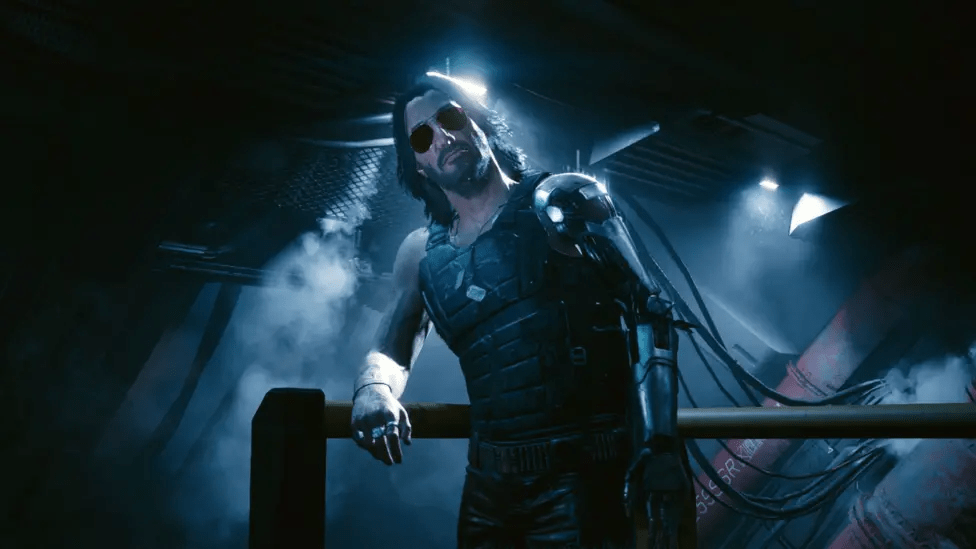
This console has been heavily anticipated and I feel is needed as the original Switch is 8 years old and the hardware has become outdated and unable to keep up with modern graphics. From the existing third party titles that are releasing day one on the Switch 2 it appears that the Nintendo Switch 2 is a significant leap forward. These titles include Elden Ring & Cyberpunk 2077 which are known for the high demand it puts on a system.
The console has a numerous new features such as a chat function that is launched from a button on the controllers, camera functionality for external cameras for video calling using the new chat system and in game features including camera mini games in Mario Party, each Joy-con 2 has mouse functionality for certain games and ANC (Active Noise Cancelation) has been added for using the system’s microphone when in chat calls.
Switch 2 also has many direct improvements over its predecessor including; bigger screen 7.9 inches, 1080p 120Hz display, HDR10 support (High Dynamic Range), better kickstand similar to the OLED model of its predecessor, two USB C ports, 256GB of faster Universal Flash Storage, a dock that supports 4K output, ethernet port again as the OLED model of its predecessor had and fan cooling built into the dock for enhanced cooling of the system.
Nintendo have a large launch line up of first party and third party titles for this console bolstered by the backwards compatibility, Switch 2 editions (Games from the original Switch’s library but with enhanced features) and GameCube games through Nintendo Switch Online. This includes but is not limited to:
| First Party | Third Party | Boosted Switch 1 Games | Switch 2 Editions | GameCube (NSO) |
| Mario Kart World Switch 2 Welcome Tour | Cyberpunk 2077 Final Fantasy VII Remake Intergrade Hitman World of Assassination Hades 2 Hollow Knight: Sliksong Delatarune: Chapters 1-4 Civilisation 7 Split Fiction Fortnite Yakuza 0: Director’s Cut | Pokémon Scarlet and Violet ARMS Super Mario Odyssey Super Mario 3D World + Bowser’s Fury | Legend of Zelda Breath of the Wild Legend of Zelda Tears of the Kingdom | Legend of Zelda: Wind Waker Pokémon XD: Gale of Dark |
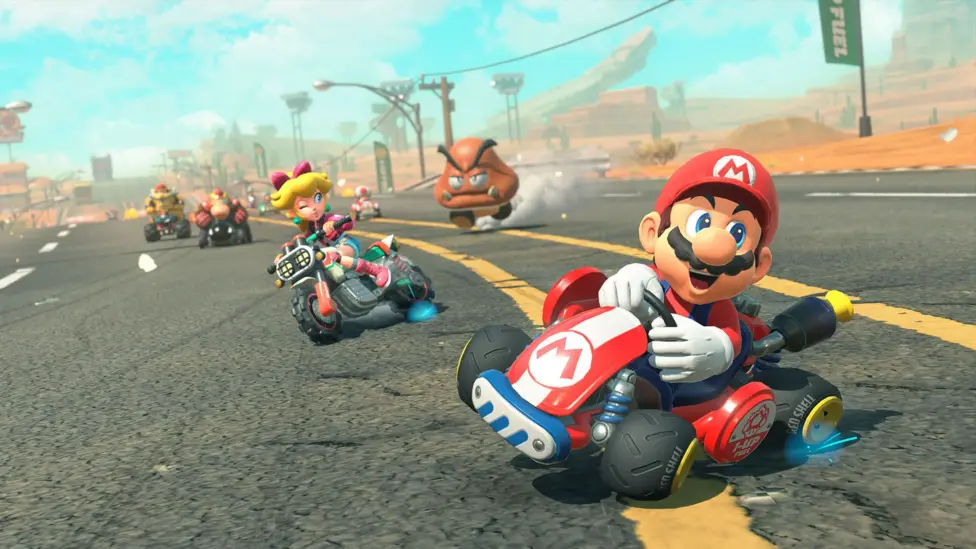
The Nintendo Switch 2 releases on the 5th June 2025 for £395 for just the console and £429 for a bundle including Mario Kart World
My takeaway from this is that I want to make my own Nintendo Direct style marketing piece to sell my game with. This will include developer commentary and interesting game footage in the style of a Nintendo Direct as it is a style people recognise, something recommended by my focus group.
 Sublime Theros